Two beers sit side by side on the same list. Both are dark, strong and Belgian. Both have a monastery on the label. One is a Trappist beer and one is an abbey beer, and the difference is not a matter of taste — it is a matter of who owns the brewery and where the money goes.
The short answer
A Trappist beer is brewed inside the walls of a working Trappist monastery, under the supervision of the monks, with profits supporting the community and its charitable work. An abbey beer is brewed in the same monastic styles by a commercial brewery — sometimes under licence from a real abbey, sometimes with no monastic connection at all beyond the name.
Every Trappist beer is, loosely speaking, an abbey beer. Almost no abbey beer is a Trappist beer.
What the Trappist label actually certifies
The Authentic Trappist Product logo is not a style mark. It is a certification issued by the International Trappist Association, and it says nothing whatsoever about how the beer tastes. It certifies three things about the brewery:
- The beer is brewed within the walls of a Trappist abbey, by or under the supervision of the monastic community.
- The brewery is secondary to the monastery. The business exists to support the monastic life, not the other way round.
- Profits go to the community’s needs and to social work, not to shareholders.
The same logo appears on Trappist cheese, bread and soap. It is a mark of provenance and purpose, and the International Trappist Association maintains the current list of certified breweries.
This is why the count of Trappist breweries changes over the years. A brewery loses the label if the monastic community shrinks below the point where it can genuinely oversee the work, or if the abbey closes. The beer might carry on being brewed and taste identical. It just stops being Trappist.
So what is an abbey beer?
Abbey beer is a much broader and looser category. It covers at least three different situations:
Beers brewed under licence from a real abbey
A monastery that no longer brews, or never brewed at scale, licences its name and sometimes its recipes to a commercial brewery. The abbey receives a fee. Leffe is the best known example of this arrangement.
Beers from breweries with a genuine monastic history
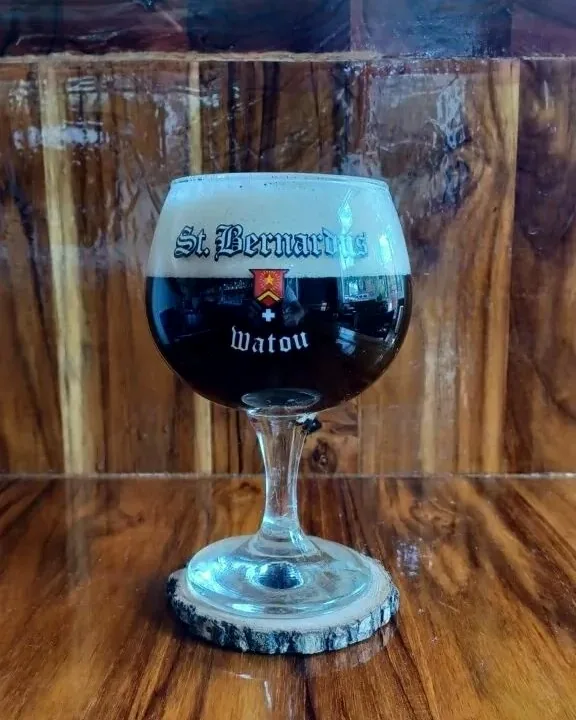
Some commercial breweries began life supplying or supporting an abbey and kept the connection in the name after the relationship ended. St. Bernardus is the classic case — it brewed under contract for a Trappist community for decades, and still brews in the same tradition, but it is a commercial brewery and its beers are not Trappist.
Beers using monastic branding with no abbey behind them
At the far end, “abbey” is simply a style cue: a Gothic label, a Latin name, no monastery anywhere in the story. These are legitimate beers. They are just not connected to a religious community in any way.
Trappist and abbey compared
| Trappist beer | Abbey beer | |
|---|---|---|
| Who brews it | Monks, or staff under monastic supervision, inside the abbey | A commercial brewery, on its own site |
| Certification | Authentic Trappist Product, issued by the International Trappist Association | None. The word is unregulated |
| Where profits go | The community and its charitable work | The brewery’s owners |
| Typical styles | Blonde, dubbel, tripel, quadrupel, pale ale | The same styles, brewed commercially |
| Can it lose the name | Yes, if the community can no longer oversee brewing | Not applicable |
| Examples on Meyboom’s list | Westmalle, Chimay, Orval, Rochefort, La Trappe, Tynt Meadow | Leffe, Augustijn |
Does the distinction change how the beer tastes?
Not reliably, and this is the part most guides get wrong. Trappist certification governs provenance, not recipe. Trappist breweries make dubbels, tripels, quadrupels, blondes and pale ales, and so do commercial abbey brewers. Some of the most respected Belgian beers in the world are not Trappist.
What the certification does give you is consistency of intent. A Trappist brewery is not under pressure to grow, to chase volume or to extend the range. That tends to produce beers that change very little from decade to decade — which is its own kind of quality, and a real reason to seek them out.
How this looked on a real beer list
Meyboom Brasserie’s beer list is a useful worked example, because it carried both categories side by side and did not distinguish between them on the page.
On the Trappist side, the list included Westmalle, Chimay, Orval, Rochefort, La Trappe and Tynt Meadow — a genuinely unusual spread, since Tynt Meadow is the English Trappist beer and rarely turns up on a bar list in Texas. On the abbey side sat Leffe and Augustijn. St. Bernardus appeared too, on draught, which is exactly the ambiguous case described above: monastic history, monastic style, commercial brewery.
You can read the full list as it was last published on the archived beer menu and the bottle and wine list. Both pages show the beers with their styles and strengths, so it is easy to sort the certified from the merely monastic yourself.
Frequently asked questions
How many Trappist breweries are there?
The number moves. Breweries have both joined and lost the certification over the past decade as monastic communities have changed, so the only reliable figure is the current list published by the International Trappist Association rather than any number quoted in an article.
Is St. Bernardus a Trappist beer?
No. St. Bernardus has a genuine monastic history — it brewed under contract for a Trappist community for many years — but it is a commercial brewery and its beers do not carry the Authentic Trappist Product mark.
Is Leffe a Trappist beer?
No. Leffe is an abbey beer brewed commercially under licence from the Abbey of Leffe. It is a well made beer with a real abbey connection, but it is not brewed by monks.
Is Trappist beer stronger than abbey beer?
Not as a rule. Both categories span everything from a modest table beer to a quadrupel above 10% ABV. Strength follows the style — dubbel, tripel, quadrupel — not the certification.
Why is Trappist beer more expensive?
Small production runs, no volume incentive to cut costs, and in several cases genuine scarcity. Trappist breweries deliberately cap output at what the monastery needs, which keeps supply tight.
Worth knowing before you order
If you want to drink something made inside a monastery, look for the Authentic Trappist Product hexagon and nothing else — the word “abbey” on a label guarantees you nothing. If you simply want a well made Belgian dark ale, widen the net, because some of the best examples have never been near a monk.
Once the categories make sense, the styles are the next thing to sort out. Our guide to single, dubbel, tripel and quadrupel covers what those numbers on the label actually mean, and the beer and cheese pairing guide shows what to do with a Trappist ale once it is in front of you.