Beer and cheese is an easier pairing than wine and cheese, and most people have it the wrong way round. Wine and cheese is the famous combination; beer and cheese is the one that works more often.
The short answer
Belgian beer pairs well with cheese because carbonation and yeast do things wine cannot: the bubbles scrub fat off the palate between bites, and the bready, fruity yeast character sits naturally alongside aged dairy. As a starting rule, match intensity — light beer with light cheese, strong dark beer with strong aged cheese — and use a sharp or sour beer to cut anything very rich.
Why carbonation matters more than flavour matching
Cheese coats the mouth in fat. That fat dulls whatever you taste next, which is why a big tannic red can feel harsh by the third bite — tannin and fat fight rather than resolve.
Carbon dioxide physically lifts the fat away. Each sip resets the palate, so the next piece of cheese tastes as clear as the first. This is the single biggest reason beer outperforms wine here, and it is why a highly carbonated tripel handles a rich triple-crème better than almost any wine will.
The second reason is shared vocabulary. Both beer and cheese are fermented, and both produce the same families of aroma compounds — nutty, bready, fruity, faintly barnyard. They are speaking the same language before you start.
Three rules that cover most of it
- Match intensity first. A delicate fresh cheese is flattened by a quadrupel. An aged hard cheese walks straight over a witbier. Get the weight right and the rest usually follows.
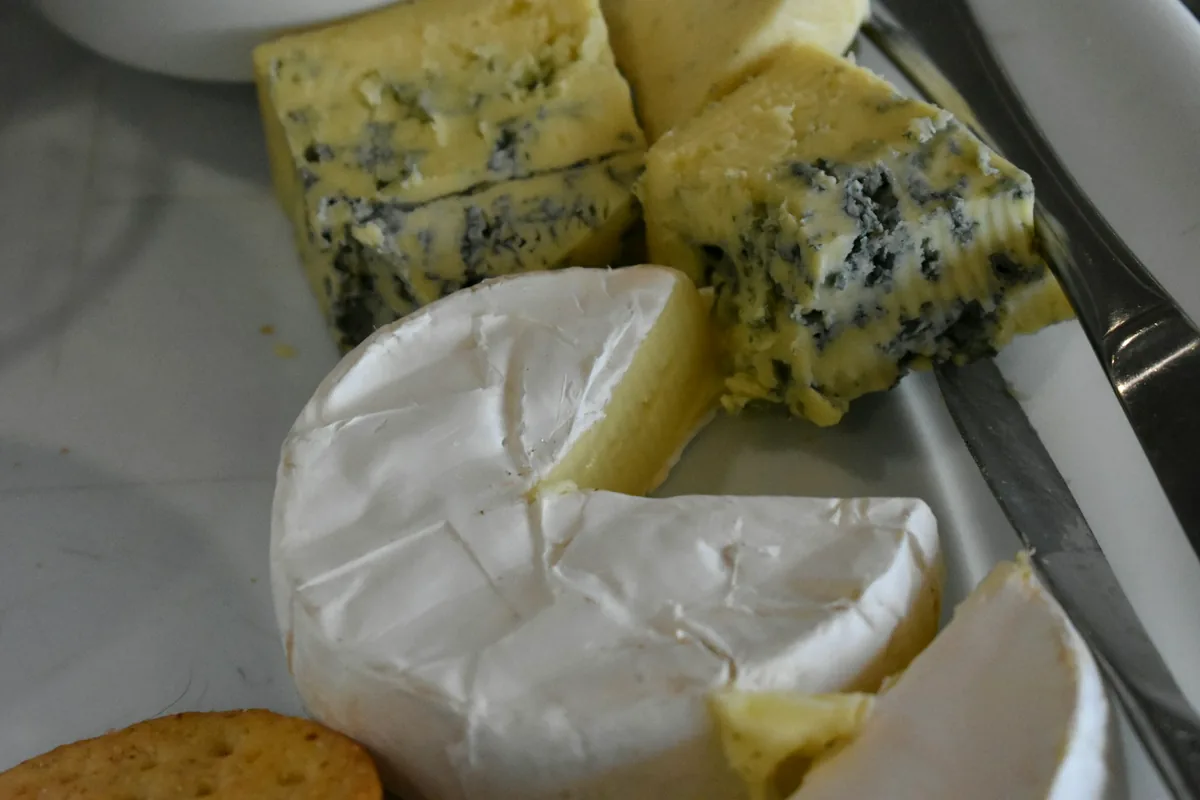
- Then either complement or contrast. Complement by matching flavours — nutty aged cheese with a malty dubbel. Contrast by opposing them — salty blue against a sweet fruit lambic.
- Use acidity or sweetness on the hardest cases. Very rich, very salty or very pungent cheeses need something sharp or sweet. A Flanders red or a kriek will handle cheeses that defeat everything else.
What to pour with what
| Beer style | Cheese to reach for | Why it works |
|---|---|---|
| Witbier | Fresh goat, mozzarella, young chèvre | Light body and citrus lift a delicate cheese without burying it |
| Belgian blonde or single | Young gouda, mild havarti, brie | Enough malt to match, dry enough to stay out of the way |
| Dubbel | Aged gouda, gruyère, comté | Caramel and dried fruit meet the nuttiness of an aged hard cheese |
| Tripel | Washed rind, triple-crème, aged cheddar | High carbonation cuts fat; the dry finish resets the palate |
| Quadrupel | Stilton, roquefort, strong blue | Dark fruit sweetness balances heavy salt |
| Kriek or framboise | Blue cheese, or a sharp fresh goat | Fruit acidity contrasts salt the way a chutney would |
| Flanders red | Anything very rich or very fatty | Sourness cuts straight through fat |
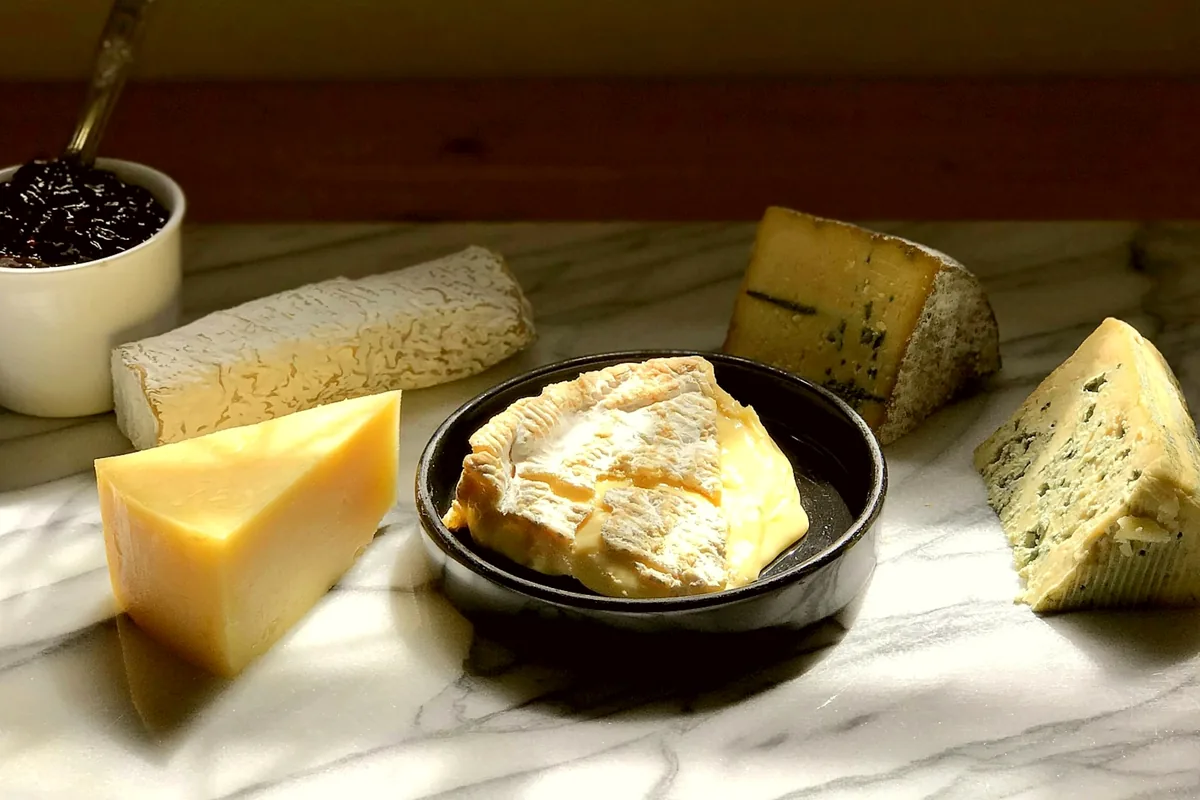
What goes wrong
Most disappointing pairings fail for one of three reasons, and none of them is an exotic flavour clash.
- Everything is too strong. Four powerful cheeses against four strong ales is not a tasting, it is an assault. At least one pair should be gentle.
- The beer is too cold. Straight from a fridge, a dubbel gives you almost nothing to match against. Ten minutes out changes it entirely.
- The order is wrong. Starting with the blue means the rest of the board tastes of blue.
Building a board that actually works
Four cheeses and four beers is the standard format, and there is a reason it is standard: it is enough to show contrast without exhausting the palate.
- Order matters. Go light to heavy, in both the cheese and the beer. Starting with a blue and a quadrupel means nothing afterwards registers.
- Serve the beer warmer than you think. Fridge-cold beer tastes of very little, and cold mutes cheese too. Cellar temperature, around 8–12°C, for the stronger ales.
- Keep the extras honest. Nuts, fruit and a little preserve help bridge a difficult pair. A board buried in accompaniments is hiding the cheese.
- Small pours. Four tasting measures, not four full glasses — these beers are strong.
How a brasserie does it
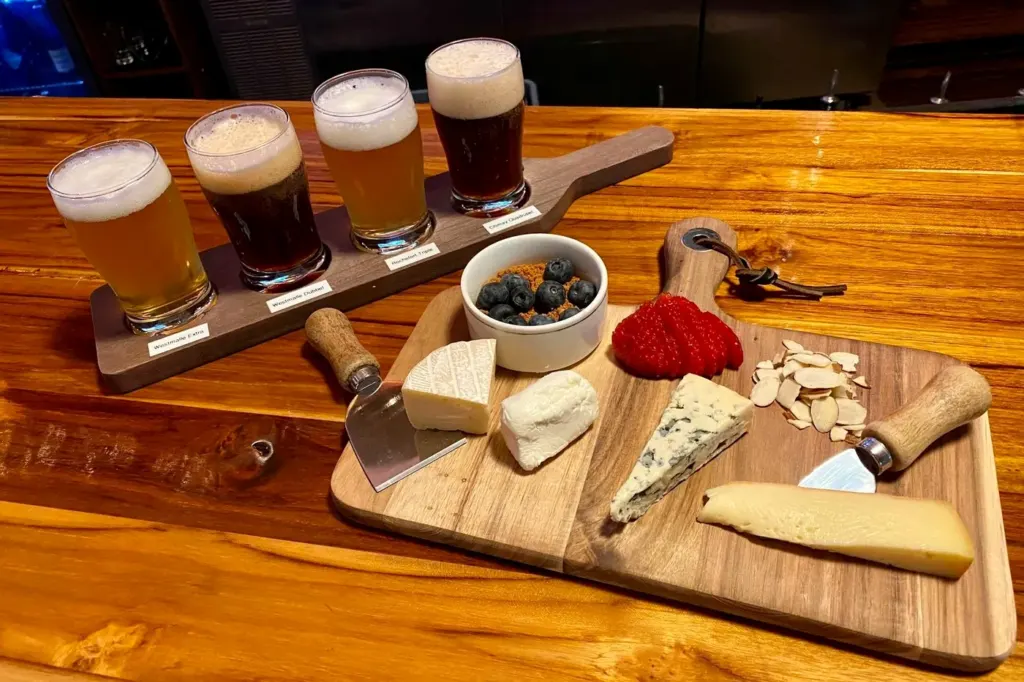
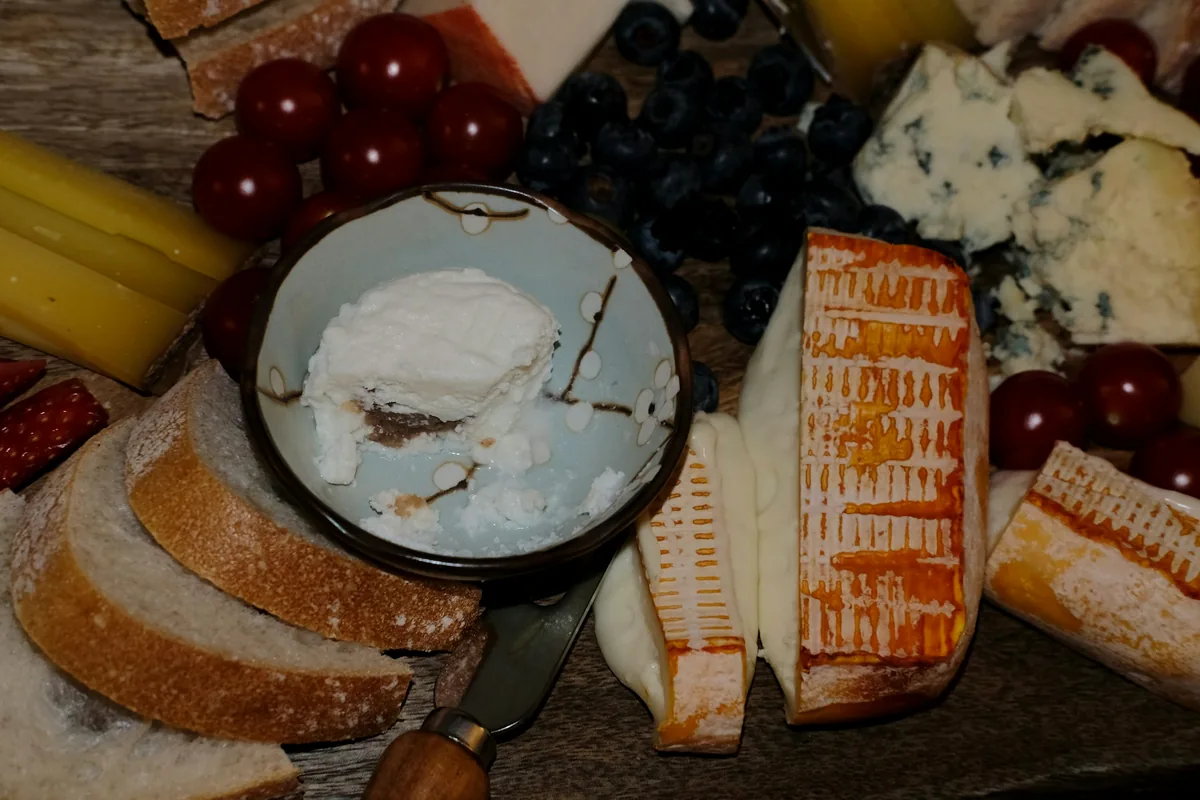
This was a menu item at Meyboom Brasserie rather than a suggestion: a Trappist beer and cheese pairing of four Trappist beers matched to four cheeses, put together by the in-house Cicerone. Its cheese board also ran to Chimay Première — a cheese made by the same abbey as the beer, which is about as direct as a pairing gets.
That is worth borrowing at home. Abbeys that brew often also make cheese, and the two are made in the same building by people who taste both. Pairing a Trappist ale with its own abbey’s cheese is the easiest win available.
The beers themselves are listed on the archived beer menu, and the cheese board appears on the brunch menu as last published.
Frequently asked questions
Is beer or wine better with cheese?
Beer, more often than not. Carbonation clears fat from the palate in a way still wine cannot, and beer’s sweetness range makes salty and blue cheeses much easier to match. Wine still wins in specific cases, particularly sweet wine with blue cheese.
Should you serve the beer or the cheese first?
Cheese first, then a sip. Tasting the beer first coats the palate and flattens the first bite. It sounds fussy and it changes the result noticeably.
What cheese goes with a Belgian tripel?
Something rich enough to stand up to the strength but not overpowering — a washed-rind cheese, a young gouda, or a triple-crème. The tripel’s carbonation and dry finish handle the fat well.
What beer goes with blue cheese?
Something sweet or sour. A quadrupel’s dark fruit sweetness balances the salt, and a fruit lambic such as kriek does the same job from the acidic direction.
How many beers should a tasting flight have?
Four is the usual number and a sensible one. Beyond that, palate fatigue sets in and the later pairs stop registering, particularly with strong Belgian ales.
Should cheese be served cold?
No. Take it out of the fridge around an hour before serving. Cold suppresses aroma in cheese just as it does in beer, and you lose most of what you are pairing.
Where to start
If you are building your first board, take a dubbel and an aged gouda and taste them together. It is the most forgiving pair on the list and it demonstrates the principle immediately.
For more on the beers themselves, our guide to Belgian beer styles explains the ladder from single to quadrupel, and Trappist vs abbey beer covers what the monastery on the label does and does not tell you. Professional pairing standards are set out by the Cicerone Certification Program.