Search for a Belgian brasserie and you get two completely different kinds of result: restaurants, and breweries. Both are correct, and the confusion is built into the word.
The short answer
A Belgian brasserie is a relaxed, all-day restaurant built around beer as much as food — Belgian classics like mussels, frites, croquettes and waffles, served alongside a deep beer list, without the formality of a proper restaurant. The word is French for “brewery”, which is why the same term also names actual Belgian breweries, such as Brasserie d’Achouffe.
Context tells you which one you are looking at. If it has a menu, it is a restaurant. If it has a brewhouse, it is a brewery.
Why one word means two things
The French brasserie comes from brasser, to brew. It originally meant the place where brewing happened. As beer halls in northern France and Belgium began serving food to the people drinking there, the name followed the room rather than the equipment, and it came to mean a particular kind of eating house: informal, open long hours, beer-led.
Belgium kept both meanings alive. Plenty of Belgian breweries still trade under the name Brasserie — Brasserie d’Achouffe and Brasserie Dupont among them — and plenty of Belgian restaurants do too. The country’s brewing culture is documented in depth by Belgian Beer World in Brussels, which is a good sense of how central the drink is to the eating.
What a Belgian brasserie actually serves
The menu is where a Belgian brasserie separates itself from a French one. Expect some or all of the following.
Mussels and frites
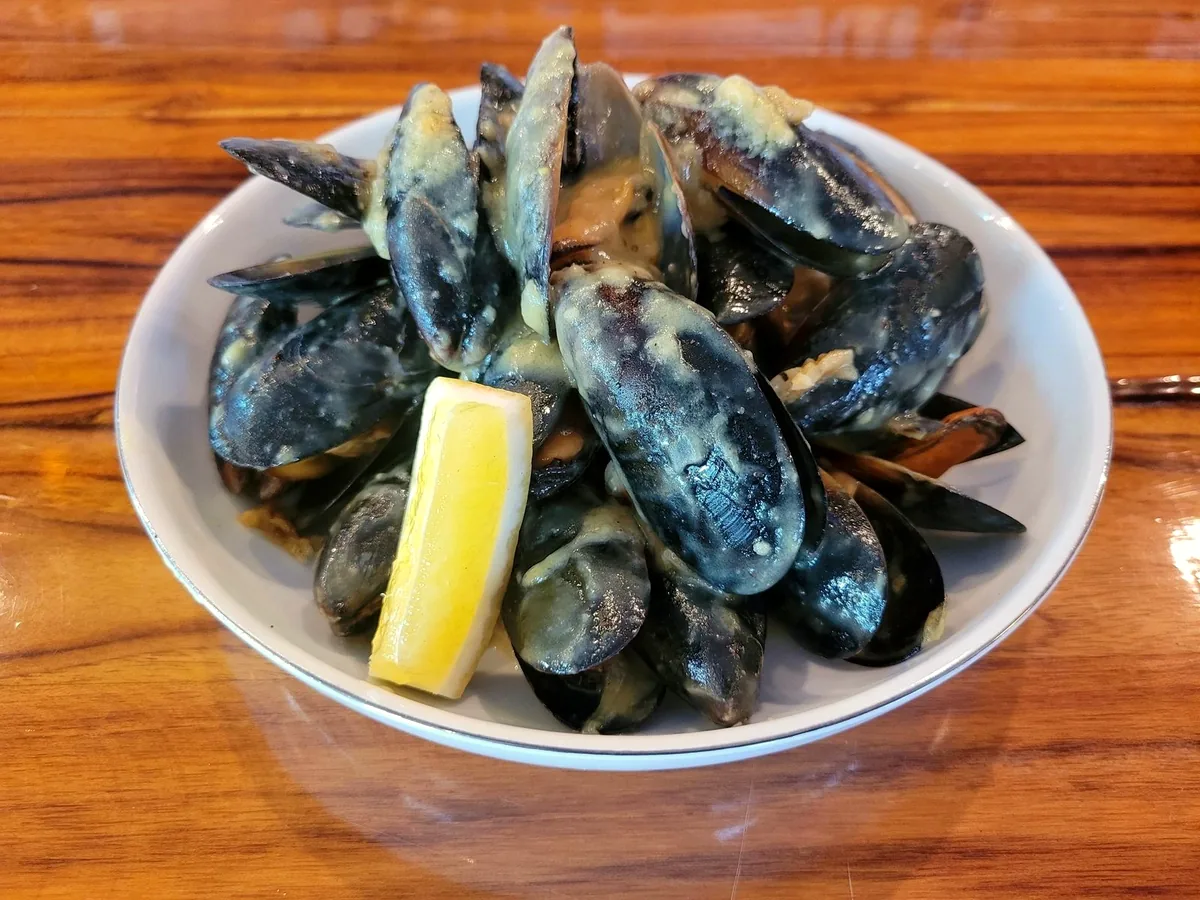
Belgium’s national dish, and the thing most people picture. Mussels steamed in a light broth, served with a mountain of fries alongside rather than under them.
Frites, treated seriously
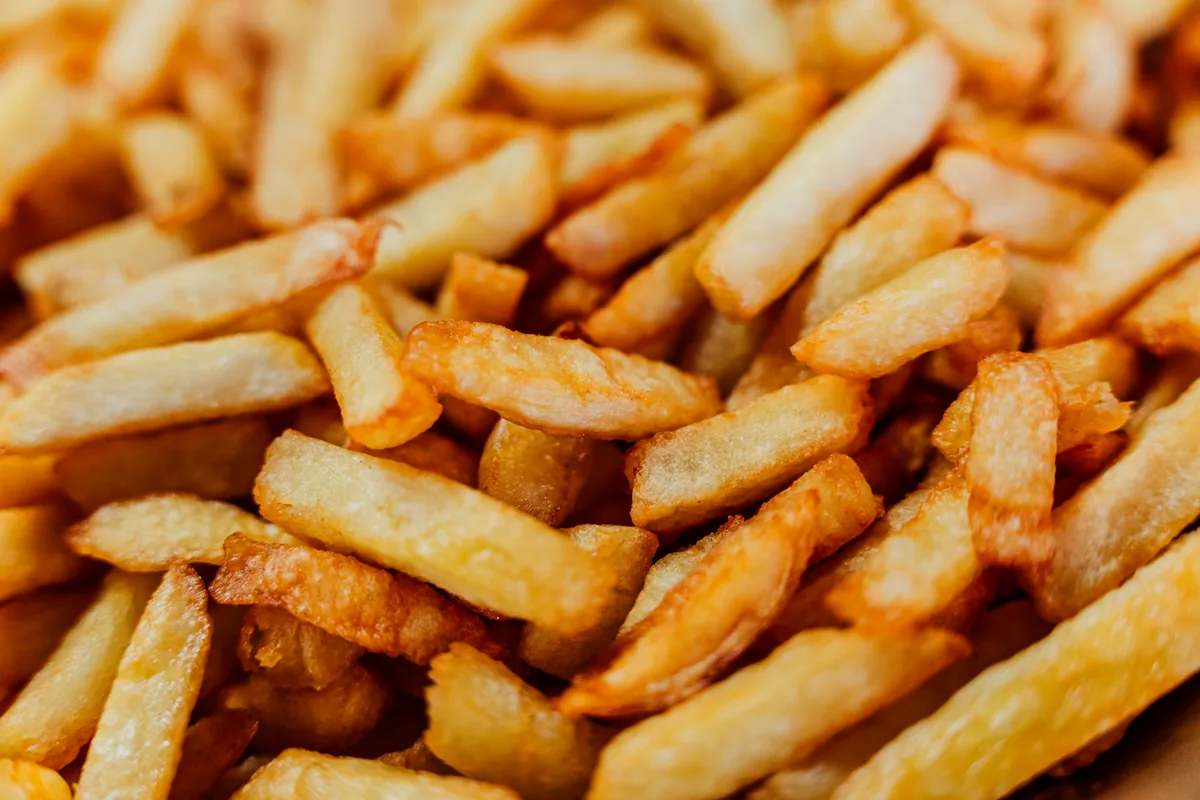
Belgian fries are their own institution — hand cut, twice fried, thick, and served with a sauce rather than left plain. Ordering them as a dish in their own right is normal, not an afterthought.
Croquettes and bar snacks
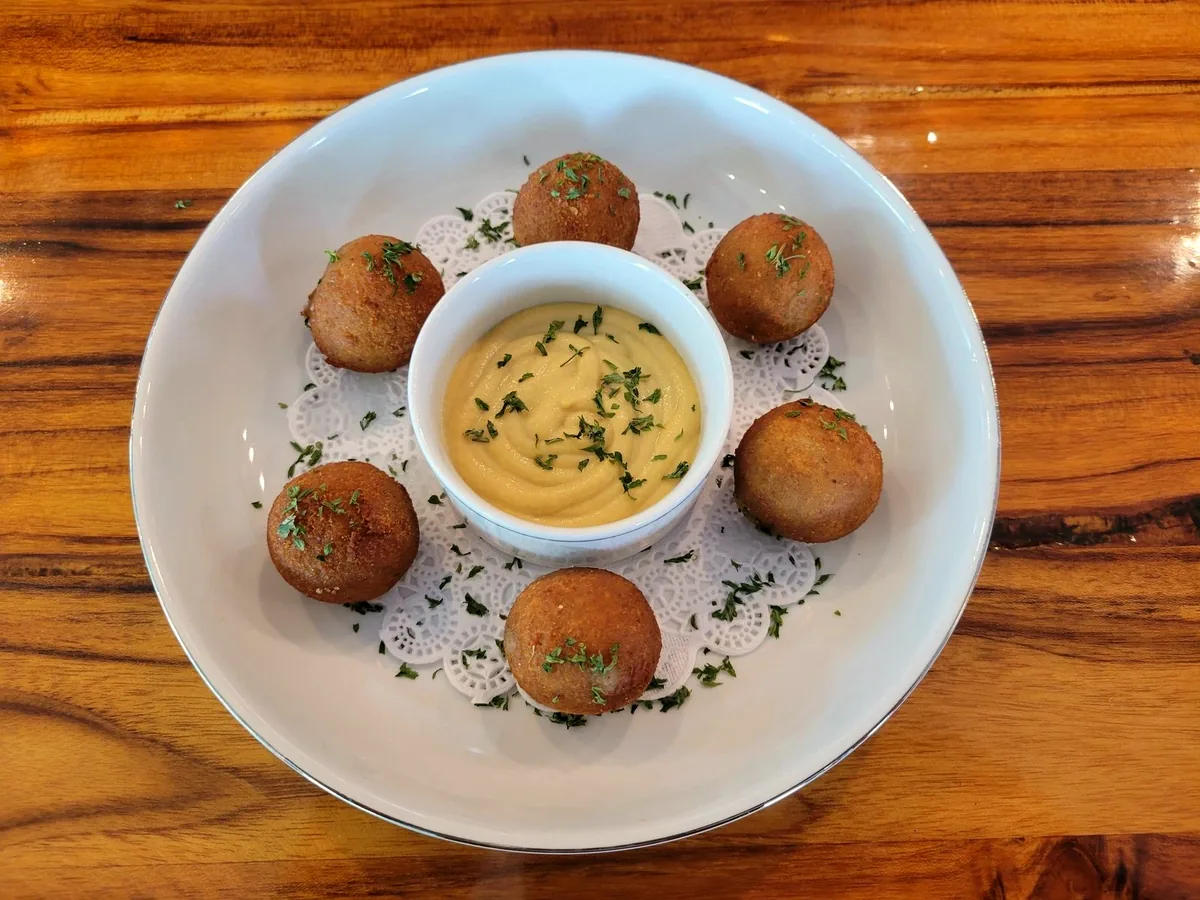
Bitterballen — crisp fried spheres of beef and thickened gravy, served with mustard — are the standard thing to order with the first beer. They are technically Dutch, and every Belgian brasserie serves them anyway.
Waffles, but not for breakfast
The Liège waffle — dense, chewy, made with pearl sugar that caramelises on the iron — is a different object from the light Brussels waffle sold at tourist stands. Both belong on a brasserie menu, and neither is confined to the morning.
A beer list that reads like a wine list
This is the real marker. A Belgian brasserie will list beers by style and strength, offer each in its own glass, and expect you to choose one to go with the food rather than defaulting to whatever is on tap.
Belgian brasserie versus French brasserie
| Belgian brasserie | French brasserie | |
|---|---|---|
| Drink focus | Deep Belgian beer list, style by style | Beer, wine and cocktails, more evenly split |
| Signature dish | Mussels with frites | Steak frites, choucroute, shellfish platter |
| Fries | Hand cut and twice fried, ordered as a dish | A side |
| Snacks | Croquettes and bitterballen with the first beer | Charcuterie and oysters |
| Glassware | A specific glass for each beer | Standard glassware |
| Hours | All day, through the afternoon | All day, through the afternoon |
How a brasserie is meant to be used
The most useful thing to understand is that a brasserie is not an occasion restaurant. It serves through the afternoon, when most kitchens are shut. You can order one beer and a plate of frites, or three courses. Nobody minds either way, and that flexibility is the whole point of the format.
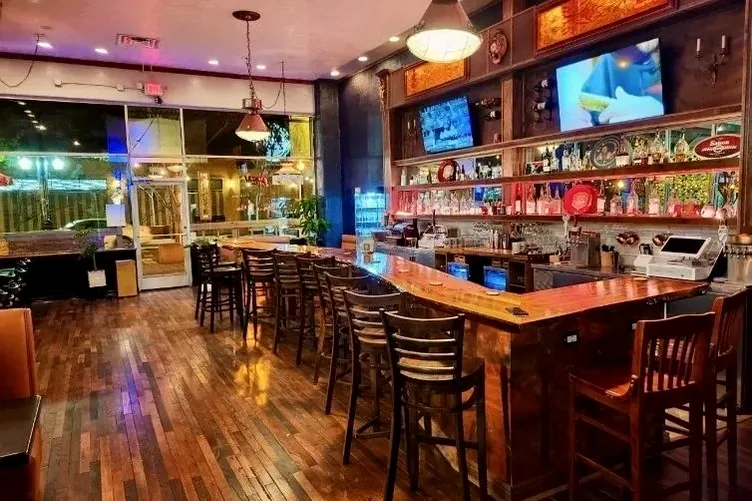
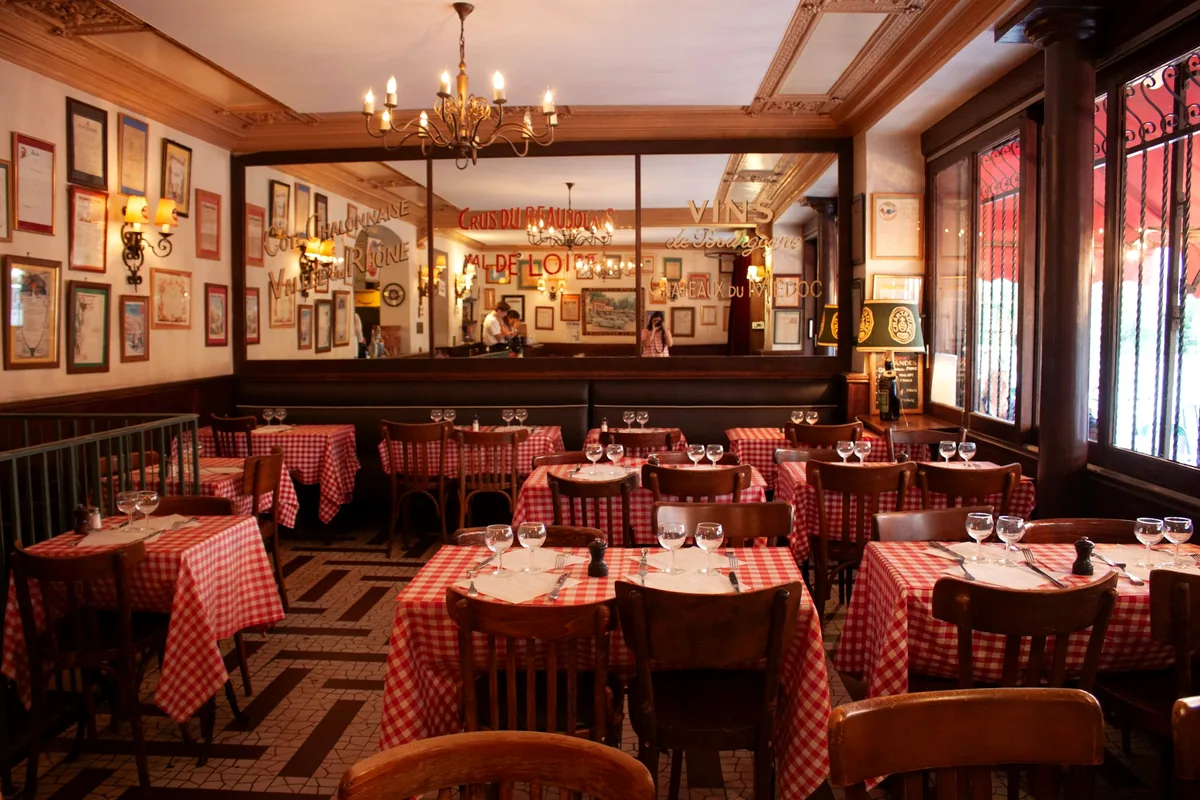
This also shapes the room. Brasseries tend to be large, hard-surfaced and loud, with a proper bar rather than a service station. They are built for people staying a while.
A worked example
Meyboom Brasserie on Greenville Avenue in Dallas ran on this model from 2022 until it closed on 31 August 2025. The menus are preserved here and they read exactly as described above: bitterballen and street frites among the starters, mussels and beer-battered cod as mains, Liège waffles on both the food and brunch menus, and a beer list running from witbier and fruit lambic through to Trappist quadrupels.
You can read the food menu as last published and the full set of archived menus, or read about how the founders brought the format to Dallas after a trip to Belgium.
What the room tells you before the menu does
You can usually classify a place from the doorway, and the tells are consistent.
- A real bar, not a service station. Somewhere you could sit and drink without eating.
- Glassware on display. A rack of different shapes means the beer list is taken seriously.
- Hard surfaces. Tile, wood, mirrors, tin ceilings. Brasseries are loud by construction.
- Tables close together. The format assumes volume and turnover, not intimacy.
- A menu that has not changed in years. Printed, laminated, long. That is a feature.
Frequently asked questions
Is a brasserie French or Belgian?
The word is French and the format exists in both countries, but they diverged. French brasseries lean towards Alsatian dishes, shellfish platters and steak frites. Belgian brasseries lean towards mussels, frites, croquettes and a far deeper beer list.
Why are Belgian breweries also called brasseries?
Because that is the literal meaning of the word. Brasserie is French for brewery, from brasser, to brew. The restaurant sense grew out of beer halls that began serving food.
Do Belgian brasseries serve food all afternoon?
Yes, and it is the single most useful thing about them. Most restaurant kitchens close between lunch and dinner; a brasserie runs continuously. If it is half past three and you want mussels, this is the format that will feed you.
Do I need to order a full meal?
No. A beer and a plate of frites is a legitimate order and nobody will blink. The format was built around people staying a long time and eating whatever they felt like along the way.
Is a brasserie expensive?
Not by design. The format grew out of working-class beer halls and the tradition is good food at everyday prices, with no requirement to order a full meal.
What do you wear to a brasserie?
Whatever you are already wearing. Brasseries are deliberately informal — that is what separates them from a restaurant proper.
The short version
A Belgian brasserie is a beer hall that learned to cook. It is informal, open when other kitchens are closed, and organised around the idea that the beer and the food are equal partners rather than one being an accompaniment to the other.
If you want the finer distinction between a brasserie and the other informal French institution it gets confused with, read brasserie vs bistro. For the drinking side, start with Belgian beer styles explained.