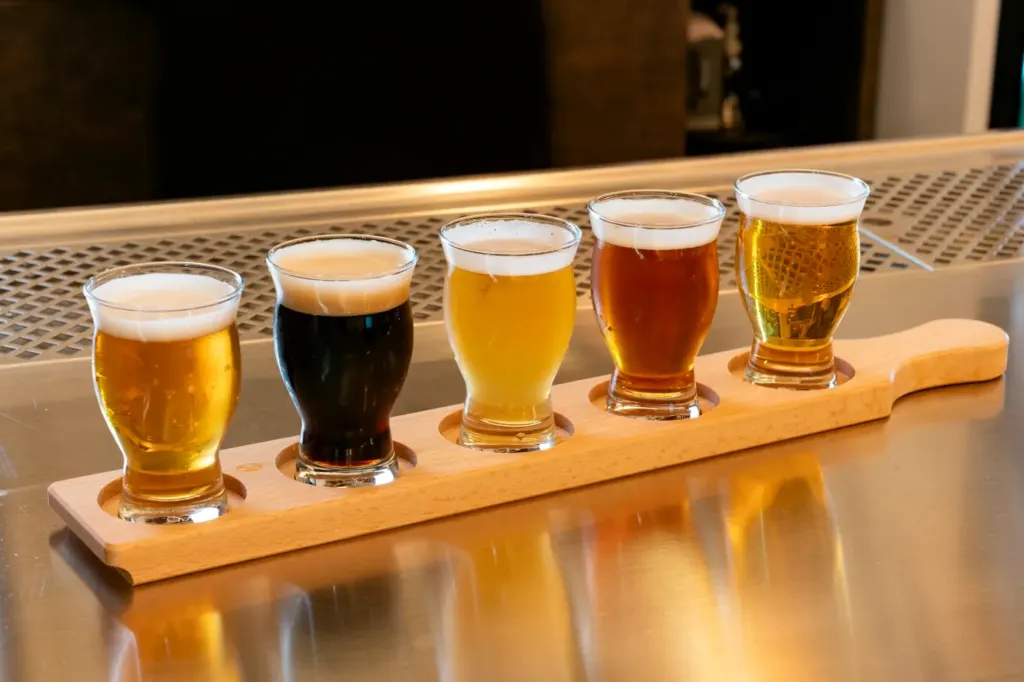
Good beer lists print two numbers next to every beer, and most drinkers only reliably understand one of them. ABV is straightforward. IBU is the one that quietly misleads people, especially on a Belgian list.
The short answer
ABV is alcohol by volume, expressed as a percentage — 5.0% ABV means five per cent of the liquid is alcohol. It is a direct measurement and it means exactly what it says.
IBU is International Bitterness Units, a laboratory measurement of the bitter compounds hops leave in the finished beer. It is not a measurement of how bitter the beer tastes. Malt sweetness, alcohol and yeast character all mask bitterness, which is why two beers at the same IBU can taste completely different.
ABV: the honest number
Alcohol by volume tells you how strong the beer is, and there is very little nuance to it. What it does not tell you is how strong the beer will feel, and Belgian brewing is built on exactly that gap.
A Belgian tripel is brewed with pale malt and candi sugar, which ferments out cleanly and leaves the beer light-bodied. The result is a beer that can sit around 9% ABV and drink like something two points lower. This is not a quirk; it is the intended effect, and it is the single most common way people misjudge a Belgian list.
The practical rule: on a Belgian list, treat ABV as a serving-size instruction rather than a flavour note. Anything above 8% is a beer to order one of.
IBU: the number that needs context
IBU counts iso-alpha acids — the compounds created when hop alpha acids isomerise during the boil. It is measured in a lab, usually by spectrophotometry, and it is genuinely precise about what it measures.
The problem is that perceived bitterness is not the same thing. Three factors get in the way:
- Malt sweetness. Residual sugar balances bitterness. A sweet, malty beer at 40 IBU tastes far less bitter than a dry one at the same figure.
- Alcohol. Higher alcohol reads as sweetness and body, softening the edge.
- Yeast. Belgian yeast throws pepper, clove and fruit esters that occupy the palate where bitterness would otherwise sit.
The Brewers Association, which publishes the style guidelines most of the industry works from, treats IBU as one input among several rather than a bitterness rating.
Why this matters more on a Belgian list
Meyboom Brasserie’s draught list printed ABV and IBU for every beer, which makes it a useful worked example. Two pairs from that list show the problem clearly.
| Beer | Style | ABV | IBU | How bitter it actually reads |
|---|---|---|---|---|
| Pilsner Urquell | Pilsner | 4.4% | 40 | Firmly bitter — dry and lean, so the hops are exposed |
| Westmalle Tripel | Tripel | 9.5% | 40 | Barely bitter — alcohol and yeast spice absorb it |
| Radeberger | Pilsner | 4.8% | 33 | Clean and noticeably bitter |
| Duvel | Golden strong ale | 8.5% | 33 | Dry finish, but bitterness is not the headline |
| Chimay Grande Reserve | Quadrupel | 9.0% | 35 | Reads sweet — dark fruit dominates |
| St. Bernardus Wit | Witbier | 5.5% | 15 | Soft, with spice rather than bitterness |
Westmalle Tripel and Pilsner Urquell were both listed at 40 IBU. Nobody would describe them as similarly bitter. The pilsner is dry, lean and hop-forward, so 40 IBU lands squarely on the tongue. The tripel is 9.5% ABV with a big spicy yeast character, and the same 40 IBU is largely absorbed by everything else going on.
Meanwhile Chimay Grande Réserve at 35 IBU reads as barely bitter at all, because it is a 9% quadrupel full of dark fruit and residual sweetness.
The third number: SRM
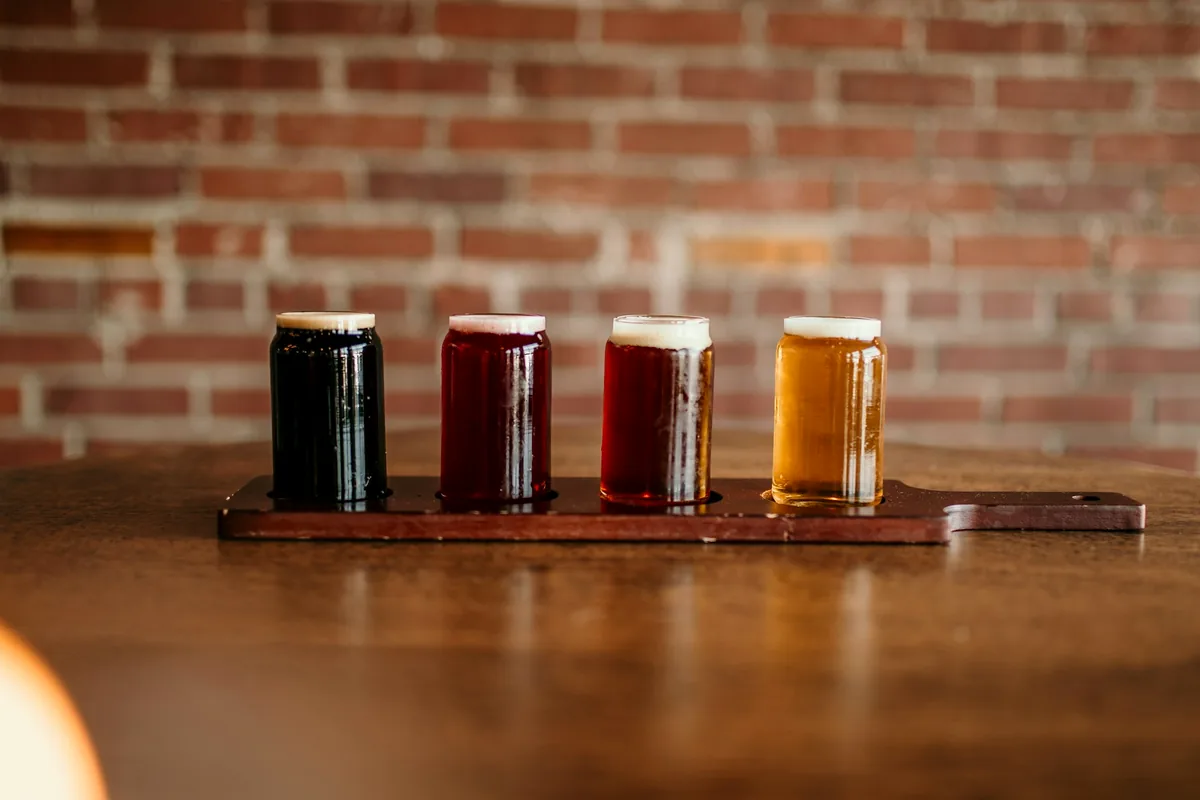
Some lists print a colour figure alongside the other two. SRM — Standard Reference Method — measures how dark the beer is, on a scale running from about 2 for a pale pilsner to 40 and beyond for a stout.
It is the most honest of the three numbers, because colour is the one thing you can verify by looking at the glass. It is also the least necessary for the same reason.
Where SRM is genuinely useful is as a rough proxy for malt character. A high figure means darker malts, which usually means caramel, chocolate or dried-fruit notes and a fuller body. It says nothing about strength — a 10% pale tripel and a 4% dark mild sit at opposite ends of the colour scale and the opposite ends of the strength scale too.
How to actually read a beer list
- Read the style first. Style tells you more than either number. Witbier, tripel, quadrupel and sour are useful words; 26 IBU is not.
- Use ABV to plan the evening. One strong beer, or three light ones. Belgian lists make it easy to get this wrong.
- Use IBU only to compare within a style. Two pilsners at 22 and 40 IBU genuinely differ. A pilsner and a quadrupel at the same number do not.
- Ignore IBU entirely on sours. Acidity, not bitterness, is what you are tasting, and IBU says nothing about it.
Frequently asked questions
What is a high IBU?
Above about 60 is high in general terms, and above 100 is at the practical limit of what beer can hold in solution. Most everyday beers sit between 10 and 40. Belgian styles cluster low to moderate — bitterness is rarely the point.
Does higher IBU mean more bitter?
Only within a similar style. Across styles it is unreliable, because malt sweetness, alcohol and yeast character all mask bitterness. A sweet, strong beer at 40 IBU tastes less bitter than a dry, light beer at 25.
What is a good ABV for beer?
There is no good or bad figure — it depends on what you want from the session. Around 4–5% is standard for a lager; Belgian ales commonly run 6–10%, which is why they are served in smaller measures.
Do IBUs fade over time?
Yes. Iso-alpha acids degrade as beer ages, so an old bottle is measurably less bitter than a fresh one. It is one more reason the printed figure is a starting point rather than a promise.
Why do some beer lists not show IBU?
Because for many styles it tells the drinker almost nothing useful, and some brewers regard publishing it as encouraging exactly the misreading described above.
The short version
Trust ABV. Treat IBU as a comparison tool within a single style and nothing more. On a Belgian list, the style name is doing most of the work anyway.
For what those style names mean, start with Belgian beer styles explained, or see how the numbers were laid out on the archived beer list and the bottle list.