

Belgians will tell you the fry is Belgian, not French, and they have a reasonable case. But the argument about origin is the least interesting part. The interesting part is that Belgian frites are made and eaten differently, and both of those differences are things you can taste.
The short answer
Belgian frites are cut thick from floury potatoes, fried twice — once at a low temperature to cook the inside, then again hot to crisp the outside — and traditionally cooked in beef fat rather than vegetable oil. They are ordered as a dish in their own right, in a paper cone, with a sauce.
A standard French fry is thinner, usually fried once, cooked in oil, and served as a side.
The double fry is the whole technique
Frying a potato once forces a compromise: hot enough to brown the outside means the inside is undercooked, and low enough to cook the inside means the outside goes limp.
The two-stage method separates the jobs. The first bath, at a relatively low temperature, cooks the potato through and drives off surface moisture without colouring it. The frites are then rested and cooled — this matters, and rushing it is the usual failure. The second bath, much hotter, forms the crust in a couple of minutes.
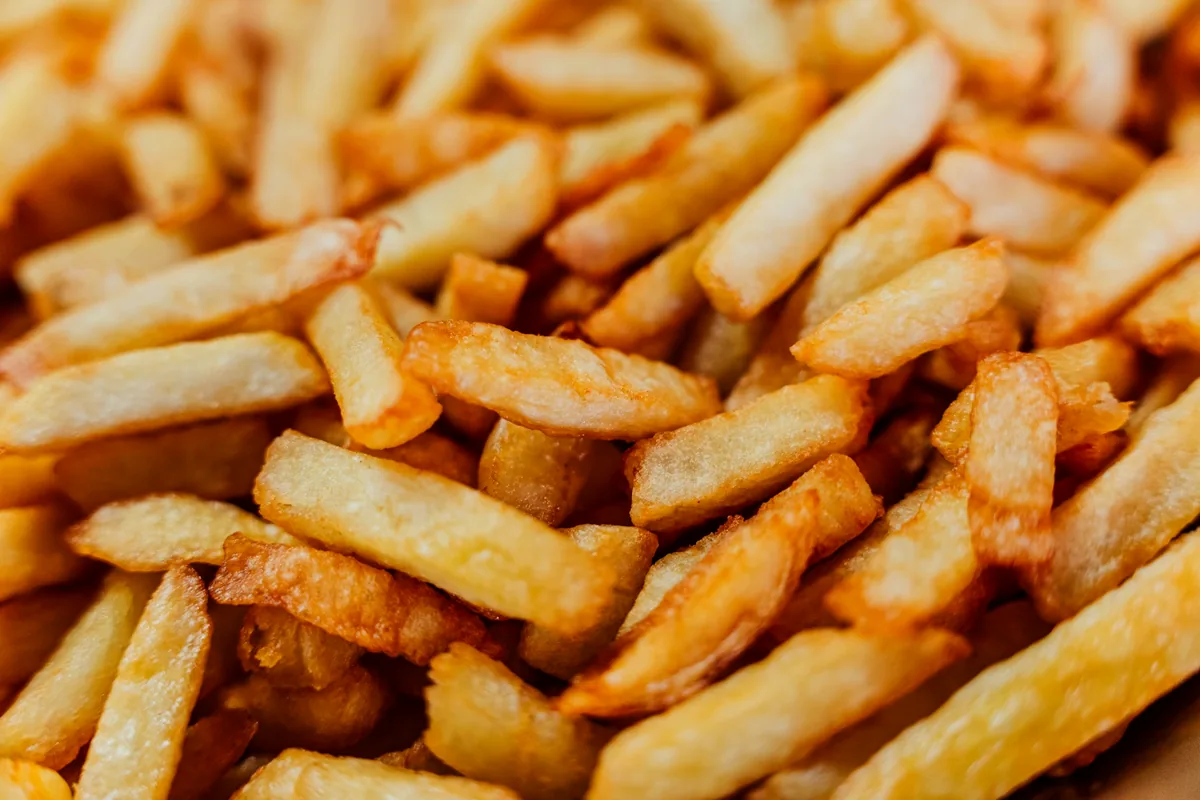
The result is the texture Belgian frites are judged on: a genuinely crisp shell around an interior that is soft and almost fluffy. A thick cut is what makes that contrast possible; a thin fry is all crust and has nowhere to put the fluffy part.
The potato matters more than people expect
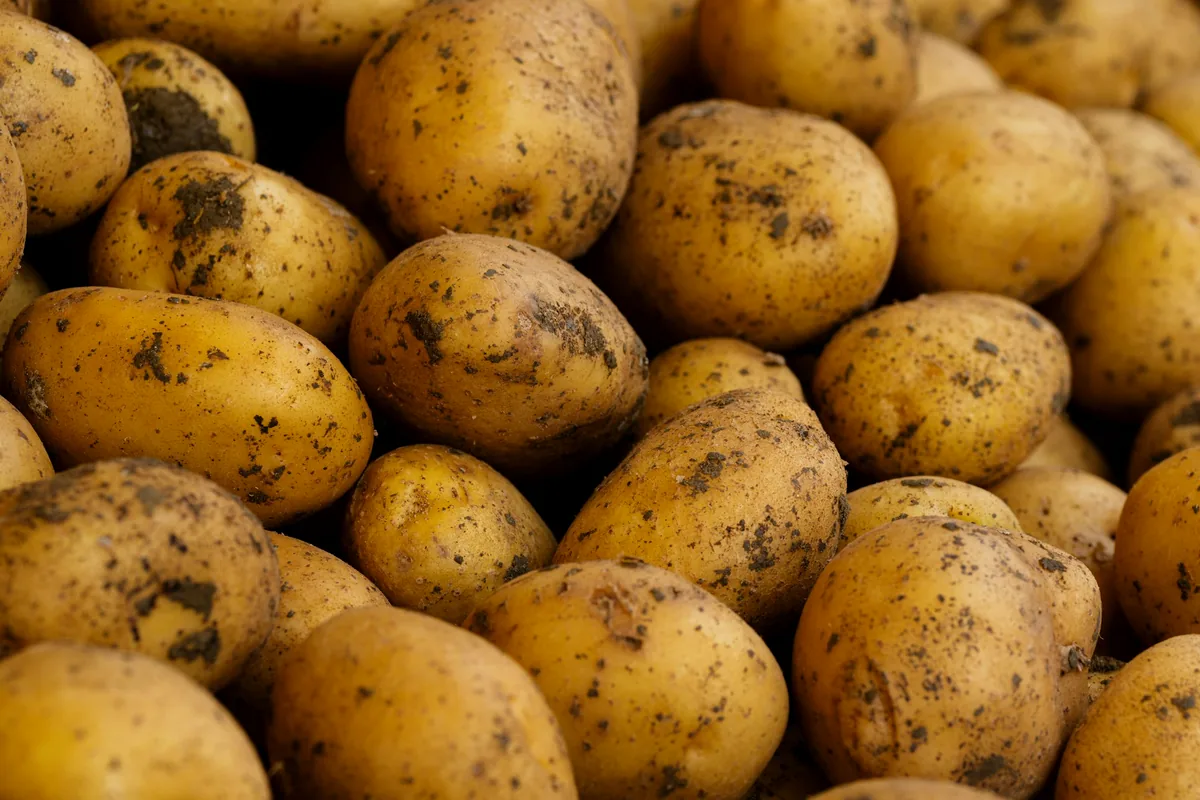
Belgian frites are traditionally cut from Bintje, a floury, low-moisture variety. Floury potatoes fall apart in a stew and are exactly what you want in a fryer: less water to drive off, more starch to form a crust, and a dry interior that reads as fluffy rather than waxy.
Use a waxy salad potato and no amount of technique will rescue it. The fry will be dense and slightly greasy.
Beef fat, and why it is disappearing
The traditional frying medium is blanc de boeuf, filtered beef fat. It has a high smoke point and contributes a distinctly savoury flavour that oil does not.
Plenty of Belgian friteries have moved to vegetable oil — for vegetarian customers, for cost, and for the practicalities of filtering and storage. Purists object. It is worth knowing that a frite cooked in oil is not doing anything wrong; it is just missing one of the flavours people associate with the original.
Belgian frites and French fries compared
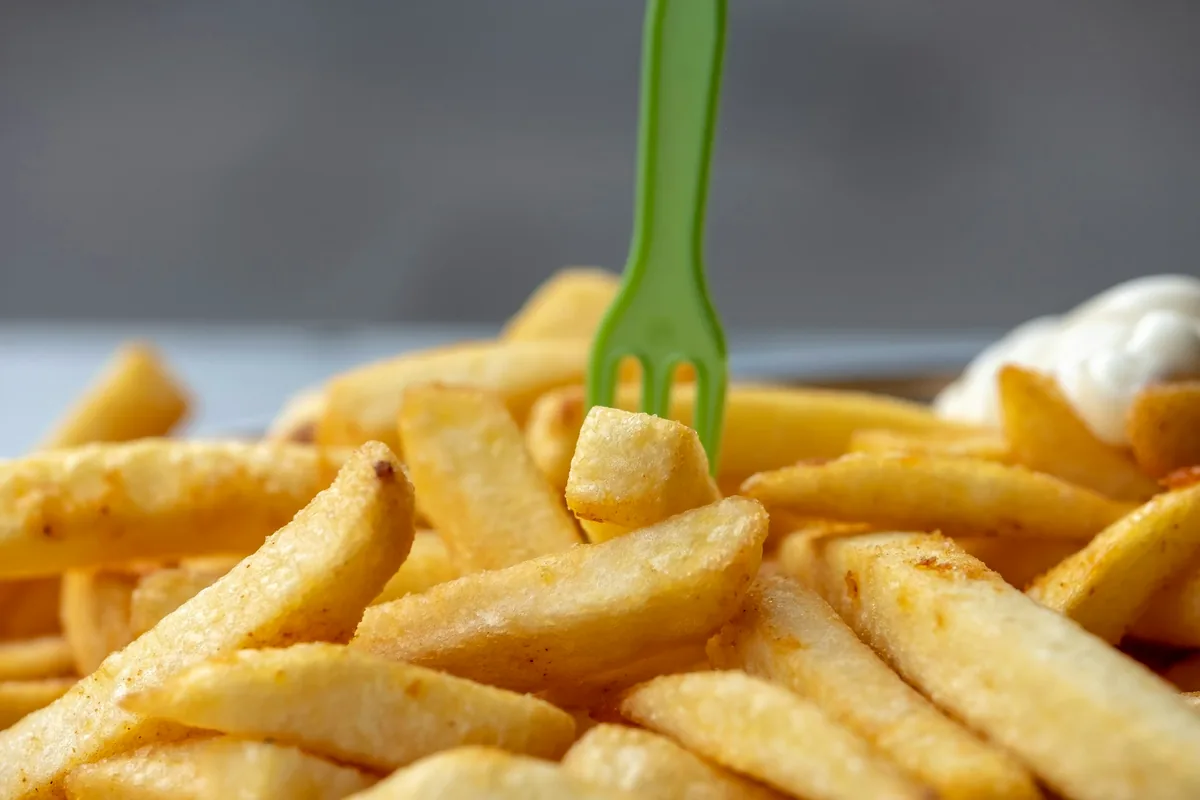
| Belgian frites | Standard French fry | |
|---|---|---|
| Potato | Floury, traditionally Bintje | Usually Russet, sometimes waxy |
| Cut | Thick, around 10mm, hand cut | Thin and uniform, often machine cut |
| Frying | Twice, low then hot, with a rest between | Usually once |
| Fat | Traditionally beef fat | Vegetable oil |
| Texture | Crisp shell, fluffy interior | Crisp throughout, little interior |
| Served as | A dish, in a cone, with sauce | A side |
| Sauce | Chosen from a long list | Ketchup by default |
The part that is really different: how they are ordered
In Belgium the fry is not a side. It is a meal bought from a friterie or frituur — a standalone shop, often a kiosk, that exists to sell frites and little else. There are thousands of them, they are a genuine part of national daily life, and they have their own trade federation, Navefri-Unafri, which represents them nationally.
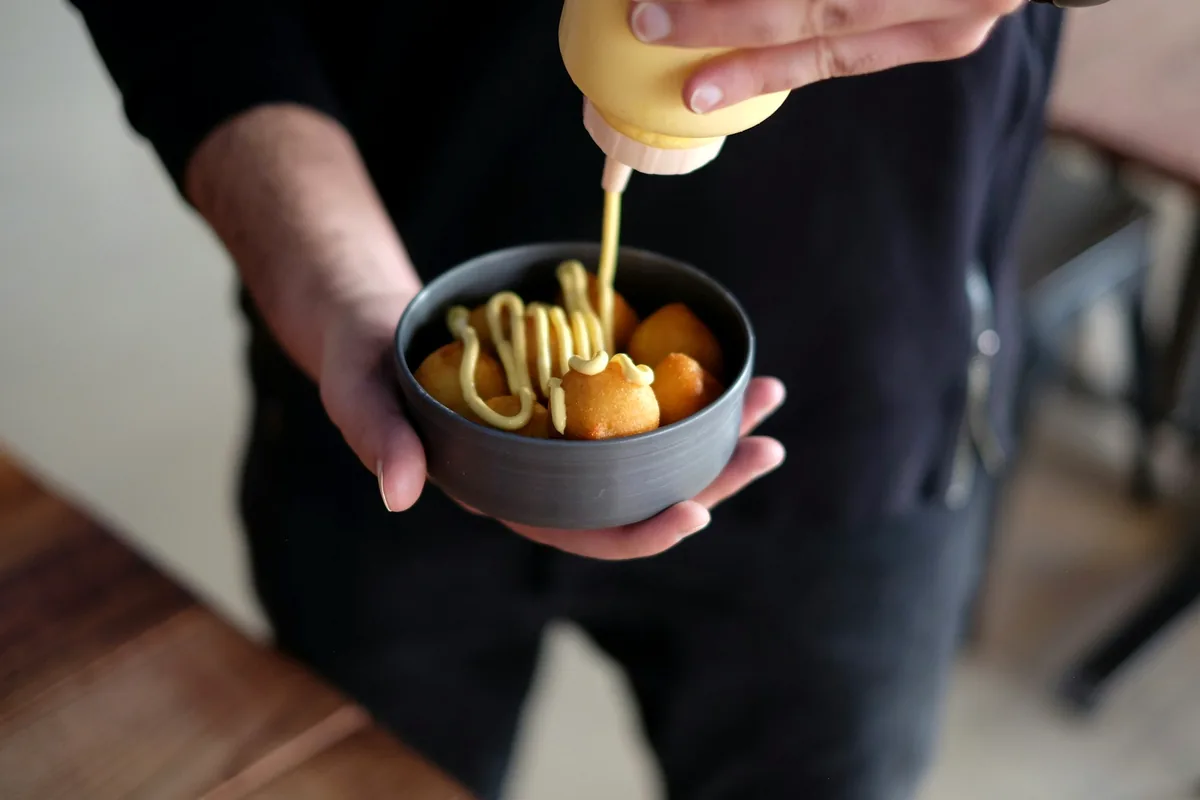
You order a cone, you choose a sauce, and you eat standing up with a small fork. The sauce list is long and mayonnaise is only the beginning — andalouse, samurai, brasil, tartare and curry ketchup are all standard.
This is why a Belgian brasserie will happily sell you a plate of frites and nothing else, and why they turn up on the menu as a starter rather than buried under a main course. Meyboom listed hand-cut street frites among its bar bites for exactly that reason.
The sauces, properly
Naming the sauces is worth doing, because the list is the part visitors find genuinely bewildering and most of them are mayonnaise-based variations rather than separate inventions.
- Mayonnaise — the default. Belgian frituur mayonnaise is thicker and less sharp than the supermarket version, and it is meant to be eaten in quantity.
- Andalouse — mayonnaise with tomato and peppers. Mild, slightly sweet, and probably the most ordered after plain mayonnaise.
- Samurai — mayonnaise with harissa or chilli. The hot one, and hotter than most people expect.
- Brasil — mayonnaise with pineapple and tomato. Sweet, and divisive.
- Tartare — mayonnaise with capers, onion and herbs. Sharp, and the usual choice with fish.
- Curry ketchup — ketchup with curry spice, milder and sweeter than it sounds.
- Joppiesaus — Dutch rather than Belgian, but common near the border: mayonnaise with curry and onion.
Ordering a frietje speciaal gets you mayonnaise, curry ketchup and raw chopped onion together, which is a good default if the list defeats you.
Frequently asked questions
Are french fries actually Belgian?
Probably, though it is genuinely contested. The most repeated Belgian claim traces the fry to the Meuse valley, with the “French” name attributed to American soldiers in the First World War encountering them in French-speaking Belgium. The evidence on all sides is thin, which is why the argument never ends.
How much is a normal portion?
Larger than you expect. A standard friterie cone is a meal rather than a side, and ordering one each for a group of four generally produces more fries than four people can finish.
Why are Belgian fries fried twice?
To cook the inside and crisp the outside at different temperatures instead of compromising on one. The first fry cooks it through; after cooling, the second fry forms the crust.
What potatoes are best for Belgian fries?
Floury, low-moisture varieties. Bintje is the traditional Belgian choice; Maris Piper and Russet behave similarly. Waxy potatoes do not work well.
What sauce do Belgians eat with fries?
Mayonnaise most often, but the standard friterie carries a long list including andalouse, samurai, tartare and curry ketchup. Ketchup alone is regarded as a children’s choice.
Are Belgian fries vegetarian?
Not automatically. Traditional frites are cooked in beef fat, so anyone avoiding meat should ask what the fryer uses — many shops have switched to vegetable oil, but plenty have not.
The short version
Thick cut, floury potato, fried twice, served in a cone with a sauce you actually chose. The technique is what makes the texture; the ordering culture is what makes it Belgian.
Frites and mussels are the two dishes that define the format — see what a Belgian brasserie is, or the other Belgian fixture in Liege waffle vs Brussels waffle. Meyboom’s version is on the archived food menu.