
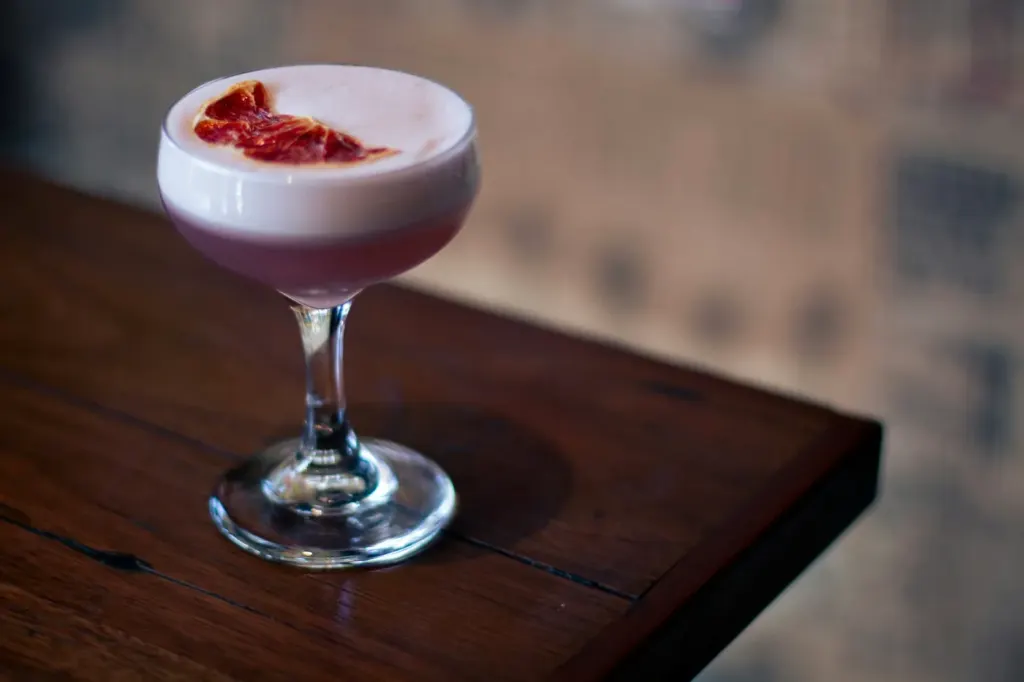
Pink, foamed and faintly ridiculous-looking, the Clover Club spent most of the twentieth century as a punchline — the drink a certain kind of drinker would not be seen holding. It is also older than almost every cocktail people take seriously, and better than its reputation ever allowed.
The short answer
A Clover Club is gin, lemon juice, raspberry syrup and egg white, shaken hard and served up. It is a sour with raspberry doing the sweetening. It dates from around the turn of the twentieth century and is named after a Philadelphia dining club, not after a plant.
The club it was named after
The Clover Club was founded in Philadelphia in 1882 — a gathering of lawyers, journalists, publishers and businessmen who met at the Bellevue-Stratford Hotel to eat well, drink seriously, and subject visiting politicians to comic abuse. It was a men’s dining society of a kind that was common then and has largely vanished since.
The drink took the club’s name. The earliest notice of it points to Michael Killackey, head bartender at the Waldorf-Astoria in New York, around 1901; the Waldorf popularised it and by roughly 1910 it was everywhere. It appears in the standard cocktail books of the era and survived Prohibition, which is more than many of its contemporaries managed.
What killed its reputation was the post-war decades, when a pink drink with foam on it became shorthand for something unserious. It came back with the craft-cocktail revival, and in 2008 Julie Reiner opened a Brooklyn bar named after it, which sealed the rehabilitation.
What goes in it
- Gin. London dry. The botanicals are the point — juniper against raspberry is the whole idea of the drink.
- Lemon juice. Fresh, squeezed to order.
- Raspberry syrup. The historical build. Not liqueur, and not grenadine.
- Egg white. For body and the dense foam cap.
Shaken without ice first to build the foam, then again with ice to chill and dilute, then strained into a chilled coupe. The two-stage shake — the dry shake — is what separates a proper foam from a thin bubbly scum, and we go into why in why cocktails have egg white in them.
Syrup, liqueur, or grenadine
This is where most versions go astray, and it matters more than it sounds.
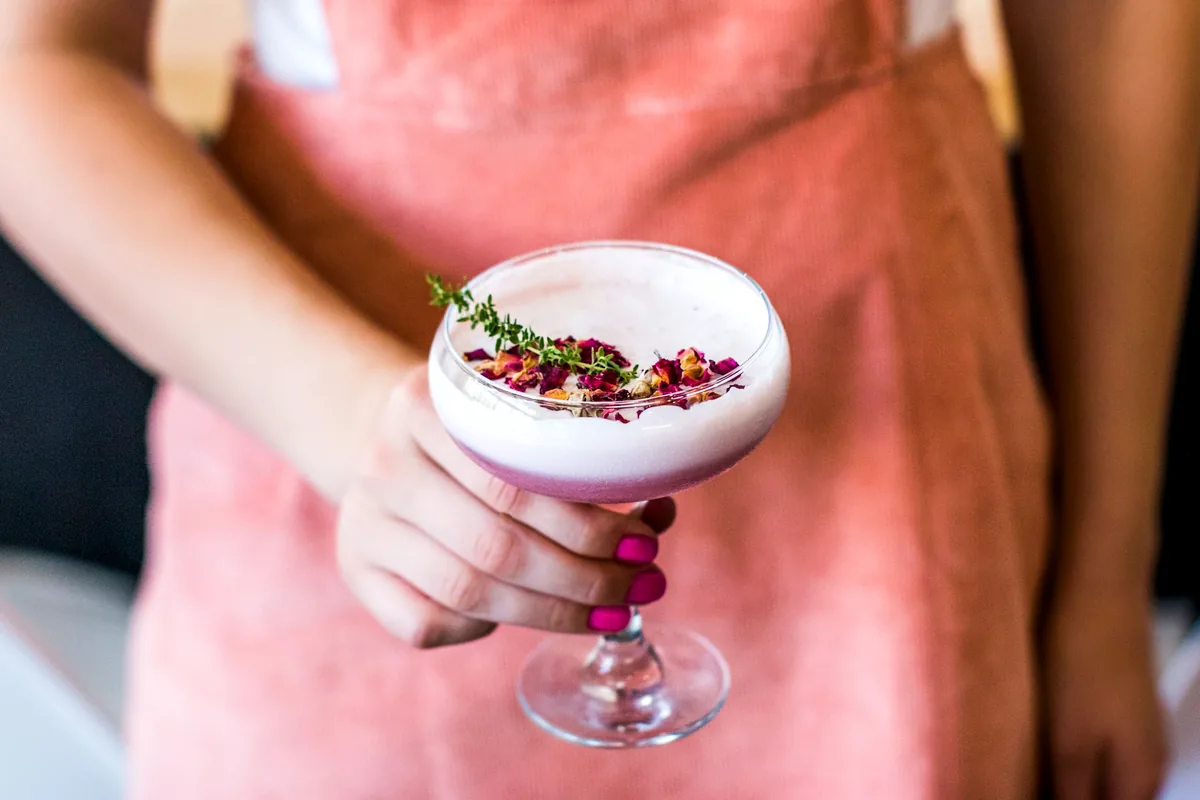
Raspberry syrup is fruit and sugar, no alcohol. It sweetens and colours the drink and lets the gin stay in charge. This is the original.
Raspberry liqueur — framboise, Chambord — brings its own alcohol and a much heavier, sweeter, more confected raspberry. Bars use it because it keeps and syrup does not. The result is recognisably the same drink, sweeter and blunter.
Grenadine is pomegranate, not raspberry, and using it makes a different cocktail. Several twentieth-century recipes call for it, which is how the substitution became respectable. It is not the same drink.
There is also a near-relative worth knowing: add a sprig of mint and it becomes a Clover Leaf, which is where a persistent confusion about the name comes from.
The vodka question
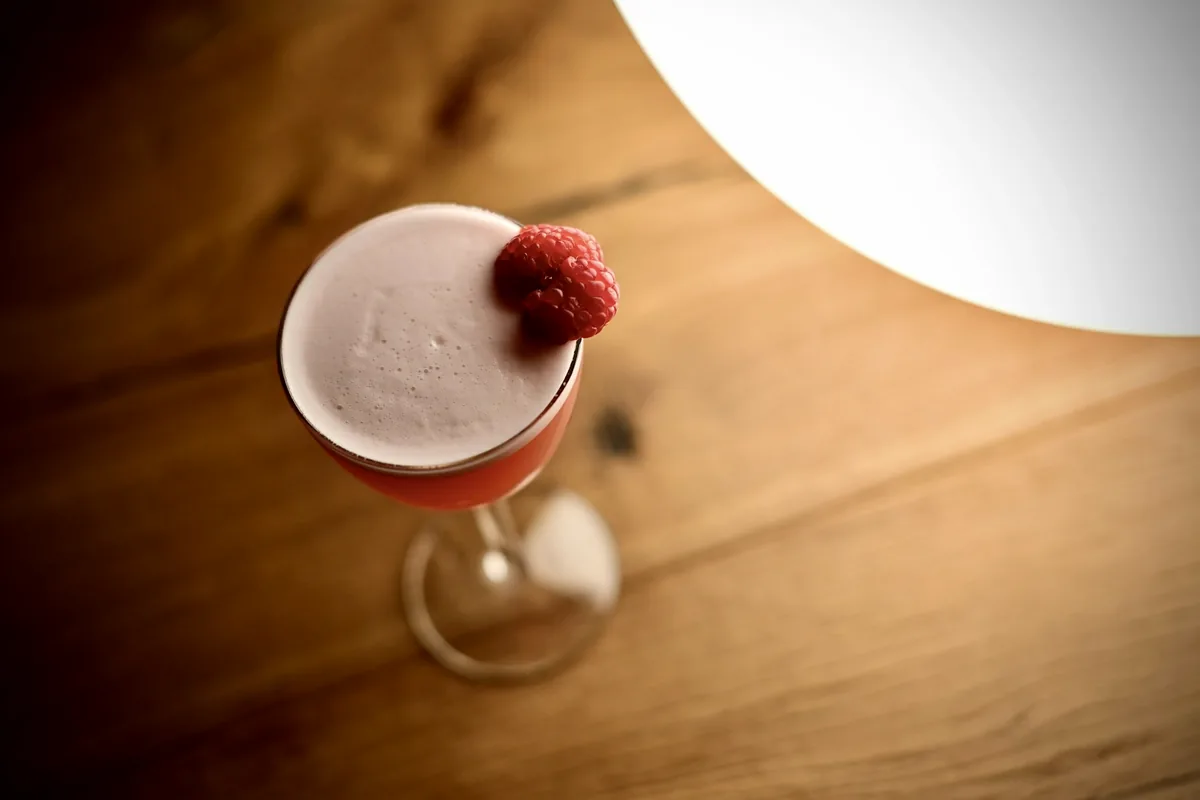
You will meet Clover Clubs made with vodka. They are common, and they are not the drink.
The substitution is easy to understand. Vodka is the default spirit in a great many bars, it is inoffensive, and against raspberry and egg white it disappears entirely — which is precisely the problem. Strip out the gin and you remove the only thing in the glass with any structure. What is left is pink, sweet, foamy and hard to distinguish from a dozen other pink, sweet, foamy drinks.
None of which makes it a bad drink to be served. It is just a different one, and if you have had a vodka Clover Club and found it unremarkable, that is the likely reason.
How to spot a good one
Four things, visible before you taste it.
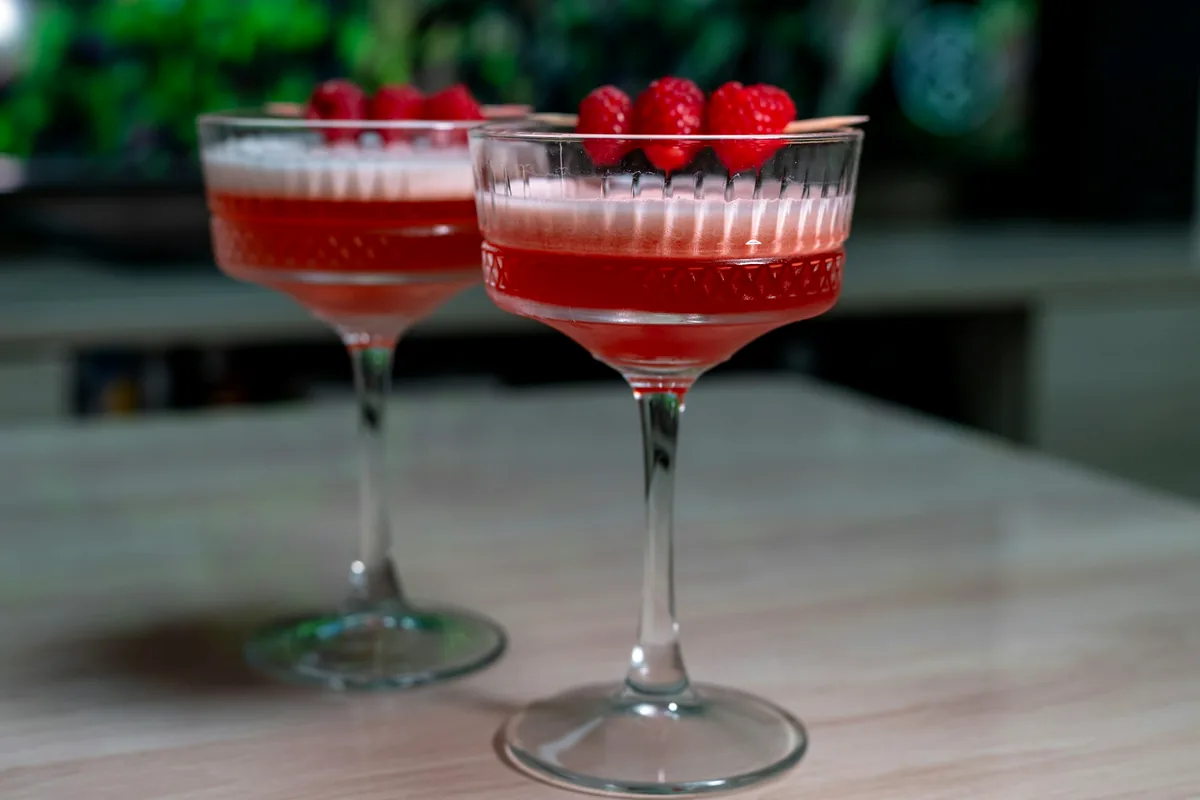
The colour. A proper Clover Club is a soft dusty pink, the colour of raspberry against a spirit. Bright fuchsia means liqueur or colouring; pale beige-pink means not much raspberry at all.
The foam. It should be dense, fine-bubbled and thick enough to hold a garnish, and it should still be there when you reach the bottom. Large bubbles collapsing within a minute mean it was shaken once instead of twice.
The temperature. Served up, in a chilled glass. A Clover Club at room temperature is unpleasant, and the foam goes first.
The smell. You should get juniper before you get fruit. If the gin is not the first thing you notice, either the raspberry is doing too much or there is no gin in it.
What it looked like on a real list
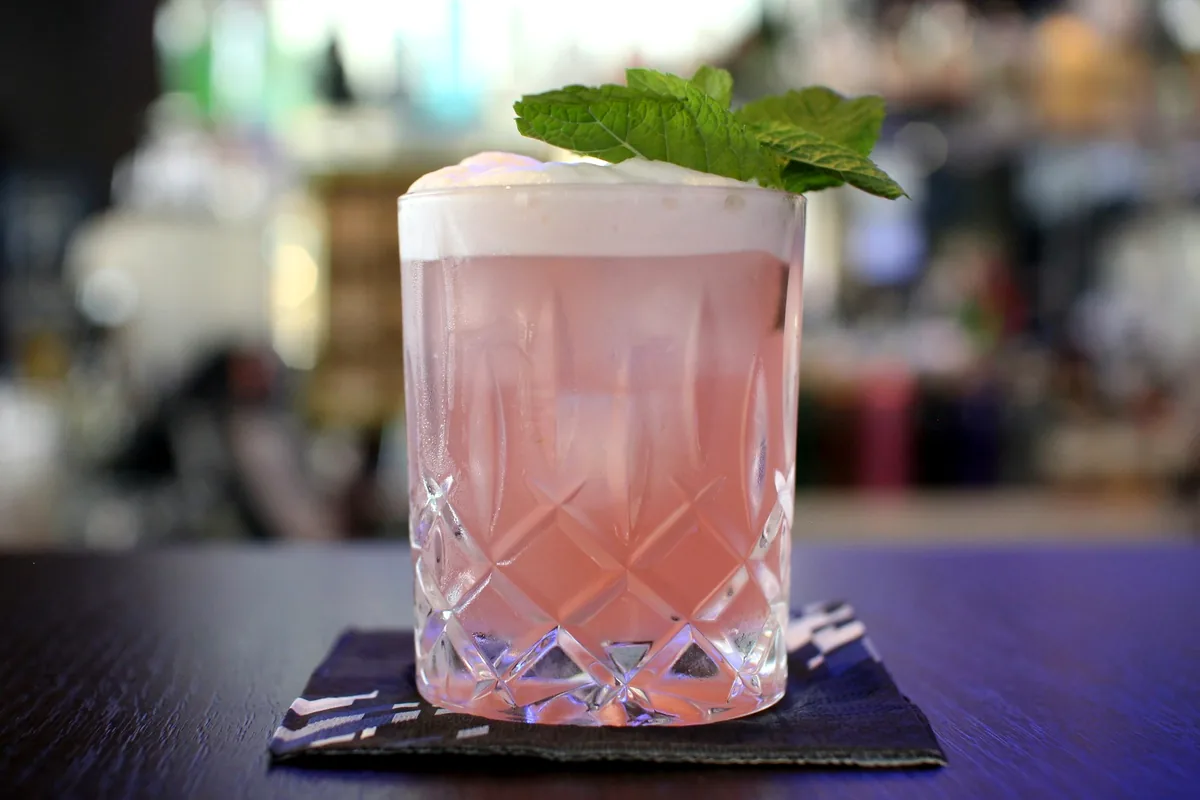
Meyboom Brasserie’s archived cocktail list, captured in February 2023, is a good example of exactly this. Its Clover Club was built with Sobieski vodka, raspberry liqueur, lemon and egg — vodka rather than gin, liqueur rather than syrup, at $12.
That was a coherent choice rather than a careless one. The same list ran Sobieski vodka through five of its sixteen drinks, and a bar that stocks one vodka heavily and uses it across the menu is making an inventory decision that most bars make. It is worth recording accurately, though, because the archived list is a document of what was actually poured, not of what the textbook says.
The archived cocktail list is still on the site, with historical prices.
Frequently asked questions
Is the Clover Club made with gin or vodka?
Gin, historically and in every classic source. Vodka versions are common in bars but the juniper is what the raspberry was meant to play against.
Why is the Clover Club pink?
Raspberry syrup. The colour is a by-product of the sweetener, not an added colouring.
What is the difference between a Clover Club and a Clover Leaf?
A mint sprig. The Clover Leaf is the same drink garnished with mint, and the two names have been swapped around by enough bartenders to confuse the record.
Can I make it without egg white?
Yes, and it is still a gin-and-raspberry sour. You lose the texture and the foam, which is most of what makes the drink distinctive. Aquafaba is a workable substitute.
Is the Clover Club a Prohibition cocktail?
It predates Prohibition by about two decades — it was first recorded around 1901 and Prohibition began in 1920. It survived the period rather than being invented during it.
The short version
Gin, lemon, raspberry syrup, egg white, shaken twice and served up. Named after a Philadelphia dining club in 1882, popularised at the Waldorf, mocked for fifty years and now back. If it arrives pale and tasting of nothing, it was probably made with vodka.
Related: the sour template and why cocktails have egg white in them.