
Most cocktails are named after a person, a place or an ingredient. This one is named after a field gun, on the grounds that drinking it felt like being shot by one.
The short answer
A French 75 is gin, lemon juice and sugar, shaken and strained, then topped with sparkling wine. It takes its name from the Canon de 75 modèle 1897, the French army’s quick-firing 75mm field gun of the First World War — a weapon famous for its rate of fire and its accuracy, and the drink was said to have both.
The gun
The French 75 was the artillery piece of its era. Its hydro-pneumatic recoil system kept the barrel still between shots, so it could be laid once and then fired repeatedly without re-aiming — up to fifteen rounds a minute. It was the backbone of French artillery from 1897 through the whole of the Great War, and it was well enough known that naming a drink after it needed no explanation.
The joke, such as it is, was about potency. A cocktail that pairs a full measure of gin with a full glass of sparkling wine is stronger than either component suggests, and it arrives with no warning of it. Contemporaries described the drink as hitting with remarkable precision.
The recipe that was actually written down
The drink’s paper trail begins in 1922, in two books published the same year: Harry MacElhone’s Harry’s ABC of Mixing Cocktails, where it appears as the “75”, and Robert Vermeire’s Cocktails: How to Mix Them, which credits it to MacElhone.
Here is the awkward part for anyone who thinks of this as a champagne cocktail. The 1922 recipe was not one. As Difford’s Guide sets out in its history of the drink, the early published version combined gin with apple brandy, grenadine and lemon juice, and was served in a cocktail glass with no sparkling wine at all.
The name arrived before the recipe settled. Earlier “Soixante-Quinze” references circulate from around 1915, and nobody has ever established who first put a drink and the gun together.
How it became a champagne cocktail
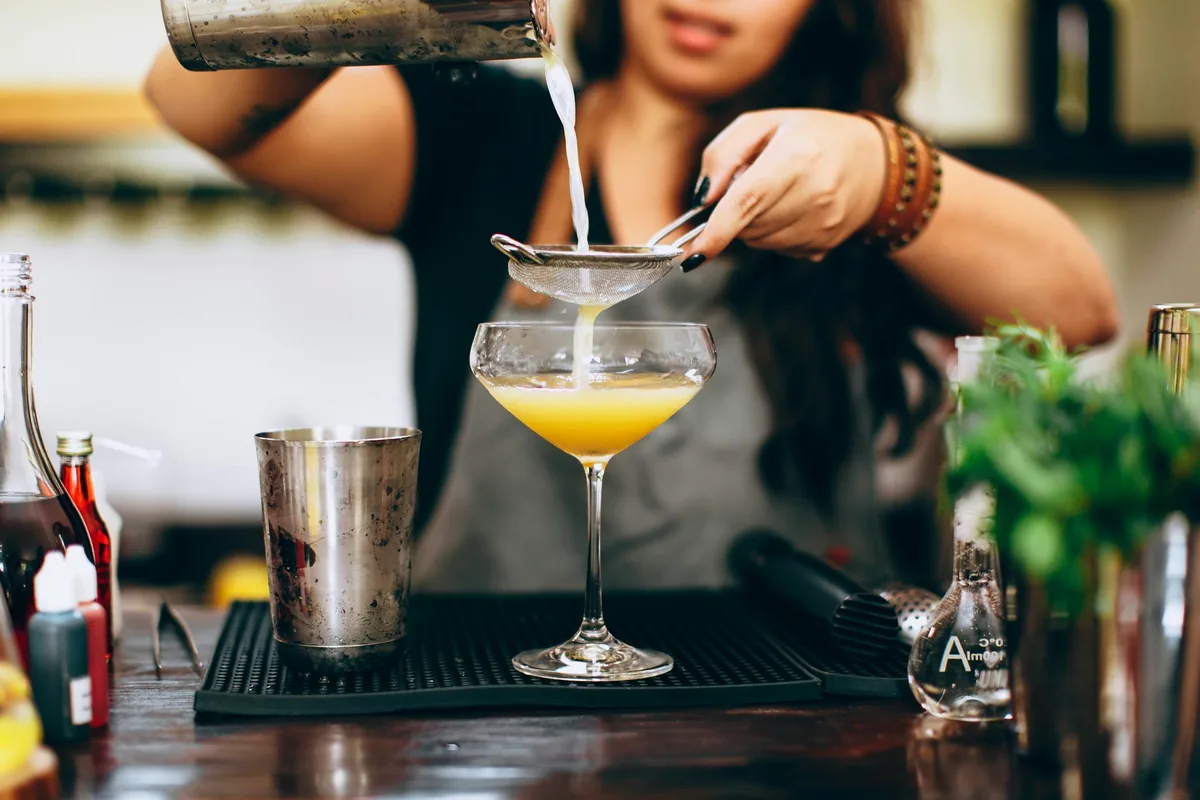
The version everybody now makes — gin, lemon, sugar, topped with champagne — is codified in the Savoy Cocktail Book of 1930 and has held ever since. The apple brandy and grenadine disappeared, the sparkling wine arrived, and the drink moved from the cocktail glass to the flute.
Structurally, what it became is a Tom Collins with sparkling wine standing in for soda water. That is the useful way to think about it: it belongs to the sour family — spirit, citrus, sugar — with carbonation on top. It is not a spritz, and it is not sweet.
There is a persistent claim that the drink should be made with cognac rather than gin. It has a real basis: some New Orleans bars, notably Arnaud’s French 75, serve it that way and have for decades. It is a good drink. It is not the historical recipe, which was gin from the start.
Champagne, cava, or something else
The sparkling wine is the larger part of the finished drink, so it matters more than the gin does — but it does not have to be champagne, and there is a decent argument that it should not be.
What you want is something dry, crisp and made by bottle fermentation, so the bubble is fine and persistent and the wine has enough acid to carry lemon. Cava and crémant both fit and cost a fraction of champagne. Prosecco is the weakest choice here: it is tank-fermented, softer, usually a touch sweeter, and its coarser bubble goes flat in the glass faster. We compared all three in cava vs prosecco vs champagne.
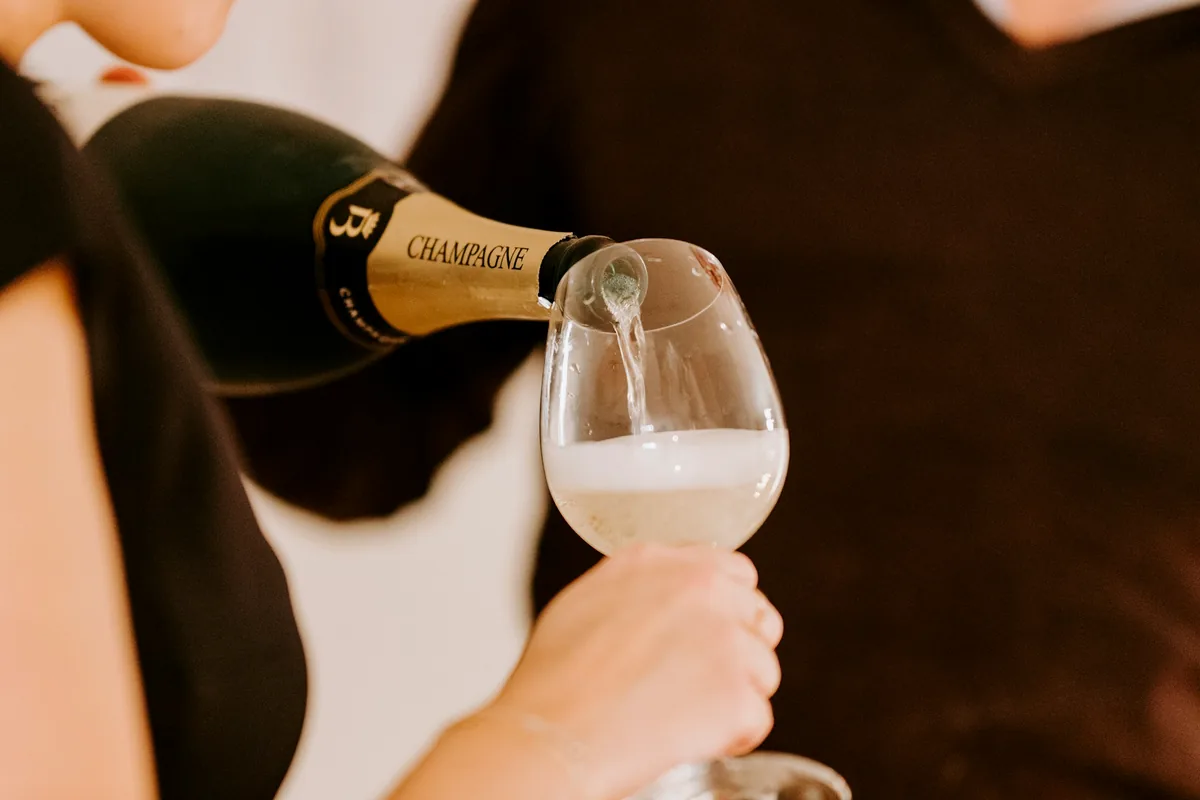
Whatever you use, pour it slowly down the side of the glass. Sparkling wine dropped straight in loses most of its carbonation on contact, which is the commonest way this drink is ruined.
Flute or coupe
The flute is standard and has been since the 1930s. It preserves carbonation, keeps the drink cold and looks the part.
A coupe holds aroma better and drinks more like the sour the cocktail actually is, at the cost of going flat sooner. Neither is wrong. If you are drinking it quickly, use a coupe; if you are nursing it, use the flute.
One thing worth doing either way: chill the glass. A room-temperature flute takes the edge off the wine within a minute.
The other seventy-fives
The template — spirit, lemon, sugar, sparkling wine — survives a change of base spirit, and bartenders have swapped it out often enough that several variants have stuck.
- French 76 — vodka in place of gin. Cleaner and blanker; the wine does more of the talking.
- French 95 — bourbon, and usually a little orange juice. Rounder and sweeter.
- French 125 — cognac, which is the New Orleans build under a name that admits it is a variation.
- Diamond Fizz — a gin fizz topped with sparkling wine rather than soda. Effectively the same drink arrived at from the other direction.
The numbering is a joke that ran away from itself: only the 75 refers to an actual gun.
What it looked like on a real list
Meyboom Brasserie’s archived cocktail list, captured in February 2023, built its French 75 with Gordon’s gin, lemon and Freixenet cava — the cava rather than champagne, which is both the cheaper and, for this drink, the defensible choice. It sat at the upper end of a list that ran from a $10 Cuba Libre to a $15 Ramos Gin Fizz.
The same cava turned up in two other drinks on that list, an Aperol Spritz and a Rasbini made with Lindemans Framboise — a lambic-and-cava combination that is a genuinely Belgian idea. The archived cocktail list is still on the site, with its historical prices.
Frequently asked questions
Is a French 75 made with gin or cognac?
Gin, historically and in the standard recipe. The cognac version is a New Orleans variation with a long local pedigree, not the original.
Why is it called the French 75?
After the French 75mm field gun of the First World War, a weapon known for firing fast and accurately. The drink was held to do the same.
Can I use prosecco in a French 75?
You can, but it is the weakest of the options. Prosecco is tank-fermented, softer and slightly sweeter, and its bubble does not last. Cava or crémant give you a closer result to champagne for less money.
How strong is a French 75?
Stronger than it tastes. A full measure of gin plus four or five ounces of wine at 12% puts it well above a glass of wine and roughly in line with a spirit-forward cocktail. That was the joke in the name.
What is the difference between a French 75 and a Tom Collins?
Sparkling wine instead of soda water. Everything else — gin, lemon, sugar — is the same, which is why the French 75 tastes like a sour rather than a spritz.
The short version
Gin, lemon and sugar, shaken and strained, topped slowly with something dry and bottle-fermented. Chill the glass, do not use prosecco if you can help it, and remember that a drink named after an artillery piece was named that way for a reason.
Related: cava vs prosecco vs champagne and aperitif vs digestif.