
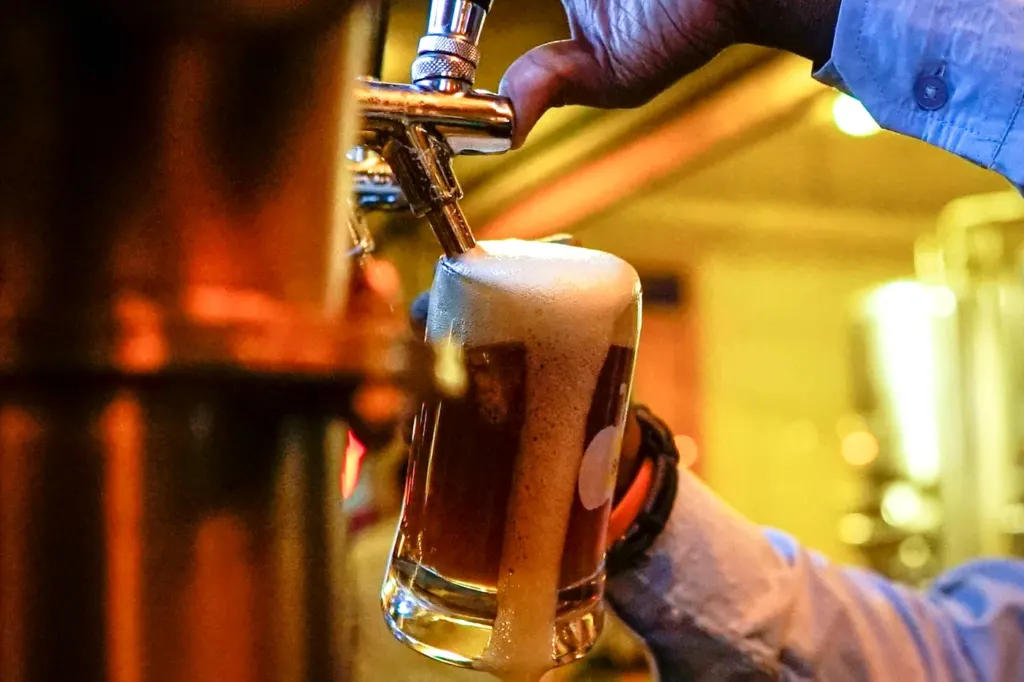
Ask the internet whether draught beats bottled and you will get a confident yes. Look at who is answering and a pattern appears: keg manufacturers, draught-system installers, and companies selling home tap machines. It is worth being suspicious of a consensus assembled entirely from people who sell kegs.
The short answer
Draught is usually fresher, always protected from light, and served in a glass rather than drunk from a bottle. Bottled beer can be conditioned in its packaging, carbonated higher, aged deliberately, and is never at the mercy of a dirty line. For a mass-market lager, draught generally wins. For a bottle-conditioned Belgian ale, the bottle is not a compromise — it is where the beer was designed to finish.
What draught genuinely does better
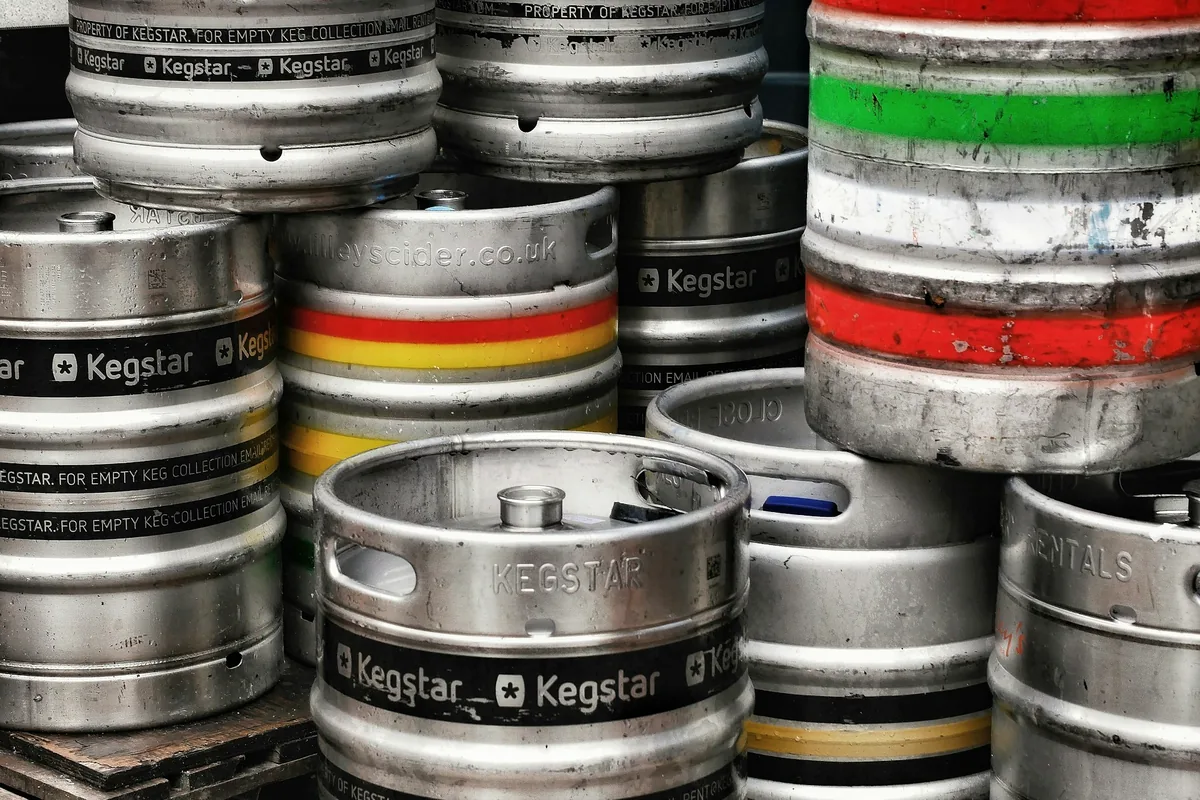
Light never reaches it. A steel keg is opaque. This is the one absolute advantage draught has, and it is not small — light damage is the fastest way to ruin beer, and it cannot happen inside a keg.
Turnover. A keg on a busy bar empties in days. A bottle may sit in a warehouse, a delivery van, a stockroom and a fridge for months before anyone opens it. Freshness is mostly a logistics question, and kegs move faster.
It arrives in a glass. Much of what people report as draught tasting better is simply that draught is never drunk from the neck of a bottle. Aroma is most of flavour, and a bottle delivers almost none of it. Pour the bottle into the right glass and a good part of the gap closes on its own.
What bottles do that kegs cannot
Refermentation. Many Belgian ales are bottle-conditioned: a dose of yeast and sugar goes in at packaging and the beer ferments a second time inside the glass. That produces the carbonation, scavenges oxygen, and lets the beer keep developing. You cannot do this in a keg that is about to be pushed with gas and emptied in a week. For these beers the bottle is not the lesser format — it is the format.
Carbonation. Belgian styles are carbonated far higher than a standard draught system is set up to deliver. A tripel wants a dense, mousse-like condition that a bar’s gas line and 20-foot run of tubing will flatten.
Age. A keg has a shelf life measured in weeks. A strong bottle-conditioned ale can be kept for years deliberately, which is a separate subject we cover in which beers are actually worth cellaring.
Consistency. A bottle is sealed at the brewery and nothing happens to it afterwards. A draught line passes through a coupler, tubing, a cooler and a tap, all of which need cleaning on a fortnightly schedule that plenty of venues do not keep.
The line is the variable nobody mentions
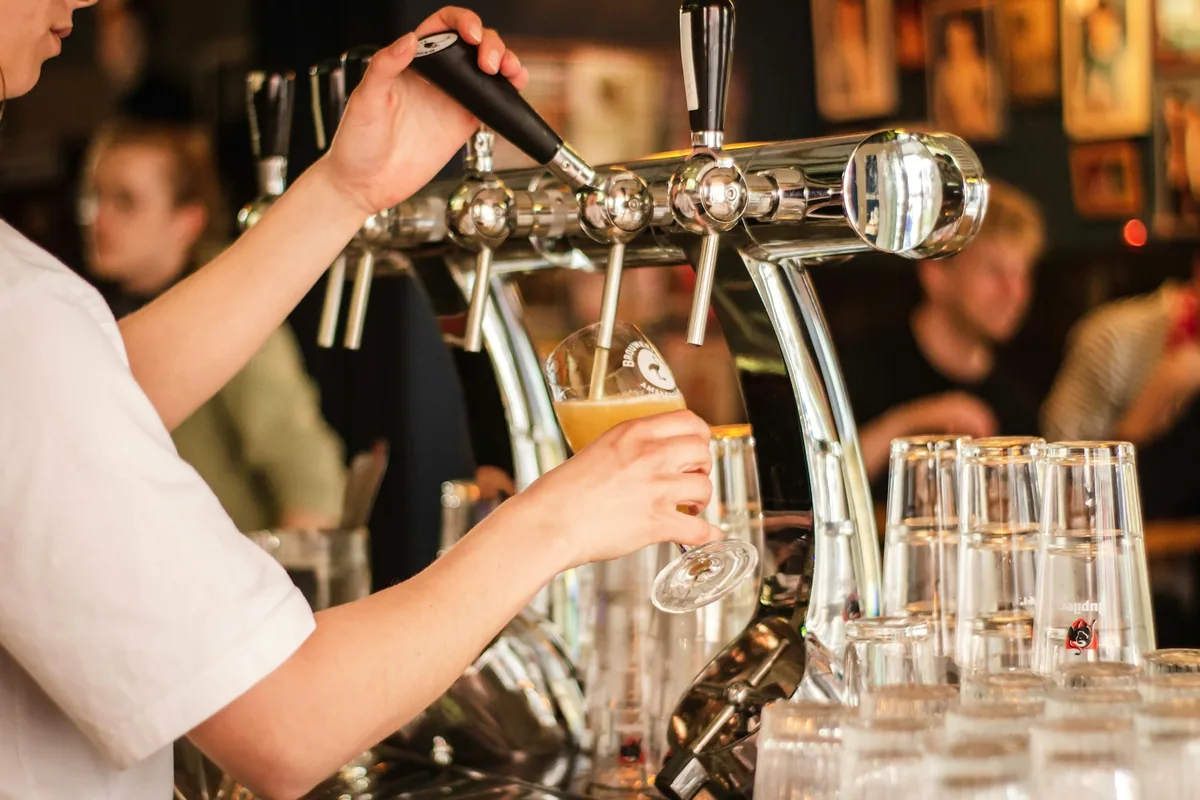
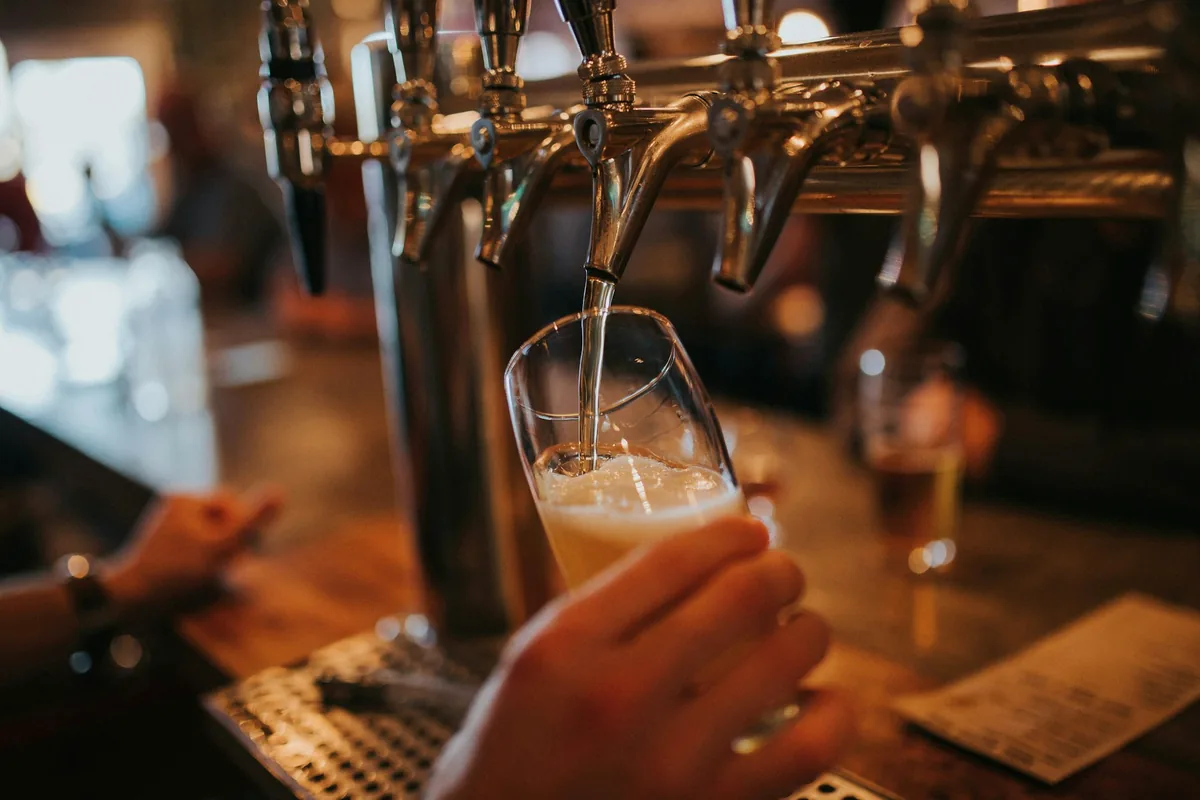
This is the part the draught-equipment blogs skip. Beer lines grow biofilm — yeast, bacteria and beer stone — and a neglected line will make excellent beer taste sour, buttery or vinegary before it reaches your glass.
A well-run bar cleans its lines every one to two weeks. A badly run one does not, and no amount of freshness advantage survives it. A sealed bottle has no such failure mode, which is why an unfamiliar venue with a suspiciously long tap list is often a better bet by the bottle.
And cask, which is neither
British cask ale is a third thing, and it complicates the tidy two-way comparison. Cask beer is unfiltered, unpasteurised and still fermenting in the container it is served from, pushed by nothing but gravity or a hand pump. It is bottle conditioning at the scale of a firkin.
That makes it the freshest beer in the building and also the most fragile: once broached, a cask has two or three days before it oxidises. It is served cooler than room temperature and far less carbonated than either keg or bottle, which is why visitors often mistake it for flat and warm rather than for what it is.
Belgium does not really do cask, but the principle matters here: the format that keeps the yeast alive is the one that keeps the beer developing, whether that is a firkin in Yorkshire or a corked bottle in Flanders.
Cans, briefly
Cans have quietly won the technical argument. They block light completely, seal better against oxygen than a crown cap, chill faster and weigh less. The old objection — a metallic taste — was solved decades ago by polymer linings; what people taste is the can itself against their lip, which disappears the moment the beer goes into a glass.
The one thing a can cannot easily do is hold a bottle-conditioned beer for years, which is why Belgium has been slow to adopt them.
So which should you order?
| Draught | Bottle | Can | |
|---|---|---|---|
| Light protection | Total | Partial (brown) to poor (green) | Total |
| Typical freshness | Best | Variable | Variable |
| Can be bottle-conditioned | No | Yes | Rarely |
| Maximum carbonation | Limited by the system | High | High |
| Suitable for ageing | No | Yes, if conditioned | Not usually |
| Main failure mode | Dirty lines | Light and time | Time |
The honest rule: order draught when the beer is meant to be drunk fresh and the bar looks like it cleans its lines. Order the bottle when the beer is strong, Belgian, bottle-conditioned, or when the tap list looks neglected.
What that looked like on a real list
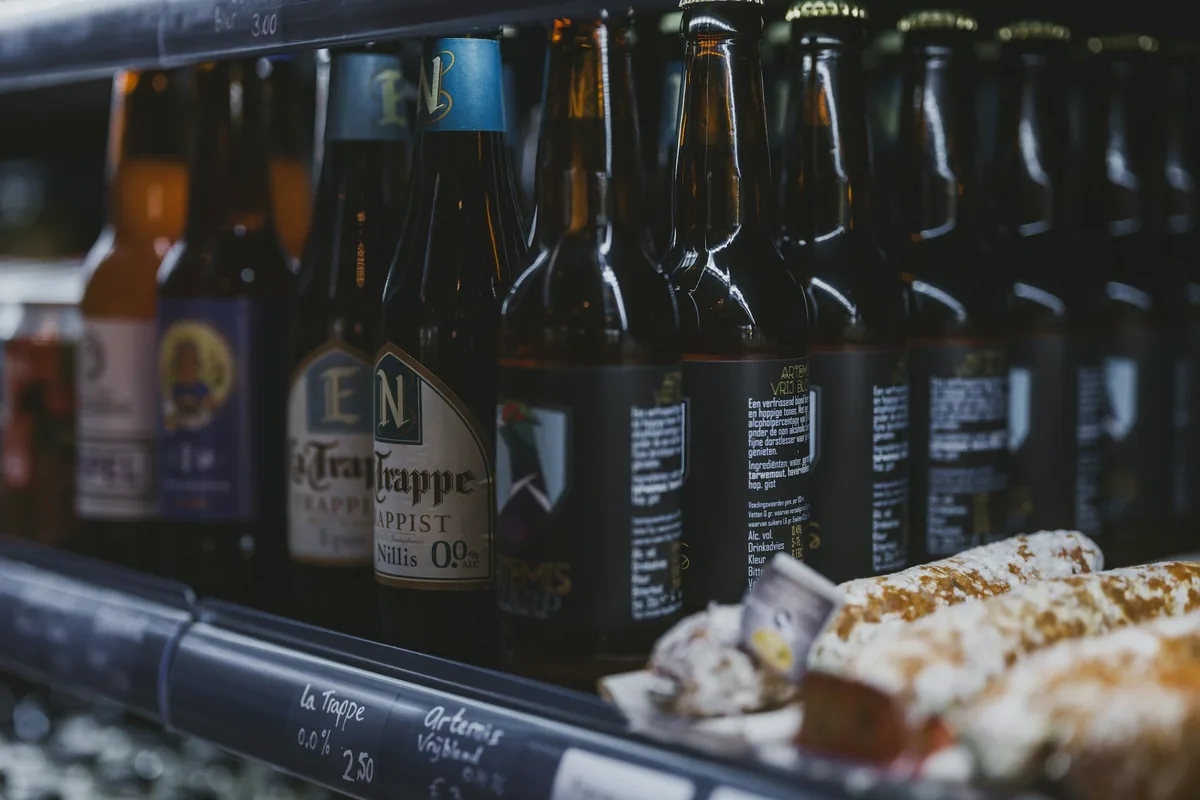
Meyboom Brasserie’s archived beer list, captured in September 2023, carried several beers in both formats — Westmalle Tripel appeared on draught, in the bottle and as a large-format bottle; Duvel and Stella Artois were on both the draught and bottle lists.
The interesting detail is the specification. Duvel on draught was listed at 8.5% and 33 IBU, and the bottled Duvel at the same figures; but the large-format section carried a barrel-aged Duvel at 11.5% that exists only in a bottle, because you cannot barrel-age into a keg and sell it by the pour. The archived beer list is still on the site, with historical prices.
Frequently asked questions
Is draught beer stronger than bottled?
No. The same beer is the same strength in either format. The persistent belief that draught is stronger comes from serving size — a pint of draught is simply more liquid than a 330ml bottle.
Why does draught beer taste better?
Usually because it is fresher, has never been light-struck, and is served in a glass where you can smell it. Pour a bottle into a proper glass and most of the difference disappears.
Does bottled beer go flat faster?
An opened one does. An unopened bottle holds its carbonation for as long as the seal lasts, and a bottle-conditioned beer actually generates its own.
Are cans worse than bottles?
Technically the opposite. Cans block all light and seal better. The metallic taste people report comes from drinking directly from the can, not from the beer.
How can I tell if a bar’s beer lines are dirty?
Persistent sourness, a buttery or butterscotch note, or a head that collapses immediately across several different beers. One bad pint is bad luck; the same fault in two different taps is the line.
The short version
Draught wins on freshness and light. Bottles win on conditioning, carbonation and age. Neither is better in the abstract, and anyone telling you otherwise is usually selling one of them.
Related: why Belgian beer is so strong and why Belgian beers each get their own glass.