
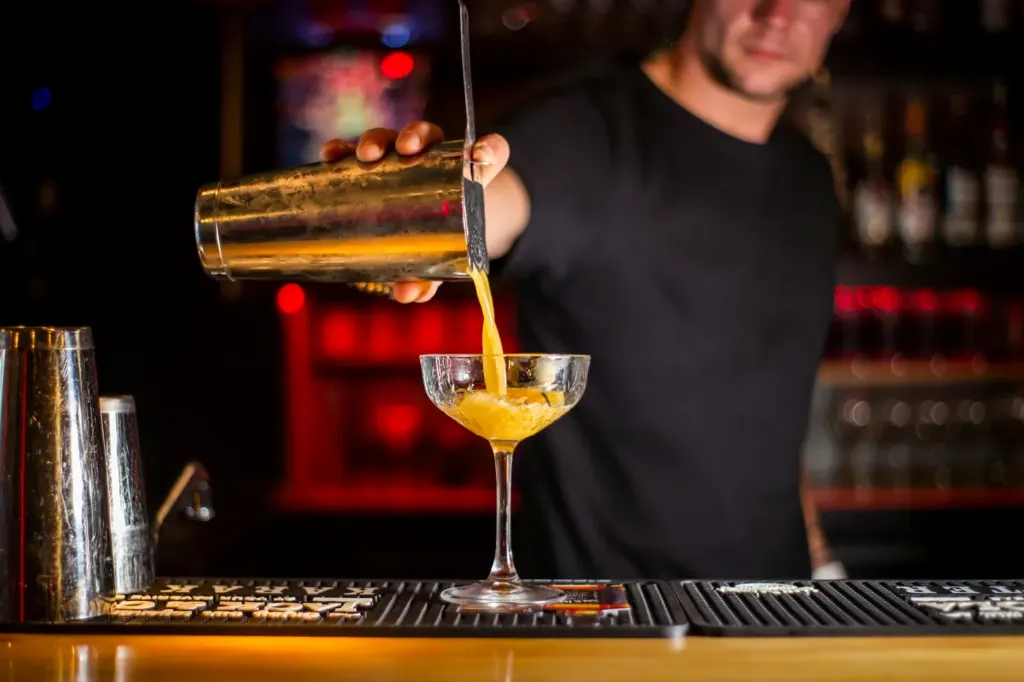
There is one cocktail that bars quietly hope you will not order, and this is it. Not because it is difficult to get right — because it is exhausting.
The short answer
A Ramos Gin Fizz is gin, lemon and lime juice, sugar, cream, egg white and orange flower water, shaken for an extremely long time and then topped with soda. Done properly it stands up out of the glass in a soft white column, like a savoury meringue.
The famous twelve-minute shake is real as an instruction and exaggerated as a requirement. The texture is the entire point of the drink, and it takes far longer to build than any other cocktail on a list.
Where it comes from
Henry C. Ramos created it in 1888 at the Imperial Cabinet Saloon in New Orleans, where it was first called the New Orleans Fizz. It took his name because customers kept asking for it that way.
Demand became a staffing problem. Ramos employed a line of dedicated “shaker boys” who did nothing else, passing a shaker down the row so no one arm had to finish it. The often-repeated figure is that during Mardi Gras in 1915 he had thirty-five of them working and still could not keep up.
When Prohibition closed his bar in 1920, Ramos initially refused to publish the recipe. It got out regardless, and the drink survived — PUNCH has a good account of both the history and the modern attempts to shorten the work.
Is the twelve minutes real?
As a historical instruction, yes. As a physical requirement, no.
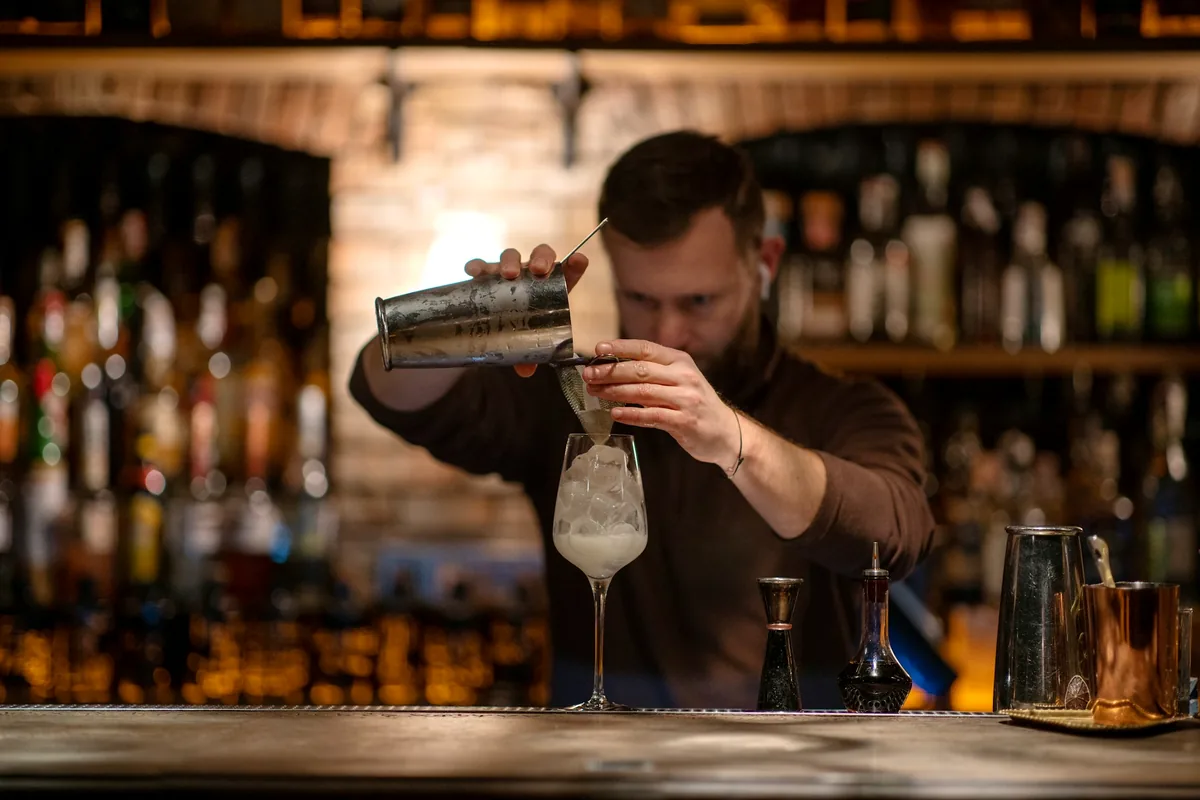
What the shaking has to achieve is an emulsion — fat from the cream and protein from the egg white, beaten together with air into a stable foam that will not separate. That takes sustained, hard agitation, but most bartenders find the texture is essentially there somewhere around two to five minutes, and further shaking adds diminishing returns.
The twelve-minute figure probably reflects nineteenth-century conditions: less efficient shakers, no controlled ice, and a house style that treated the drink as a showpiece. Thirty-five men shaking in a row is also, plainly, good theatre.
The dry shake matters more than the duration
The order of operations does more for the texture than raw minutes. Shake everything without ice first, so the proteins and fat emulsify at a workable temperature, then add ice and shake again to chill. Chilling too early stiffens the fat and the foam never fully forms.
The same principle governs every egg white drink — covered in more detail in why cocktails have egg white in them.
The modern shortcuts
Bartenders have spent a century trying to get the texture without the arm work, with mixed results.
- A spring in the shaker. The coil off a Hawthorne strainer, dropped into a dry shake, cuts through the mixture and emulsifies it much faster. The most widely used trick, and the least destructive.
- An immersion blender or milk frother. Builds the foam in seconds. Purists object that the result is fluffier and less dense than a shaken one, and they have a point.
- Batching. Pre-mixing everything except the soda, refrigerated, so only the shake remains at service. This is how most bars that keep it on the menu survive it.
- The two-minute version. A hard dry shake, a short shake with ice, and an acceptance that the last ten minutes were mostly ceremony.
None of them is cheating exactly. The drink was designed around the labour available in 1888, and thirty-five shaker boys are not.
The soda trick
The last step is the one that produces the column, and it is counter-intuitive.
Strain the shaken drink into a chilled tall glass with no ice, let it settle for a minute, then pour a small amount of soda water down the inside of the glass — or, better, into the empty shaker and then in. The carbonation lifts the foam and pushes it above the rim, where it sets and holds.
Rushing this is why home attempts collapse. The rest is a well-made fizz; the standing column is the party trick.
What makes it different from other fizzes
| Ramos gin fizz | Gin fizz | Silver fizz | |
|---|---|---|---|
| Gin | Yes | Yes | Yes |
| Citrus | Lemon and lime | Lemon | Lemon |
| Egg white | Yes | No | Yes |
| Cream | Yes | No | No |
| Orange flower water | Yes | No | No |
| Soda | A splash, at the end | Topped | Topped |
| Shake time | Minutes | Seconds | Seconds |
On a real list
Meyboom Brasserie carried one, which is a slightly surprising thing to find on a Belgian brasserie’s cocktail list — it is a labour-intensive drink for a bar whose main business was beer. The archived spec lists Gordon’s gin, lime, simple syrup, cream and egg.
It sat alongside three other egg drinks on the same list: the Clover Club, the Whiskey Sour and the espresso martini that the Dallas Observer named the best in the city, per the archived press page.
Why bars quietly hate it
It is not snobbery. A Ramos occupies one pair of hands for several minutes at a station that is expected to produce a drink every thirty seconds. On a busy Friday, one order can put a bartender four drinks behind.
That is why it tends to appear on menus at quiet cocktail bars and disappear from busy ones, and why ordering a round of them is the sort of thing that gets remembered.
Frequently asked questions
How long do you really need to shake a Ramos Gin Fizz?
Two to five minutes of hard shaking, split between a dry shake and a shake with ice, gets you most of the way. Twelve minutes is tradition rather than necessity.
What is orange flower water?
A distillate of bitter orange blossom, floral and quite perfumed. It is used in tiny quantities — a few drops — and too much makes the drink taste of soap.
Why does my Ramos Gin Fizz not stand up?
Usually one of three things: not enough shaking, adding the soda too early, or a glass that was not properly chilled. The foam needs to set before the soda lifts it.
Can you make it without cream?
You would have a gin fizz, which is a fine drink, but the cream is doing half the emulsion work. Without it the texture is much thinner.
Is it a brunch drink?
It has that reputation in New Orleans, helped by being creamy and citrusy. Historically it was drunk at all hours.
Worth knowing
Order one at a quiet bar rather than a busy one, and do not order it as a round of six. It is the one drink where the polite thing is to consider the person making it.
For the technique underneath it, see why cocktails have egg white in them. For the other New Orleans classic on the same list, the Sazerac.