
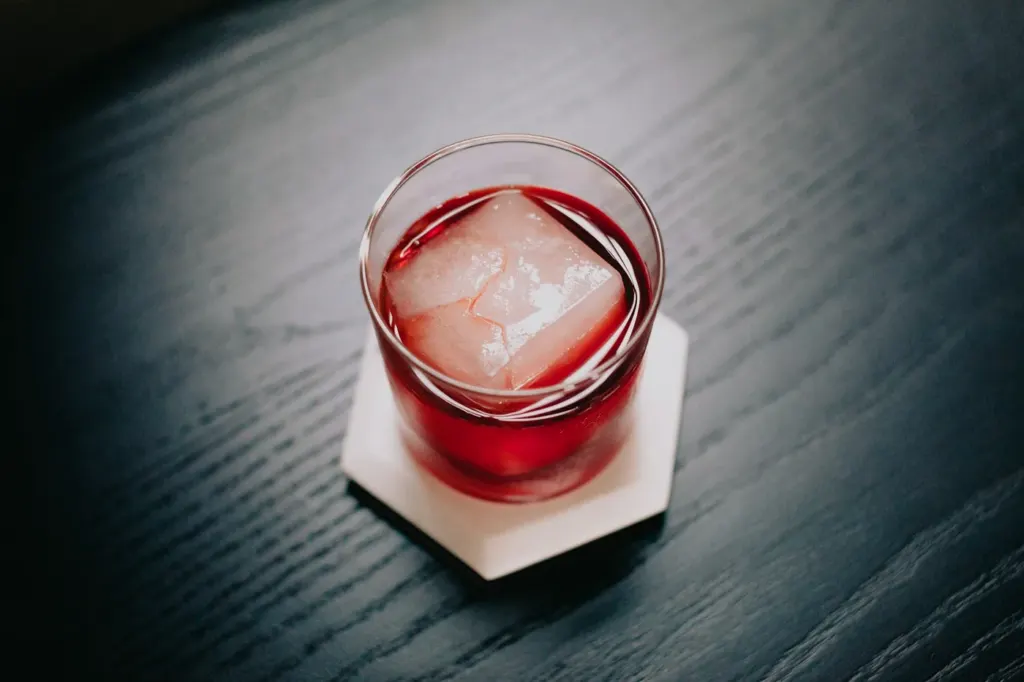
Most classic cocktails are a list of ingredients. The Sazerac is a list of ingredients plus a piece of technique, and the technique is the part people skip.
The short answer
A Sazerac is rye whiskey, sugar and Peychaud’s bitters, stirred with ice and strained into a chilled rocks glass that has been rinsed with absinthe, then finished with a lemon peel. The peel is expressed over the surface and traditionally discarded rather than dropped in.
Crucially it is served without ice in the glass — the ice does its work during the stir and stays behind.
The rinse is the whole drink
An absinthe rinse means a small amount of absinthe swirled around the inside of a chilled glass and then tipped out. What is left is a film, and an enormous amount of aroma.
This is a deliberate technique rather than a shortcut. Absinthe is powerful enough that a measured quantity would dominate everything; a rinse puts the anise in your nose without putting it in the drink. Every sip arrives through it.
Get this wrong — leave the absinthe in, or skip it — and you have a rye old fashioned with unusual bitters. It is a perfectly nice drink and it is not a Sazerac.
How it is built
The order matters more here than in most stirred drinks, because two glasses are involved.
- Chill a rocks glass — ice and water in it while you work, or straight from the freezer.
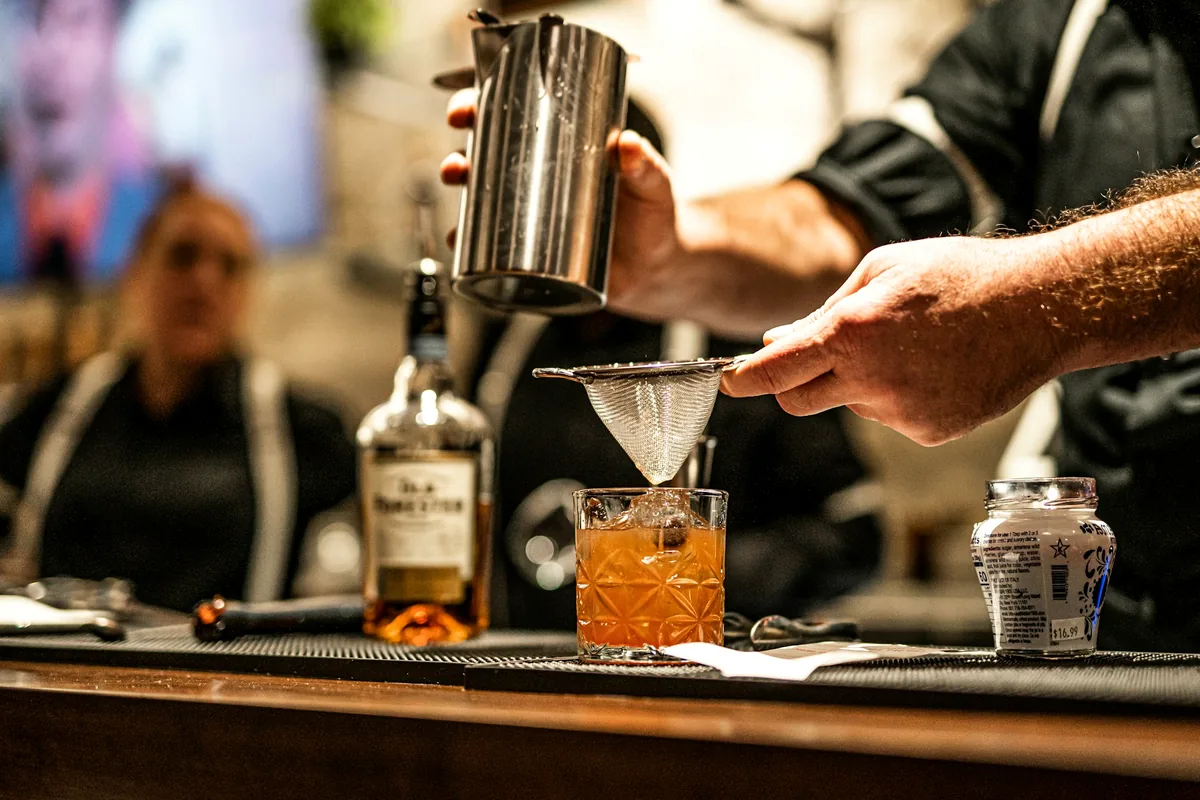
- Stir the drink in a separate glass: rye, sugar and Peychaud’s bitters, over ice, until properly cold and slightly diluted.
- Empty the chilled glass and rinse it with absinthe — a small pour swirled around the inside, then tipped out.
- Strain the drink into the rinsed glass. No ice goes in.
- Express a lemon peel over the surface, skin side down, and discard it.
The two-glass method is what people skip, and it is the difference between a rinse and a measured ingredient.
Where the cognac went
The drink began as a brandy cocktail. Its name comes from Sazerac-de-Forge et Fils, a French cognac that was the original base, sold in a New Orleans coffee house in the 1850s.
Two things changed it. Phylloxera devastated French vineyards from the 1860s, and cognac supply collapsed. At the same time American rye was cheap and plentiful. The substitution stuck, and by the 1870s the absinthe rinse had been added too.
The city has since made it official — Louisiana named the Sazerac the official cocktail of New Orleans in 2008, and the city’s own account of the drink runs through the same history.
About “America’s first cocktail”
You will see this claim everywhere, usually attached to a story that Antoine Peychaud served brandy and bitters in a coquetier, a French egg cup, and that the word “cocktail” is a corruption of it.
It is a good story and it is almost certainly not true. The word “cocktail” appears in print in America in 1806, decades before Peychaud’s shop. Treat it as civic folklore — New Orleans is entitled to some.
How it compares to its neighbours
| Sazerac | Old fashioned | Manhattan | |
|---|---|---|---|
| Base | Rye whiskey | Bourbon or rye | Rye whiskey |
| Sweetener | Sugar cube or syrup | Sugar cube or syrup | Sweet vermouth |
| Bitters | Peychaud’s | Aromatic | Aromatic |
| Extra | Absinthe rinse | None | None |
| Ice in the glass | No | Yes | No |
| Garnish | Lemon peel, expressed and discarded | Orange peel, often a cherry | Cherry |
What it looked like on a real list
Meyboom Brasserie’s archived cocktail list built its Sazerac with Sazerac rye whiskey, Herbsaint absinthe and Peychaud’s bitters — which is the orthodox spec, right down to the Herbsaint.
That last choice is a small piece of history in itself. Herbsaint was created in New Orleans in 1934 as a legal substitute while absinthe was still banned in the United States, and it became the standard rinse. Absinthe was relegalised in 2007 and plenty of bars still reach for Herbsaint, because that is what the drink has tasted like for most of a century.
Why it is so small
A Sazerac arrives looking meagre if you are expecting a rocks glass with ice in it. The measure is deliberate: with no ice in the glass, nothing is going to dilute further, so the drink is finished at the moment it is poured.
That also puts a clock on it. A stirred drink served without ice warms steadily, and the absinthe aroma that the rinse provides fades as it does. Fifteen minutes is about the useful life of one.
Drinking one
- Expect it strong. There is no ice in the glass and no long mixer. It is essentially chilled, lightly diluted, aromatised rye.
- Smell it first. The rinse is doing most of the work and it fades as the drink warms.
- Drink it slowly. It is small for a reason.
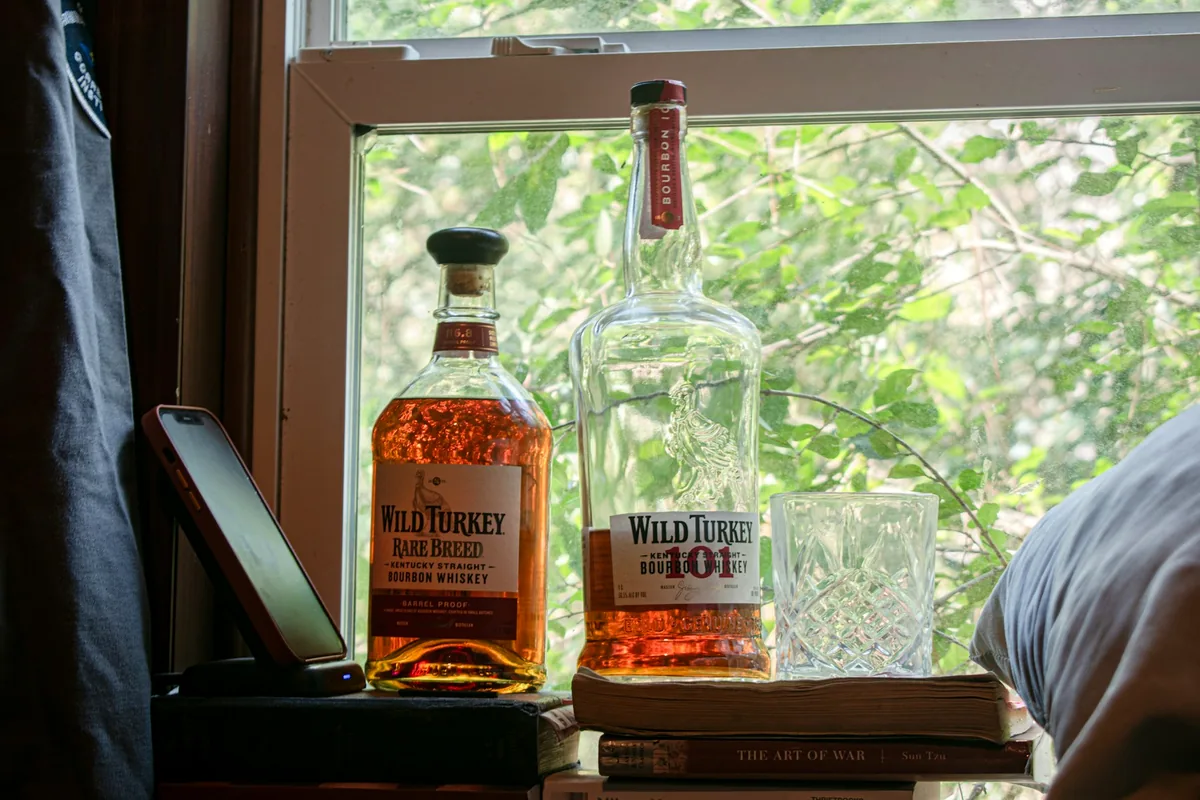
- Rye, not bourbon. Bourbon’s sweetness softens the drink into something rounder and less interesting. The spice of rye is what the bitters are pushing against.
Frequently asked questions
Is a Sazerac served with ice?
No. It is stirred over ice and strained into a chilled glass, then served neat. Ice in the glass is a common error.
What is the difference between a Sazerac and an old fashioned?
The bitters and the rinse. An old fashioned uses aromatic bitters and is served over ice; a Sazerac uses Peychaud’s, adds an absinthe rinse, and is served without ice.
How strong is a Sazerac?
Strong. It is essentially chilled, lightly diluted rye — no ice in the glass, no mixer, and a measure of spirit close to a double. That is why it comes in a small glass and why it is worth taking slowly.
Can you use bourbon in a Sazerac?
You can, and some bars do. Rye is traditional and the spice suits the drink better — bourbon makes it noticeably sweeter.
What can I use instead of absinthe for the rinse?
Herbsaint, which is what the drink was made with for most of the twentieth century. Pastis works at a push.
Why is the lemon peel discarded?
Because the oils are the point, not the fruit. The peel is squeezed over the surface to spray the oil across it; leaving the peel in adds bitterness from the pith over time.
Worth knowing
If you order one and it arrives over ice with the peel dropped in, it will still taste good. But the version with the rinse, no ice and the expressed peel is a genuinely different drink, and it is the one worth seeking out.
For the bottle that makes the rinse work, see what absinthe actually is; for the one that makes it a Sazerac rather than an old fashioned, cocktail bitters explained. Meyboom’s spec is on the archived cocktail menu.