
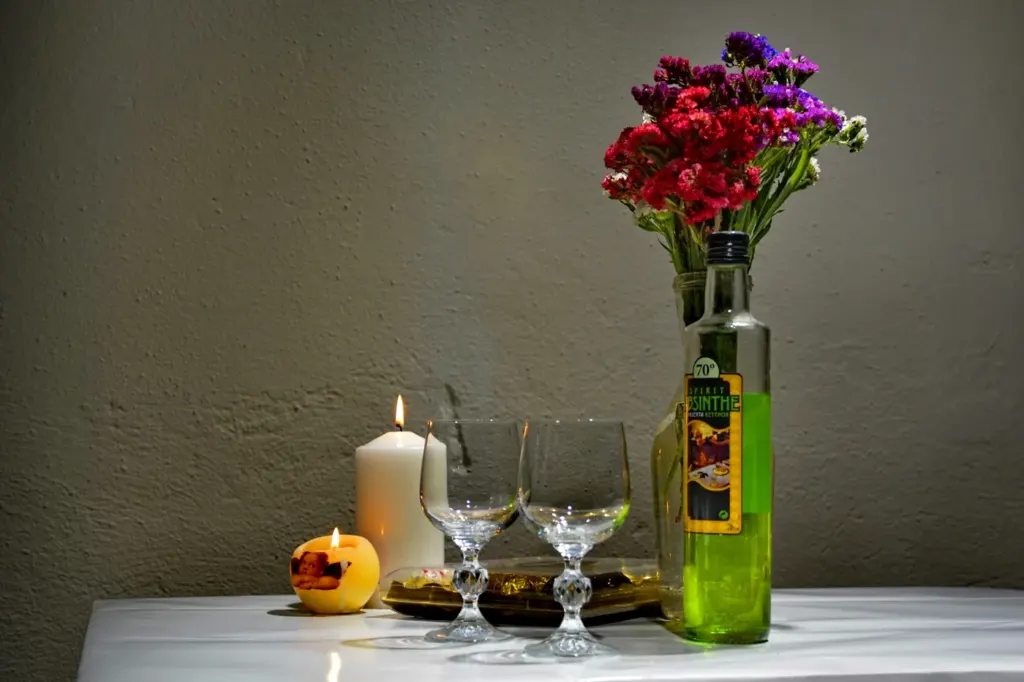
No spirit carries more folklore per bottle. Absinthe is supposed to make you see things, drive you mad, and have been banned for exactly those reasons. Almost none of that survives contact with the evidence, and the real story is more interesting anyway.
The short answer
Absinthe is a very high-strength distilled spirit — commonly 45–74% ABV — flavoured with grand wormwood, green anise and sweet fennel. It is not a liqueur, because it is not sweetened, and it is not meant to be drunk neat.
It is not a hallucinogen. The compound blamed for that, thujone, is present in quantities far too small to have any such effect. What absinthe does to you is what a spirit at twice the strength of whisky does to you.
Where the myth came from
Absinthe was enormously popular in nineteenth-century France — cheap, strong, and drunk in volume at a time when wine was scarce after phylloxera devastated the vineyards. A backlash followed, driven by a temperance movement and a wine industry that had every commercial reason to see it gone.
The campaign found its villain in thujone, and its case in a set of experiments that fed animals near-lethal doses of pure wormwood oil. A widely reported murder in Switzerland in 1905, committed by a man who had drunk absinthe along with a great deal of wine and brandy, sealed it. Bans followed across most of Europe and the United States.
Modern chemistry has been unkind to the theory. Analyses of both contemporary and pre-ban vintage bottles found thujone at levels far below anything psychoactive — Chemical & Engineering News reported the findings when the vintage-bottle study was published in 2008. Historic absinthe was not meaningfully different from the modern product.
What was different was the drinking. A spirit at 68% ABV, consumed several glasses at a sitting, in an era with no meaningful food-safety regulation and widespread adulteration of cheap brands with industrial chemicals, will produce casualties. It does not need a hallucinogen to do it.
What is actually in it
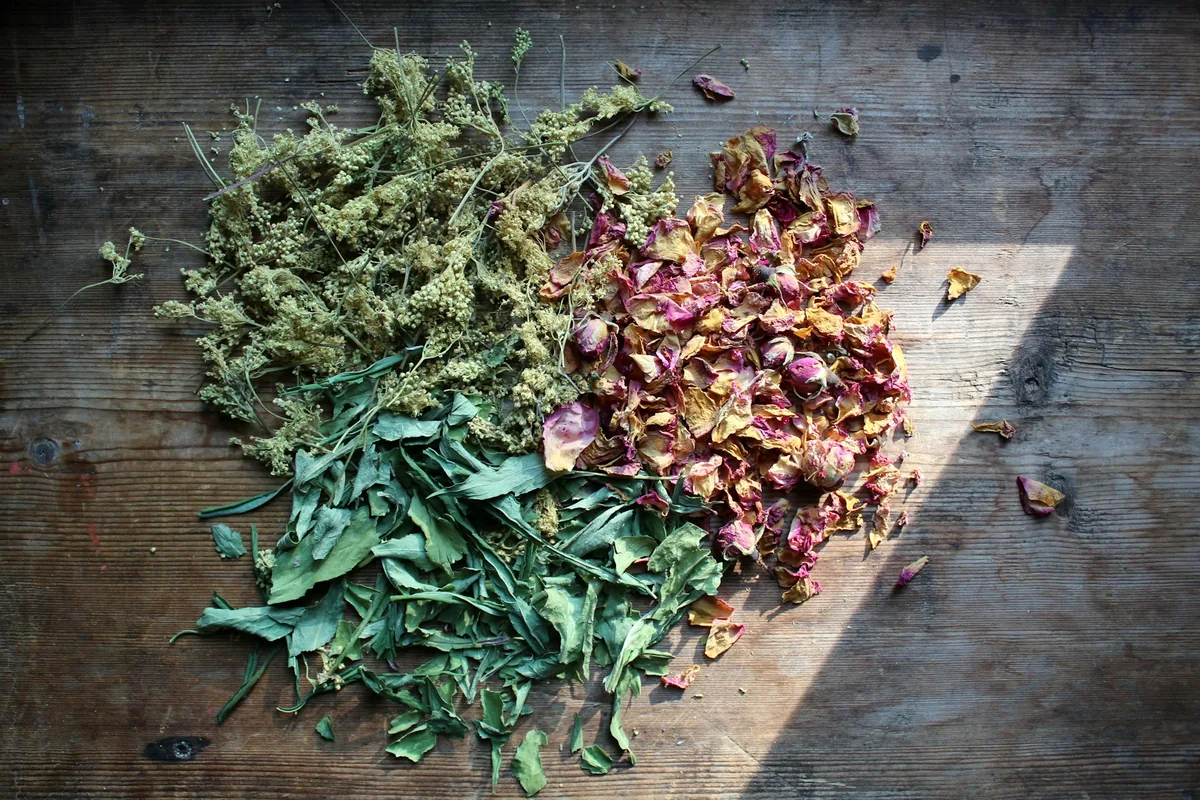
- Grand wormwood (Artemisia absinthium) — the bitter herb it is named for, and the source of the thujone.
- Green anise — the dominant flavour, and the reason absinthe tastes of liquorice.
- Sweet fennel — rounding out the anise.
- Colouring herbs in a verte — often hyssop and lemon balm, steeped after distillation, which is where the green comes from. A blanche skips this step and stays clear.
The green of a naturally coloured absinthe fades to amber over years as the chlorophyll degrades. A bottle that stays electric green is coloured artificially.
The louche, and why you add water
Absinthe is not drunk neat. The traditional service is a slow drip of iced water over a sugar cube on a slotted spoon, at roughly three to five parts water to one of spirit.
The water does two things. It brings the strength down to something drinkable, and it triggers the louche — the spirit turns from clear to a cloudy opalescent white as the essential oils, soluble in alcohol but not in water, come out of solution. It is the same effect you see when water is added to pastis or ouzo.
The burning-sugar ritual, with a flaming spoon, is a 1990s invention from the Czech absinth revival. It is theatre, and it scorches the drink.
How to tell a good one
The category was rebuilt from almost nothing after relegalisation, and the quality range is wide. Three things separate a real absinthe from a green-dyed anise liqueur:
- Distilled, not compounded. A proper absinthe is distilled with its herbs. A compounded one is neutral spirit with essences and colouring stirred in. The label will usually say if it is distilled; silence is a bad sign.
- It louches properly. Add water and a genuine absinthe turns opalescent slowly, from the top down, into a stable milky cloud. A compounded one goes cloudy instantly and unevenly, or barely at all.
- The colour is not electric. A naturally coloured verte is a soft, slightly yellowish green that fades with age. Vivid emerald green in a modern bottle means dye.
Price is a reasonable proxy. The Czech-style products that drove the 1990s revival are mostly compounded and mostly built around the mythology rather than the drink.
Absinthe and its relatives
| Absinthe | Pastis | Herbsaint | Ouzo | |
|---|---|---|---|---|
| Origin | Switzerland and France | France | New Orleans | Greece |
| Wormwood | Yes | No | No | No |
| Sweetened | No | Yes | Yes | Usually lightly |
| Typical strength | 45-74% ABV | 40-45% ABV | 45% ABV | 37-50% ABV |
| Louches with water | Yes | Yes | Yes | Yes |
| Created as | A medicinal tonic | An absinthe replacement after the ban | A legal absinthe substitute in 1934 | A regional anise spirit |
Herbsaint is worth singling out. It was created in New Orleans in 1934, while absinthe was still banned in the United States, specifically as a legal substitute — an anise liqueur with no wormwood. It became the standard rinse for a sazerac and stayed there even after absinthe was relegalised in 2007.
Meyboom Brasserie’s archived cocktail list used exactly that: its Sazerac was built with Sazerac rye, Peychaud’s bitters and Herbsaint.
Frequently asked questions
Is absinthe illegal?
No, not in most of the world. The United States relegalised it in 2007 under a thujone limit, and the European Union permits it under similar rules. The bans that made its reputation were lifted long ago.
Does absinthe make you hallucinate?
No. Chemical analysis of both modern and pre-ban bottles found thujone far below any psychoactive threshold. The effects people describe are those of a very strong spirit.
How strong is absinthe?
Typically 45–74% ABV, which is roughly one and a half to two times a standard whisky. That is why it is served heavily diluted, and why it should be treated with respect.
What does absinthe taste like?
Predominantly of anise — liquorice-like — with a bitter herbal edge from the wormwood and a cooling, almost menthol finish. If you dislike pastis or ouzo you will probably dislike absinthe.
Why does absinthe turn cloudy?
The louche. Essential oils that dissolve in alcohol will not dissolve in water, so adding water forces them out of solution as a fine emulsion. It is a sign the spirit was genuinely distilled with herbs rather than flavoured afterwards.
Worth knowing
If you have avoided absinthe because of the mythology, the mythology is the least accurate thing about it. If you are drawn to it because of the mythology, you will be disappointed — it is a strong, bitter, anise-heavy spirit, and that is all it has ever been.
For where it turns up on a drinks list, see the Sazerac, and for the other bottle in that build, what cocktail bitters are.