Two breweries put beer in an oak barrel. One is trying to make it taste of bourbon and vanilla; the other is trying to let wild organisms turn it sour over three years. Both are called barrel-ageing, and the word covers two traditions that have almost nothing in common.
The short answer
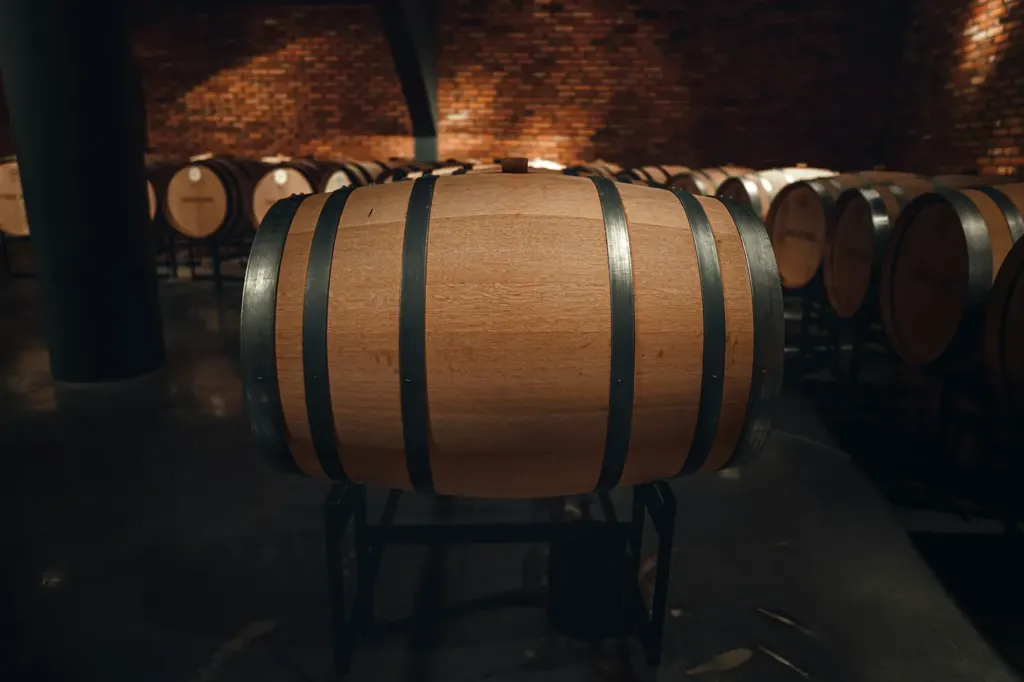
The American way puts strong beer into a freshly emptied spirits barrel — usually bourbon — for months, to pick up the wood and whatever the wood is soaked in. The barrel is a flavouring.
The Belgian way puts beer into large, old, neutral oak vessels for years, so that the microorganisms living in the wood can slowly acidify it. The barrel is a habitat.
Why bourbon barrels specifically
There is a legal accident at the bottom of this. By US law, straight bourbon must be aged in new charred American oak. A distillery can therefore use each barrel exactly once, and is left with an enormous supply of perfectly good barrels it is forbidden to reuse.
Those barrels are cheap, plentiful and still wet with whiskey. Brewers took them, and an entire category followed from a rule written for somebody else.
What the beer picks up comes from three sources. The residual spirit soaked into the staves is the obvious one. The charring caramelises wood sugars and gives colour and sweetness. And the oak itself contributes vanillin — lignin in the wood converts to it over time, which is why vanilla is the signature note of almost every bourbon-barrel beer.
The style that suits it is a big, sweet, dark one: imperial stout above all, then barleywine. There has to be enough beer to stand up to the wood, which is why nobody barrel-ages a pilsner.
The Belgian way: wood as a habitat
Belgium was ageing beer in oak centuries before American craft brewing existed, and for the opposite reason.
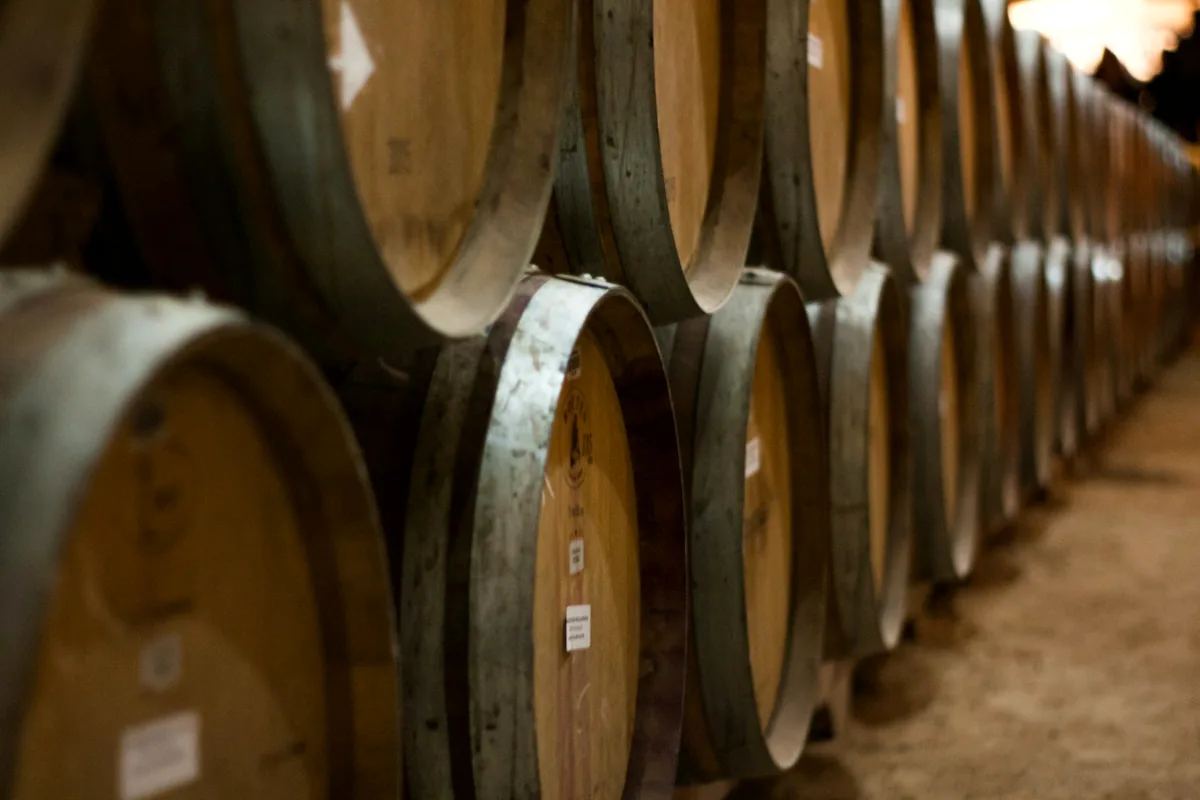
Lambic ferments in shallow open vessels and then goes into old wooden casks for one to three years. Flanders red goes into foeders — huge upright oak tuns, some over a century old — for eighteen months to two years or more. The wood in both cases is deliberately neutral: old, used many times over, contributing very little flavour of its own.
What it does contribute is somewhere to live. The porous oak harbours Brettanomyces, lactobacillus and pediococcus, and those organisms slowly acidify the beer, producing the sourness and the barnyard funk the styles are built on. A brand-new barrel would be useless for this; the value is in a vessel that has been colonised.
Because every foeder develops its own population, no two are identical. Blending across barrels — young with old, sharp with round — is therefore part of the craft rather than a shortcut. Gueuze is defined by it. More on those styles in what a lambic actually is.
What oak actually does
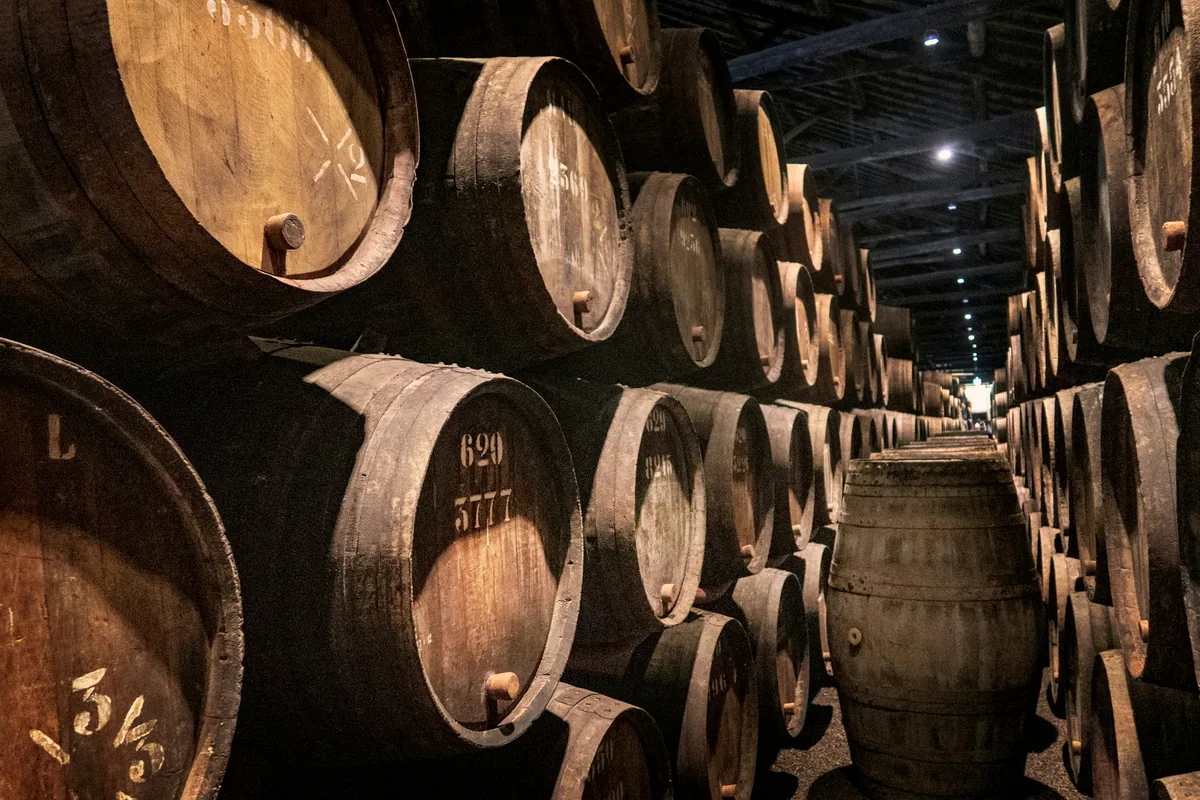
Beyond flavour, wood does two mechanical things that steel does not.
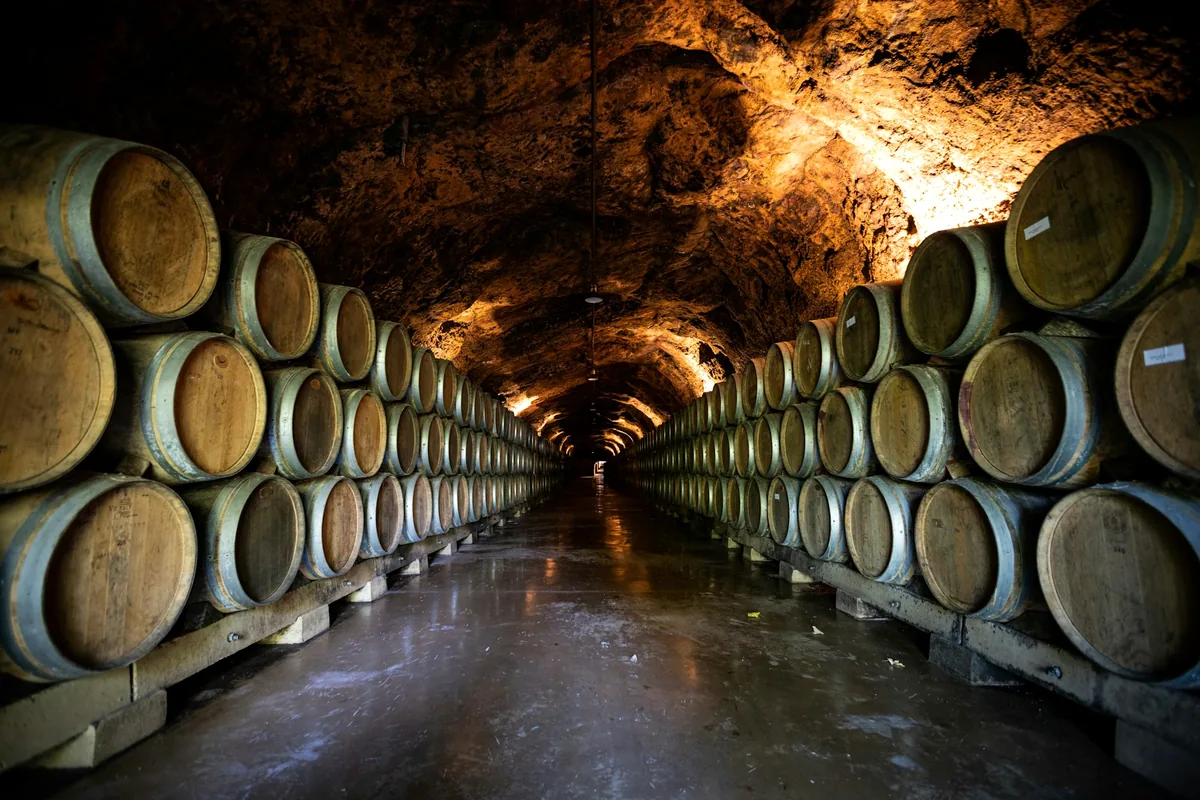
It breathes. Oak is slightly permeable, so a tiny amount of oxygen reaches the beer continuously. In small doses over long periods that is maturation rather than staling — it softens harshness and develops the sherry and dried-fruit notes people prize in old strong beer.
It concentrates. Some liquid evaporates through the staves. Distillers call the loss the angels’ share; in beer it slightly intensifies what remains.
Both effects need time, and time is the real cost of a barrel programme. A brewery running one has beer, tank space and capital tied up for a year or more before anything can be sold — which is a good part of the answer to why some beer costs what it does.
When wood goes too far
Barrel-ageing is not a process with a linear reward, and over-oaking is a real fault.
Left too long in a fresh spirit barrel, a beer stops tasting of beer. Tannin builds until the finish is drying and woody, the vanilla goes from warm to confected, and the whiskey character swamps whatever the base beer was doing. Small barrels are the usual culprit — the smaller the vessel, the greater the ratio of wood surface to liquid, and a 50-litre cask will over-extract in weeks where a hogshead takes a year.
This is one of the arguments for blending. Rather than pulling a whole batch at the moment it is right, a brewery can leave some longer, take some earlier, and marry them — which is exactly what Belgian sour producers have always done, for entirely different reasons.
Reading the label
| Spirit-barrel ageing | Belgian oak maturation | |
|---|---|---|
| Vessel | Fresh bourbon or whiskey barrel | Old neutral oak, often a large foeder |
| Time | Three months to two years | One to three years or more |
| Purpose | Flavour from wood and spirit | Acidity from resident microorganisms |
| Typical styles | Imperial stout, barleywine, strong ale | Lambic, gueuze, Flanders red |
| Signature | Vanilla, coconut, whiskey warmth | Sourness, funk, dried fruit |
| Blending | Sometimes | Central to the style |
One caution. “Oak-aged” and “barrel-aged” are not regulated terms, and some products get their oak character from wood chips or spirals suspended in a steel tank. That is a legitimate technique and much cheaper, but it delivers flavour without the slow oxidation or the microbiology, and it is not the same thing.
What that looked like on a real list
Meyboom’s archived lists carried both traditions, which is unusual and worth noting.
On the bottle list: Duvel Barrel Aged, marked Batch 7, at 11.5% and $17 — a Belgian golden strong ale finished in spirit barrels, which is Belgium borrowing the American idea. In the large format section, Duvel Barrel Aged in Irish Whiskey at $55, the most expensive single item on either list.
And on the same lists, the other tradition entirely: Rodenbach Classic on draught and Rodenbach Grand Cru in bottle — Flanders reds matured in foeders at Roeselare — plus the four Lindemans lambics. Same wood, opposite intentions, sitting a few lines apart. Both lists are still on the site: the beer list and the bottle list.
Frequently asked questions
What does barrel-aged mean on a beer?
That the beer spent time maturing in a wooden barrel, either to take on flavour from the wood and its previous contents, or to be soured by organisms living in the wood.
Why do brewers use bourbon barrels?
Because US law forbids reusing them for bourbon, so they are abundant and cheap, and they arrive still soaked in whiskey.
What is a foeder?
A very large upright oak vessel, often decades or centuries old, used in Belgium for the long maturation of sour beers. The wood is neutral; the point is the microorganisms it houses.
Does barrel-aged beer taste of alcohol?
Spirit-barrel versions usually taste warmer and read as stronger, partly from residual spirit and partly because the beers chosen for it are strong to begin with.
Is oak-aged the same as barrel-aged?
Not necessarily. Some beers get oak character from chips or spirals in a steel tank. It is a real technique but it skips the slow oxidation and the microbiology.
The short version
Wood for flavour, or wood for bacteria. America puts strong dark beer into fresh whiskey barrels for months; Belgium puts beer into old neutral oak for years and lets it go sour. Read which one you are being sold, because they are not variations on a theme.
Related: which beers are worth cellaring and Flanders and Wallonia.