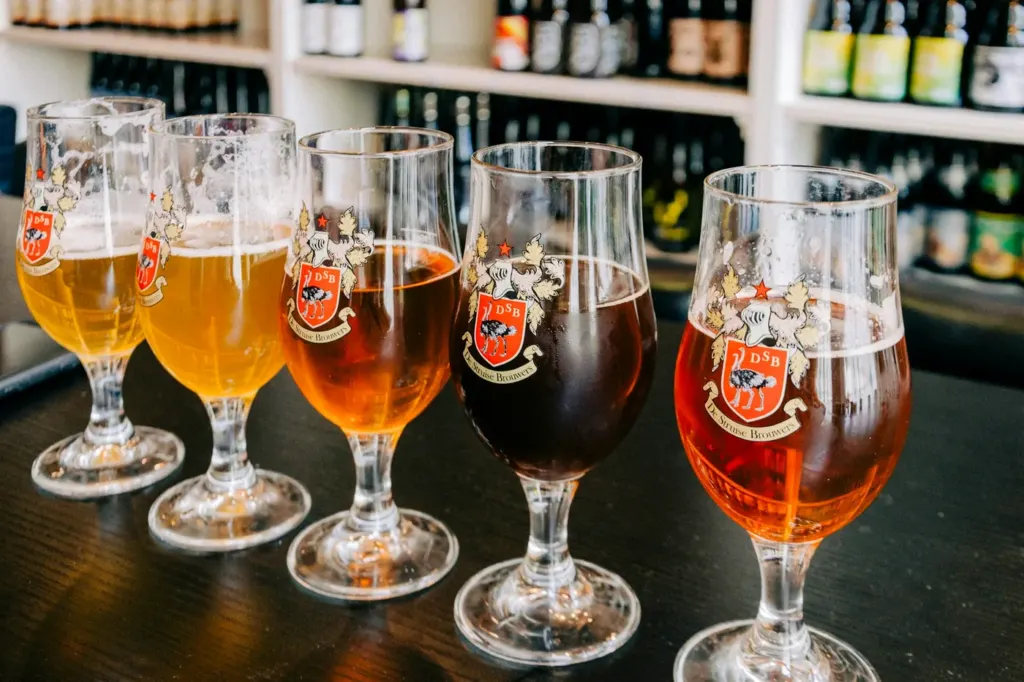
Three words do most of the work on a Belgian beer list, and all three look like they mean something arithmetical. Double the strength, triple the strength, quadruple the strength. They do not, they never have, and the beers themselves make that obvious the moment you line them up.
The short answer
- Dubbel — dark brown, malty, dried fruit, roughly 6-8% ABV.
- Tripel — pale gold, dry, spicy and fruity, roughly 7.5-9.5% ABV.
- Quadrupel — very dark, rich, warming, roughly 9-12% ABV.
A tripel is not one and a half times a dubbel. It is a different colour, a different flavour and only a little stronger. The names describe styles, not multiples.
Where the names came from
The words are older than the styles and were never a strength scale. The most-repeated explanation is that monastic breweries marked casks with one, two or three Xs to indicate relative strength within their own house — a rough shorthand for the brewery’s small beer, its middling beer and its best beer. That is a house ranking, not a system, and it says nothing about how one abbey’s tripel compares to another’s.
What fixed the modern meanings was a single brewery. Westmalle brewed a dark strong beer it called Dubbel from the 1920s and, in 1934, a pale strong beer it called Tripel — reformulated to roughly its present shape in 1956. Both were copied so widely that the names stopped describing Westmalle’s range and started describing two styles. Nearly every Belgian dubbel and tripel brewed since is measured against those two beers.
Dubbel
Deep brown to garnet, topped with a dense tan head. The flavour is malt-driven and distinctly of dried fruit — raisin, fig, plum — with caramel and often a faint chocolate note. It finishes drier than the aroma suggests.
That fruit is not fruit. It comes from dark candi syrup in the kettle and from the esters the Belgian yeast throws off during a warm fermentation. There is very little hop character: bitterness is present only to keep the malt from cloying.
At 6-8% a dubbel is the most sessionable of the three, and the one that suits food best — it is the standard match for a cheese board or anything braised.
Tripel
Pale gold and cloudy with yeast, under a thick white head that lasts. The aroma is pepper, clove and orchard fruit; the body is much lighter than the strength implies; the finish is dry and warming with a spicy bite.
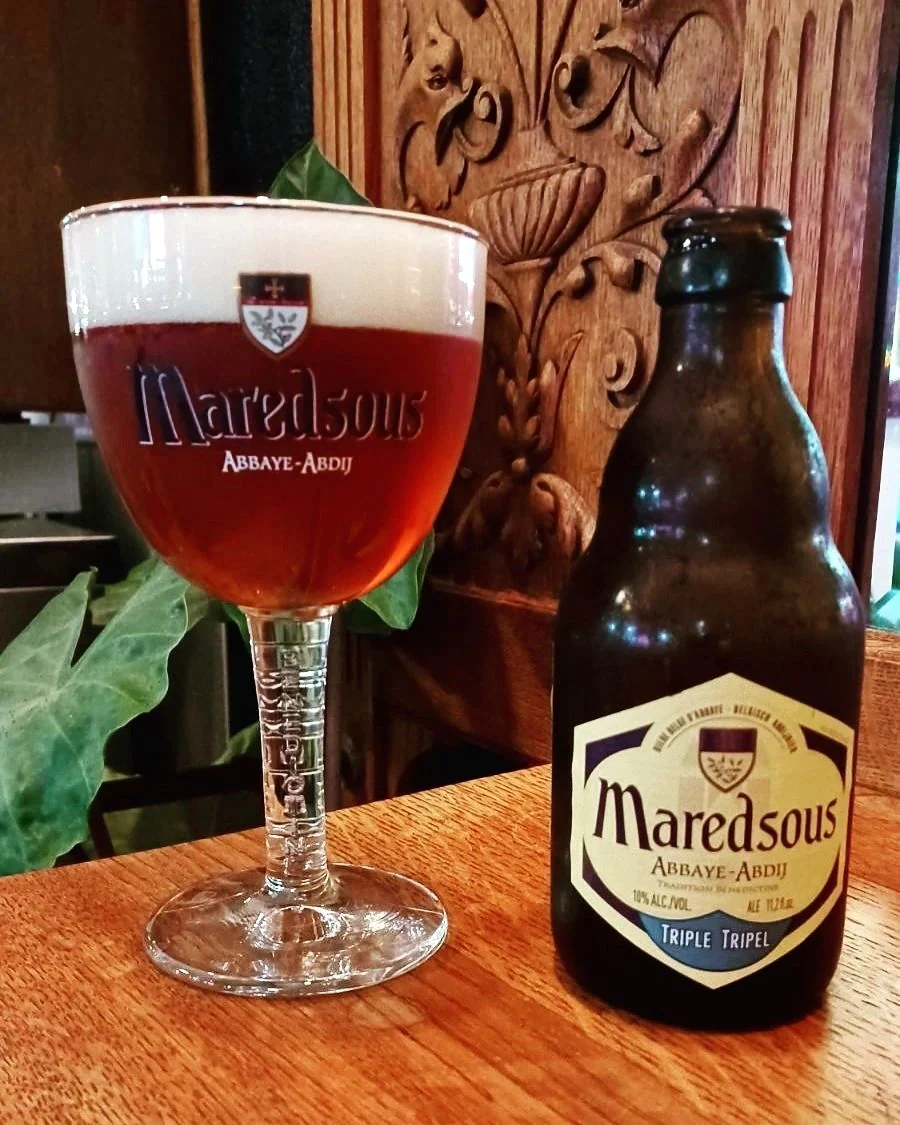
A tripel is where the Belgian use of sugar is most visible. Pilsner malt provides the base, and a large addition of clear candi sugar takes the beer to 9% without giving it any of the weight that 9% of malt would. The result is the paradox the style is built on: a beer that is stronger than most wine’s poor relations and drinks like something half its size.
This is the style that most often surprises people, and the reason the glass it arrives in is small.
Quadrupel
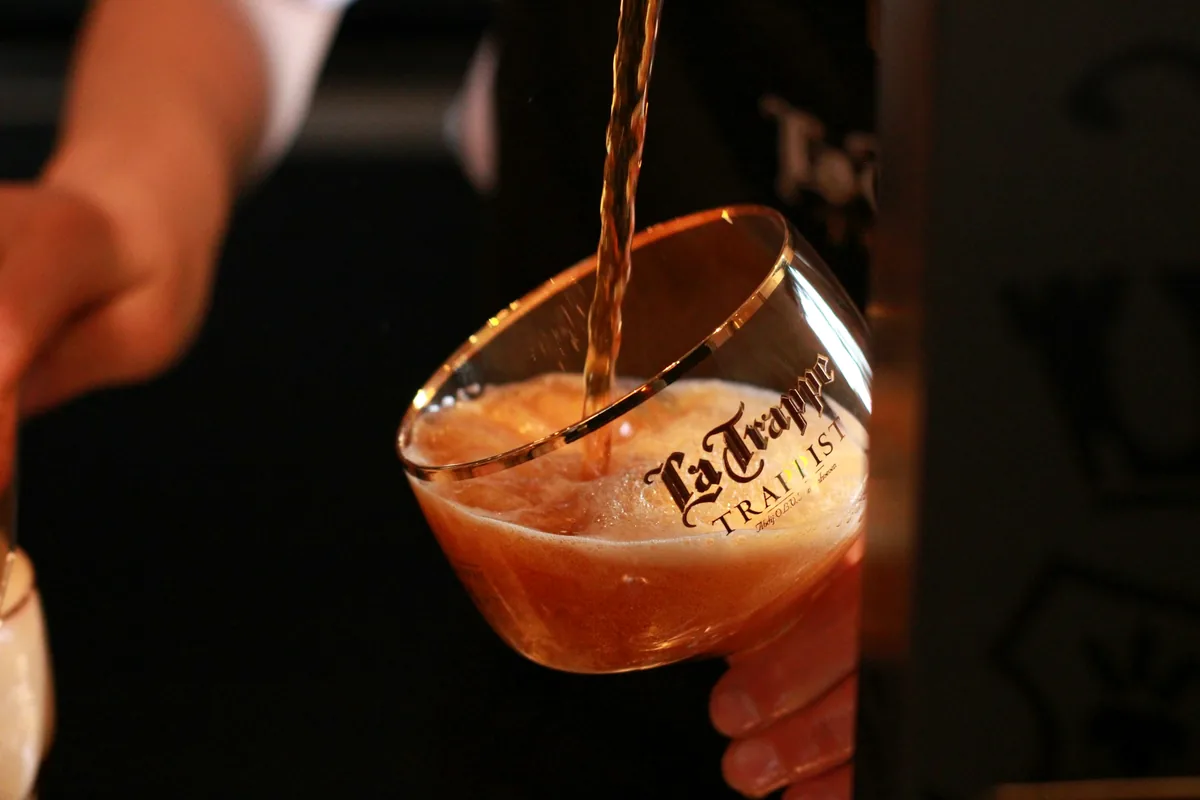
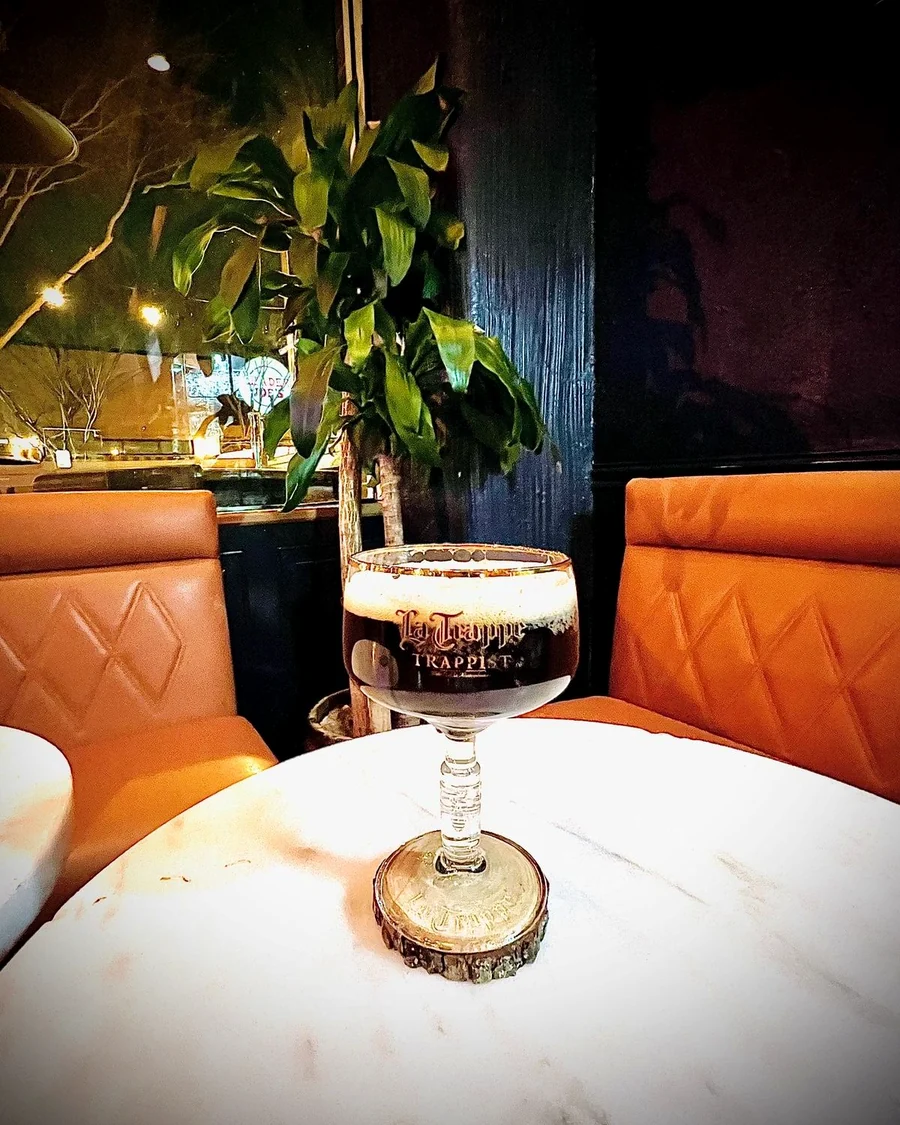
The newest of the three names, and the only one that is not really Belgian. The Dutch brewery La Trappe — a Trappist house in the Netherlands, not Belgium — introduced a beer called Quadrupel in 1991. The name was adopted by American brewers for anything very dark and very strong in the Belgian manner, and it has since travelled back across the Atlantic.
Belgian breweries themselves largely do not use it. Rochefort 10 and Westvleteren 12 are the archetypes of the style and neither carries the word on the label; they are simply the strongest beer in the house. Belgian brewers tend to say strong dark ale, which is also how style guidelines such as the BJCP’s Belgian dark strong ale entry classify them.
Expect near-black beer, a huge dried-fruit and molasses character, noticeable warmth, and 10% or more. These are beers to sit with.
The other names on the same list
Two more words turn up beside these three and are worth separating out.
Enkel, or single, or patersbier — “fathers’ beer” — is the weak one. It is the beer the monks brewed for themselves rather than for sale, typically 4.5-6%, pale and dry. Very few are sold commercially; Westmalle Extra is the best-known example and is largely a taproom beer. If you see the word on a list, it means the lightest thing the brewery makes.
Belgian golden strong ale sits awkwardly next to tripel and is frequently confused with it. Both are pale and strong. The golden strong is drier, more highly carbonated, more sharply attenuated and usually a shade paler, and it tends to lead with pear and pepper where a tripel leads with orchard fruit and clove. Duvel defines the category the way Westmalle defines the tripel.
Reading them side by side
| Dubbel | Tripel | Quadrupel | |
|---|---|---|---|
| Colour | Deep brown to garnet | Pale gold | Very dark brown to black |
| Typical ABV | 6-8% | 7.5-9.5% | 9-12% |
| Driven by | Dark malt and dark candi syrup | Pilsner malt and clear candi sugar | Dark malt, syrup and time |
| Flavour | Raisin, fig, caramel | Pepper, clove, orchard fruit | Molasses, dried fruit, warmth |
| Body | Medium | Light for the strength | Full |
| Name fixed by | Westmalle, 1920s | Westmalle, 1934 | La Trappe, 1991 |
What that looked like on a real list
Meyboom Brasserie’s archived draught list carried a Westmalle Dubbel at 7.0% and a Chimay Grande Réserve, labelled Trappist Quadrupel, at 9.0%. The bottle list added a Westmalle Tripel at 9.5%, a La Trappe at 10.0% and the whole Rochefort range — the 6 at 7.5%, the 8 at 9.2% and the 10 at 11.3%.
The Rochefort numbers, incidentally, are another false scale: 6, 8 and 10 are old Belgian degrees of gravity, not ABV and not a ranking anyone uses today. They happen to run in the same direction as the strength, which is why nobody has ever bothered to correct them.
Both archived lists are still on the site — the draught and bottle list and the forty-five-bottle list — with historical prices.
Frequently asked questions
Is a tripel three times as strong as a single?
No. A Westmalle Extra, the brewery’s own single, is 4.8%; the tripel is 9.5%. That is roughly double, not triple. The names never encoded a ratio.
Is a dubbel darker because it is stronger?
No. Colour comes from dark malts and dark candi syrup. A tripel is paler than a dubbel and usually stronger. On a Belgian list, colour tells you about flavour and nothing about alcohol.
What is a quadrupel, officially?
Officially, nothing — it is a marketing name coined by La Trappe in 1991. The style it describes is catalogued as Belgian dark strong ale. Both terms point at the same beers.
Do you have to be a Trappist brewery to make these?
No. Any brewery can brew a dubbel or a tripel, and most do. Only a handful of Belgian monasteries may call a beer Trappist — five at the time of writing, and the number moves as communities change. That is a separate question, covered in Trappist vs abbey beer.
Which should I try first?
A dubbel. It is the gentlest of the three, the most food-friendly, and it gives you the Belgian yeast character without the strength getting in the way.
Where to start
Order a dubbel with dinner, a tripel when you have somewhere comfortable to sit, and a quadrupel when you have nowhere else to be. And read the ABV on the list, because the name will not tell you.
Related: why Belgian beer is so strong and the Belgian beer styles worth knowing.