
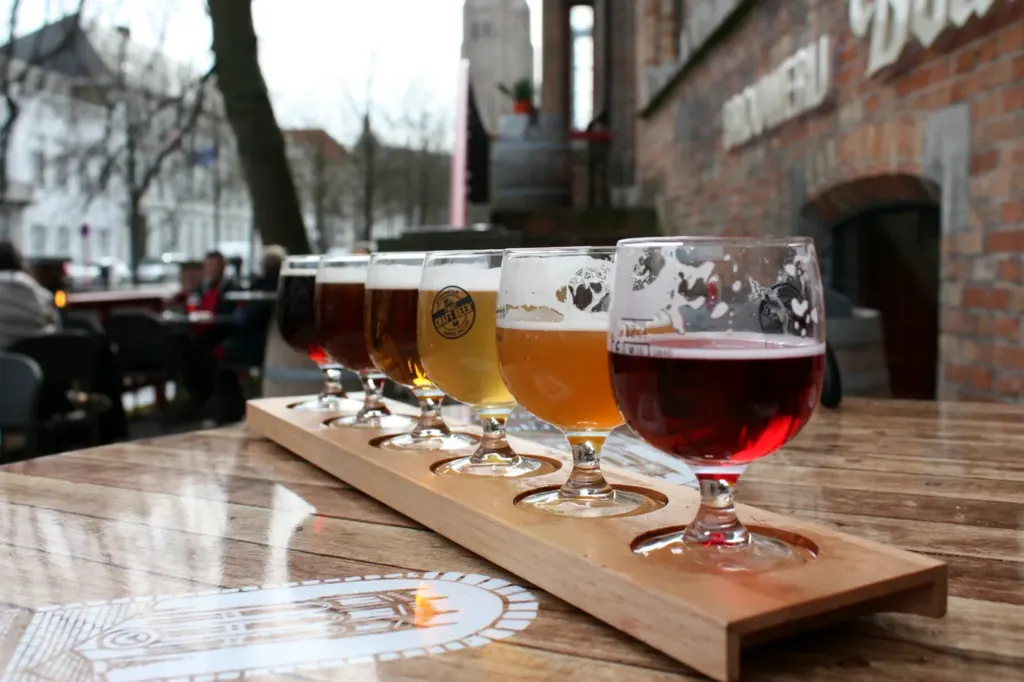
A flight is the cheapest way to find out what you like. It is also the most commonly wasted thing on a bar menu, because most people order one, drink it left to right without thinking, and leave knowing roughly what they knew before.
The short answer
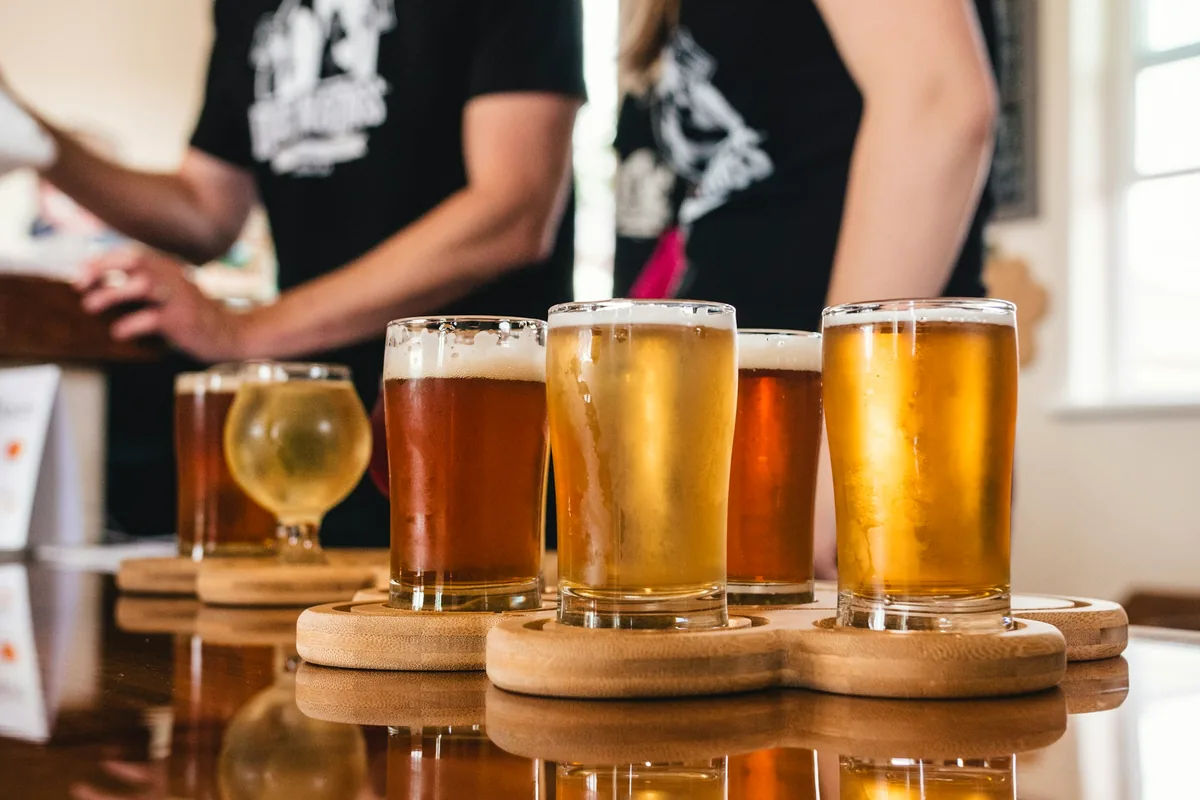
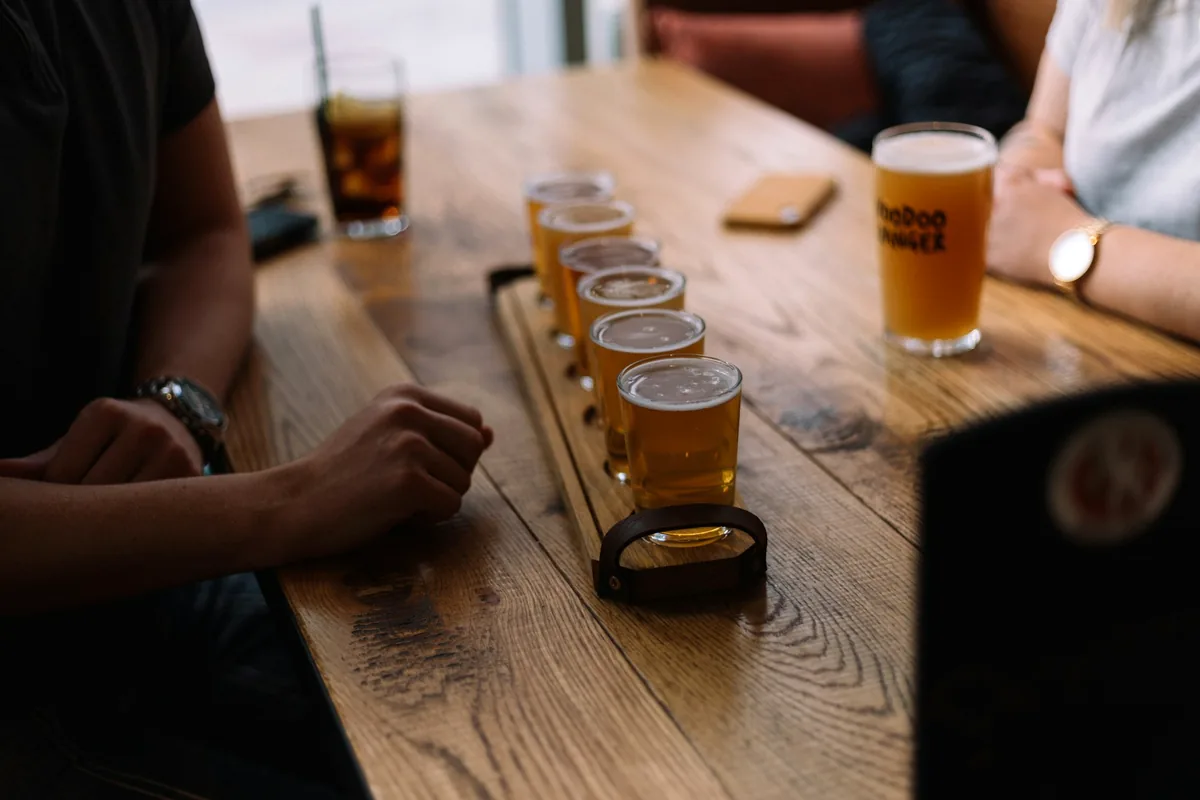
A beer flight is a set of small pours — usually three to six, usually 3 to 5 ounces each — served together on a paddle, board or tray so you can compare them side by side. The point is not the quantity. The point is that comparison teaches you things a single pint cannot.
What you actually get
Four 4-ounce pours is the most common shape, which comes to about a pint in total — often for a little more than a pint costs. You are paying a small premium for variety and for the glassware.
Most bars will let you choose the beers. Some run a fixed flight, usually a themed one: everything from a single brewery, everything in one style, or a progression through the list. A fixed flight chosen by the bar is often the better bet at a place whose list you do not know.
Choose it yourself, and choose for contrast
The instinct is to pick four things you already expect to like. That produces four glasses of much the same beer and teaches you nothing.
The better approach is to make the flight answer a question:
- One variable at a time. Four beers of the same style from four breweries will show you what the style actually is, and how much room there is inside it.
- A ladder. The same brewery’s range from weakest to strongest shows you a house character running through everything.
- A spread. One pale, one amber, one dark, one sour covers the map if you have no idea what you like yet.
Tell the bartender what you are trying to find out. Ask for it in words rather than pointing at four names: “something hoppy, something malty, something sour, and whatever you would drink” is a completely reasonable order and usually produces a better flight than the list does.
Drink them in the right order
Palate fatigue is real and it is fast. Start with the most assertive beer and everything after it tastes like a rumour.
The working rule is light to heavy: lightest in colour, lowest in alcohol, and least bitter first, building towards dark, strong and intense. Where a beer breaks the pattern, intensity wins over colour — a heavily hopped pale ale belongs after a mild brown one.
Sours are the exception to everything. Acidity resets and then dominates the palate, so a sour is best placed either first, on its own, or last. Put a kriek in the middle of a flight and the two beers after it are wasted.
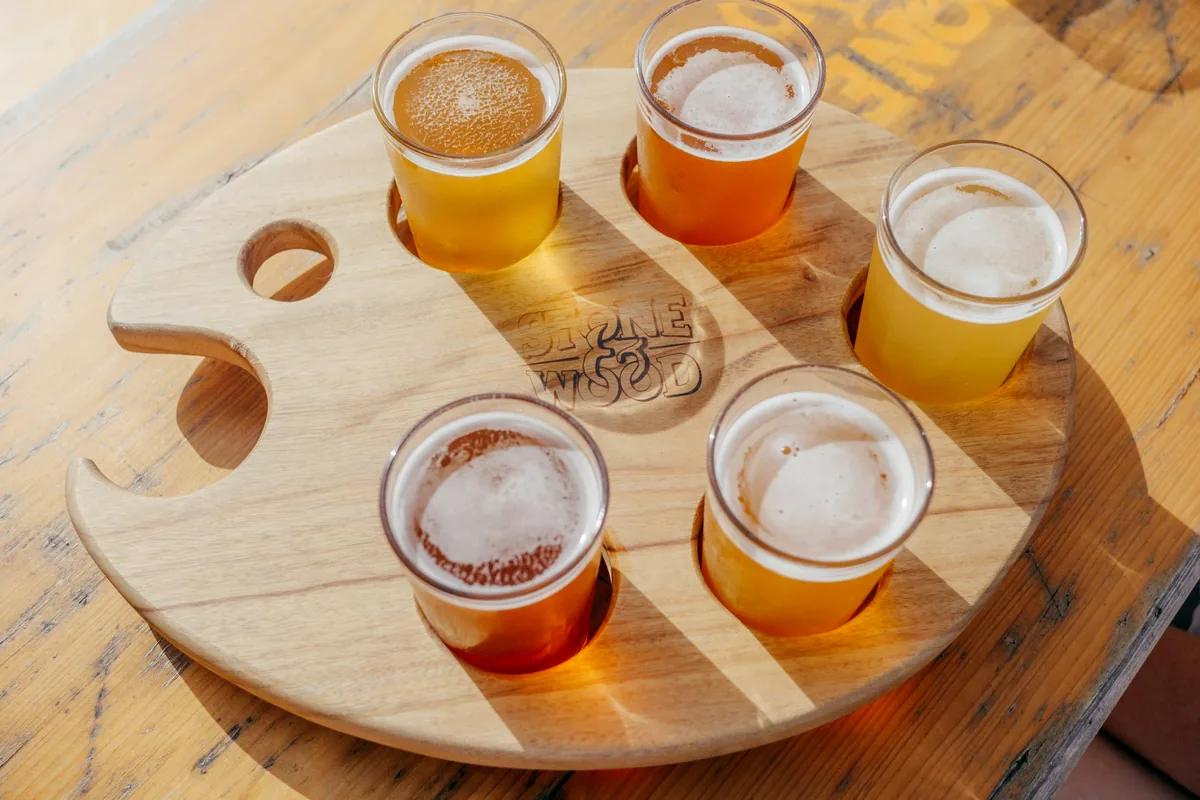
If the flight arrives on a round board, or the glasses have been shuffled, ask which is which before you start.
What to actually do with each glass
Four small glasses is enough beer to think about, and thinking about it is the point.
- Look. Colour, clarity, and whether the head lasts. A head that collapses immediately usually means a dirty glass rather than a bad beer.
- Smell. A short sniff, then a second. Most of what you will call flavour is aroma, and it fades as the beer warms and flattens, so smell early.
- Taste. First the front — malt sweetness, fruit — then the finish, which is where bitterness and dryness live. Beers that taste similar at the front often diverge completely at the end.
- Go back. Return to the first glass after the fourth. It will taste different, and the difference is the most useful thing the flight will tell you.
Let the cold ones warm. Almost every beer is served too cold, and the flavours that distinguish one from another only appear a few degrees up. A flight that has sat for ten minutes is more informative than one drunk immediately.
Pace it, and eat something
A flight looks small and is not necessarily small. Four 4-ounce pours of Belgian ale at 8-9% is a great deal more alcohol than four of a 4% lager — the same volume can carry twice the drink. If the flight is built from strong beers, treat it as two pints, not one.
Water between glasses does more for the palate than anything else, and plain bread or a mild cheese resets it further. That is also why beer and cheese work: the fat coats, the carbonation cuts, and each beer arrives at a clean palate. We go into that pairing properly in how to pair Belgian beer with cheese.
What a flight will not tell you
It is a sampling method with real limits, and knowing them saves you from drawing the wrong conclusion.
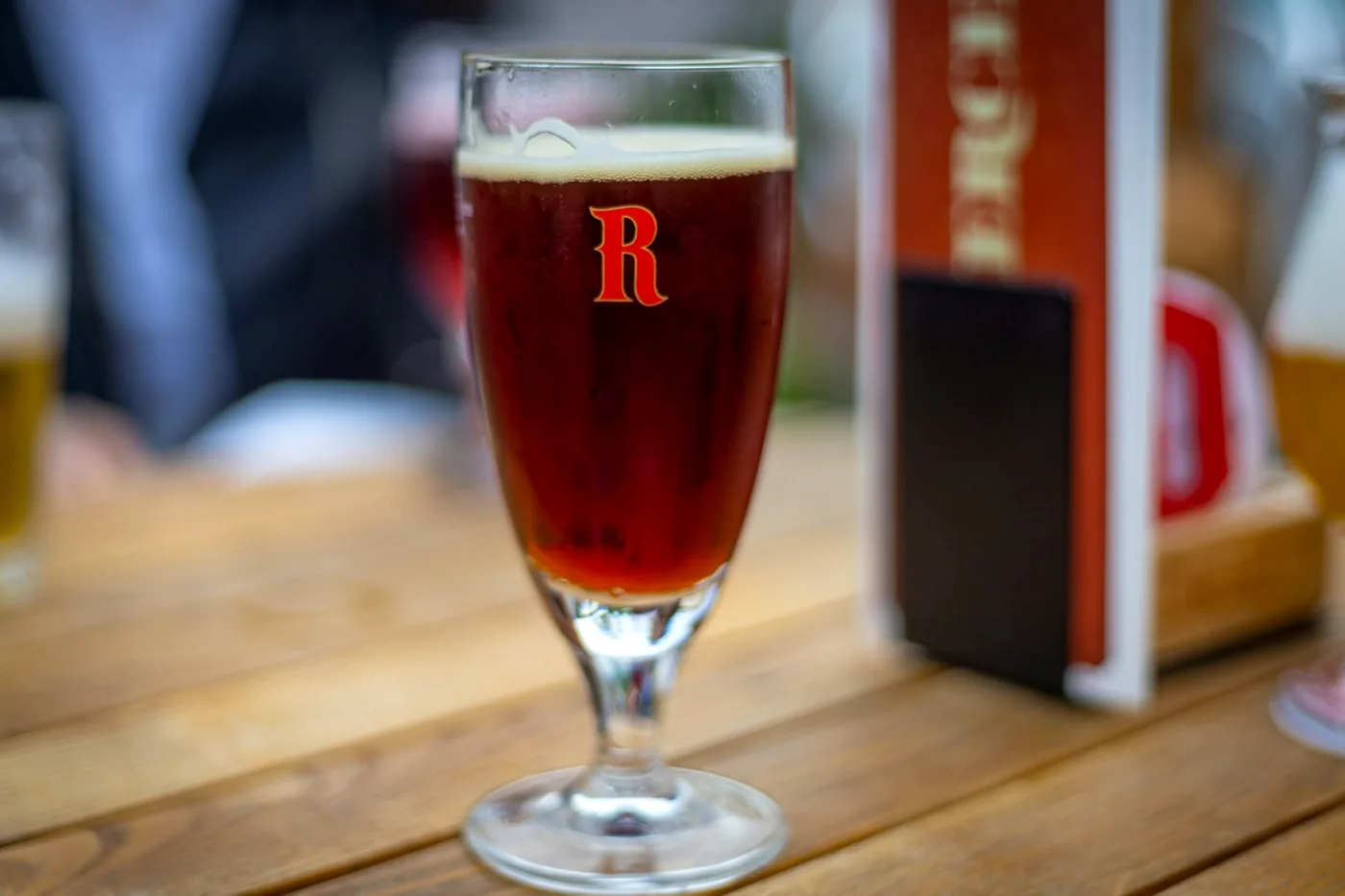
Small pours warm and flatten quickly, so the fourth glass is a slightly different beer by the time you reach it than it was when it landed. Strongly carbonated styles suffer most. A flight also strips a beer of its glassware — a tripel served in a taster is not being shown at its best, and a beer designed around a chalice or a tulip loses part of its aroma in a straight-sided sample glass.
And comparison flatters the extremes. Put a subtle, balanced beer between a sour and a stout and it will read as boring, when in a glass on its own it might be the best thing on the list. If a beer underwhelms you in a flight, that is worth one more try before you write it off.
What that looked like on a real list
Meyboom Brasserie’s archived beer list, captured in September 2023, offered a Draught Beer Flight of four 4-ounce pours, chosen by the drinker or by the bartender. Alongside it sat a Trappist Beer & Cheese Pairing — four Trappist beers matched to four cheeses, described on the menu as paired by the house Cicerone.
That second one is the flight idea taken to its conclusion: a fixed set, chosen by someone who has studied the subject, with the food built around it. A Cicerone is the beer world’s equivalent of a sommelier, and a pairing menu is where the qualification actually shows.
The archived list, with its historical prices, is still on the site as the beer menu.
Frequently asked questions
How many beers are in a flight?
Usually four. Three to six is the normal range; more than six and the last few are wasted on a tired palate.
How much beer is in a flight?
Typically 12 to 20 ounces in total — about a pint to a pint and a quarter. Check the pour size, because a flight of 5-ounce pours of strong ale is a substantial amount of alcohol.
What order should I drink a flight in?
Lightest and mildest first, building to dark, strong and bitter. Put sours at one end or the other, never in the middle.
Can I share a flight?
Yes, and it is often the best way to use one. Two people sharing two flights cover eight beers and can compare notes.
Is a flight cheaper than a pint?
Usually slightly more expensive for the same volume. You are paying for variety and for four glasses to wash, not for beer.
The short version
Order for contrast, not for comfort. Drink light to heavy, park the sour at one end, smell before you taste, and go back to the first glass at the end. Drink water. Then order a full glass of whichever one stopped you.
Related: why Belgian beers each get their own glass and what ABV and IBU actually tell you.