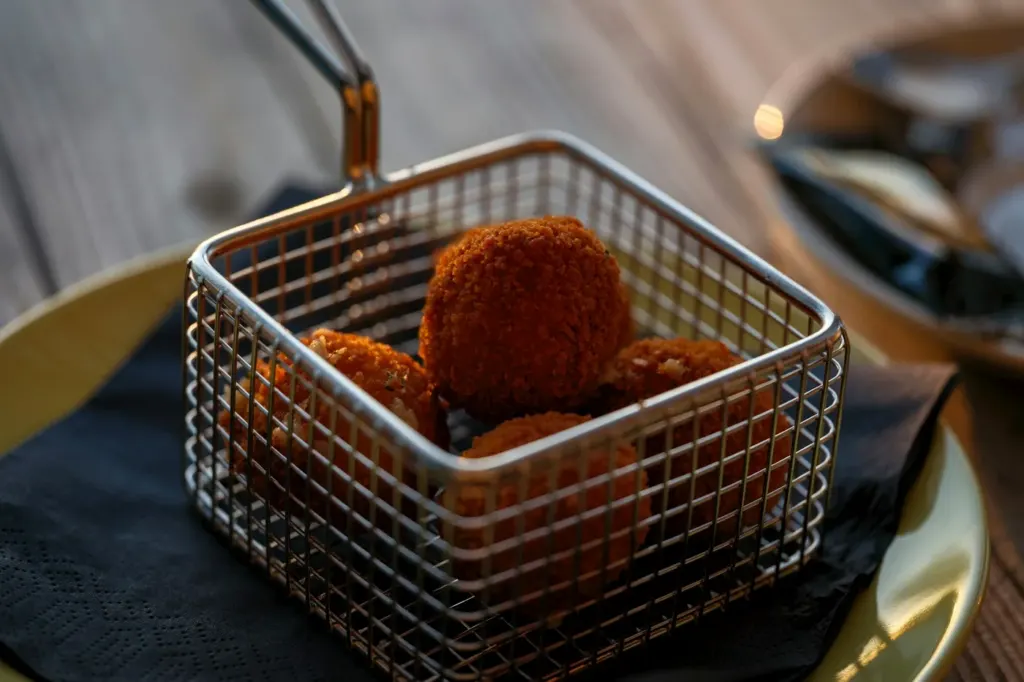
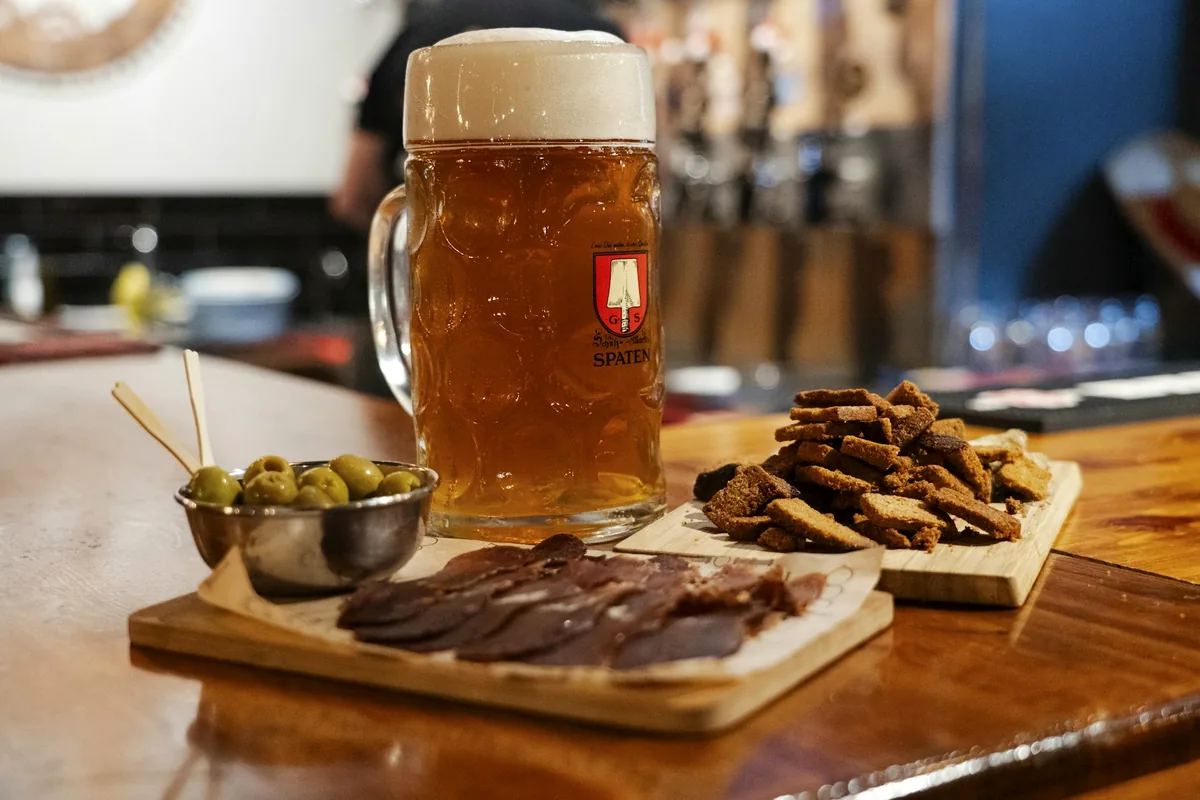
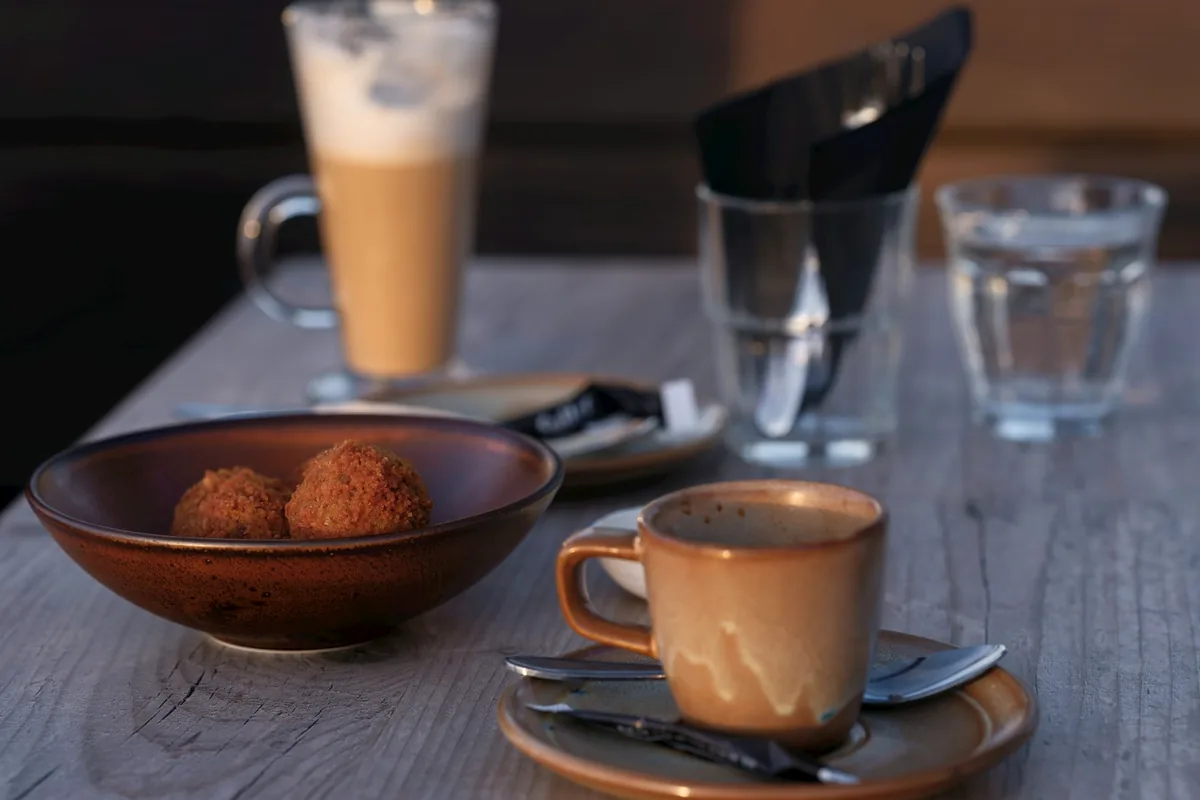
Order a beer in a Belgian or Dutch bar and something will eventually arrive alongside it: small brown spheres, crisp on the outside, with a dish of mustard. Nobody explains what they are, and everybody burns their mouth on the first one.
The short answer
Bitterballen are deep-fried balls of thick beef ragout — a heavily reduced, roux-bound stew that is chilled until firm, rolled, breadcrumbed and fried. The outside is crisp; the inside melts back to liquid in the heat. They are served hot with mustard, and eaten with a cocktail stick or your fingers.
They are Dutch in origin, not Belgian, and they are on every Belgian brasserie menu regardless.
They are not named after the taste
This is the part most people get wrong, and it is the most satisfying fact about them.
Bitterballen are not bitter. The name comes from het bittertje — a small glass of bitter, the herbal spirit Dutch drinkers took in the late afternoon. The snacks served with that drink became bittergarnituur, the bitter’s garnish, and the round ones became bitterballen. The Dutch etymology database traces the word along exactly that line.
So the name records what you were drinking, not what you were eating. That is also why the convention survives: bitterballen are still understood as something that comes with a drink rather than a course in its own right.
What is actually inside
The filling is a ragout, and the technique is the interesting part:
- A very thick roux. Butter and flour cooked out, then beef stock added slowly — far less liquid than a sauce would take.
- Meat and seasoning. Shredded or finely chopped beef, onion, parsley, nutmeg, salt and pepper. Nutmeg is close to non-negotiable in the Dutch version.
- Chilled solid. The mixture is spread out and refrigerated for hours until it is firm enough to handle. This step is what makes the shape possible.
- Rolled, breaded, fried. Into balls of three or four centimetres, through egg and breadcrumb, then into hot fat for a couple of minutes.
The frying is brief, which is the point: long enough to crisp the crumb, short enough that the centre loosens back to a molten ragout rather than cooking through.
Bitterbal, kroket or frikandel?
Three fried things that turn up in the same places and confuse everybody.
| Bitterbal | Kroket | Frikandel | |
|---|---|---|---|
| Shape | Small sphere, 3-4cm | Cylinder, palm length | Skinless sausage shape |
| Filling | Thick beef ragout | The same ragout, more of it | Minced meat, not a ragout |
| Eaten as | A snack with drinks | A light meal, often in a bread roll | Street food, often with sauce |
| Served with | Mustard | Mustard, or bread | Mayonnaise, curry, onion |
| Where you meet it | A bar, on a shared plate | A snack bar or a lunch counter | A frituur or a vending wall |
Why a Dutch snack is on Belgian menus
Partly geography and partly function. The Netherlands and Flanders share a language and a border, and bar food travels along both. But the better reason is that the bitterbal does a job Belgian brasseries need doing: it is small, hot, salty and rich, it arrives fast, and it goes with beer.
A Belgian brasserie is built around people sitting for a long time with a drink in front of them. It needs something to put on the table in the first ten minutes that is not a starter. Croquettes fill that slot in Belgium the way olives do in Spain.
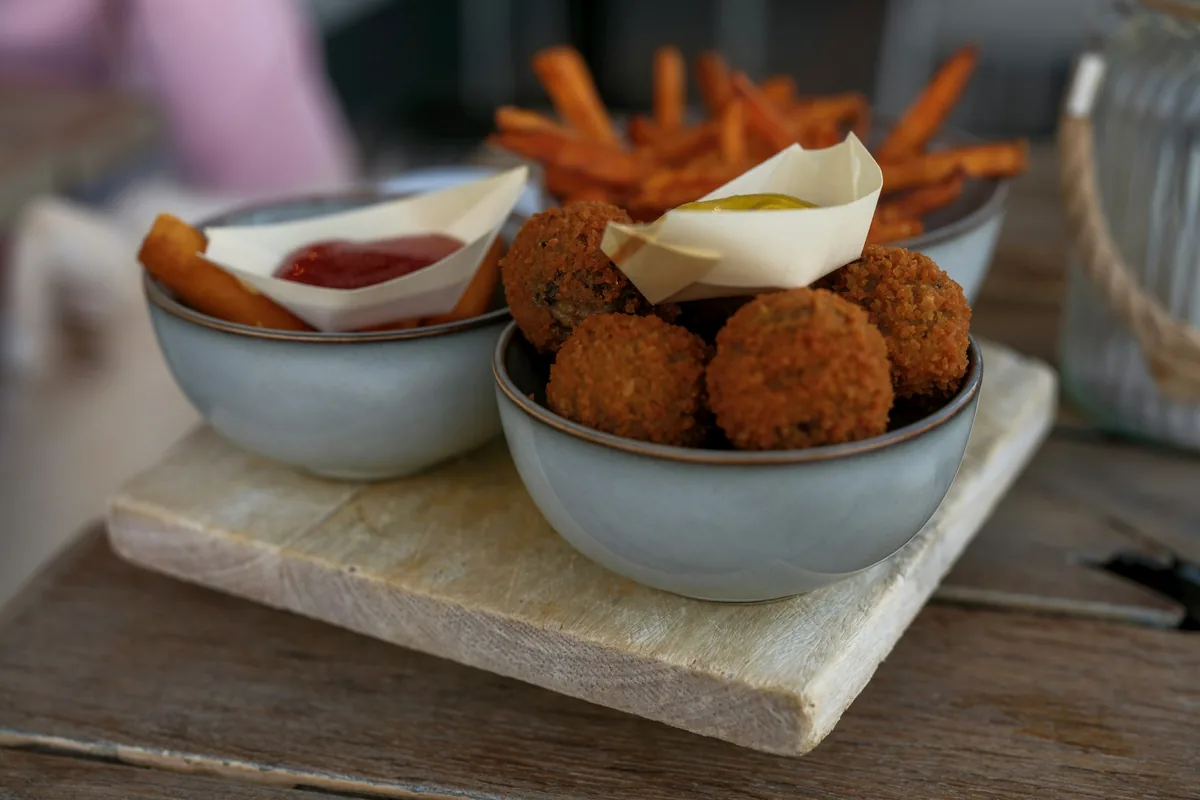
Meyboom Brasserie listed bitterballen at the top of its starters — described on the menu as Dutch fried meatballs, bite-sized beef and gravy croquettes, served with the house mustard or, for a little extra, the house beer cheese sauce. They also appeared on the happy hour list, which is exactly where the tradition would put them.
What else arrives on the plate
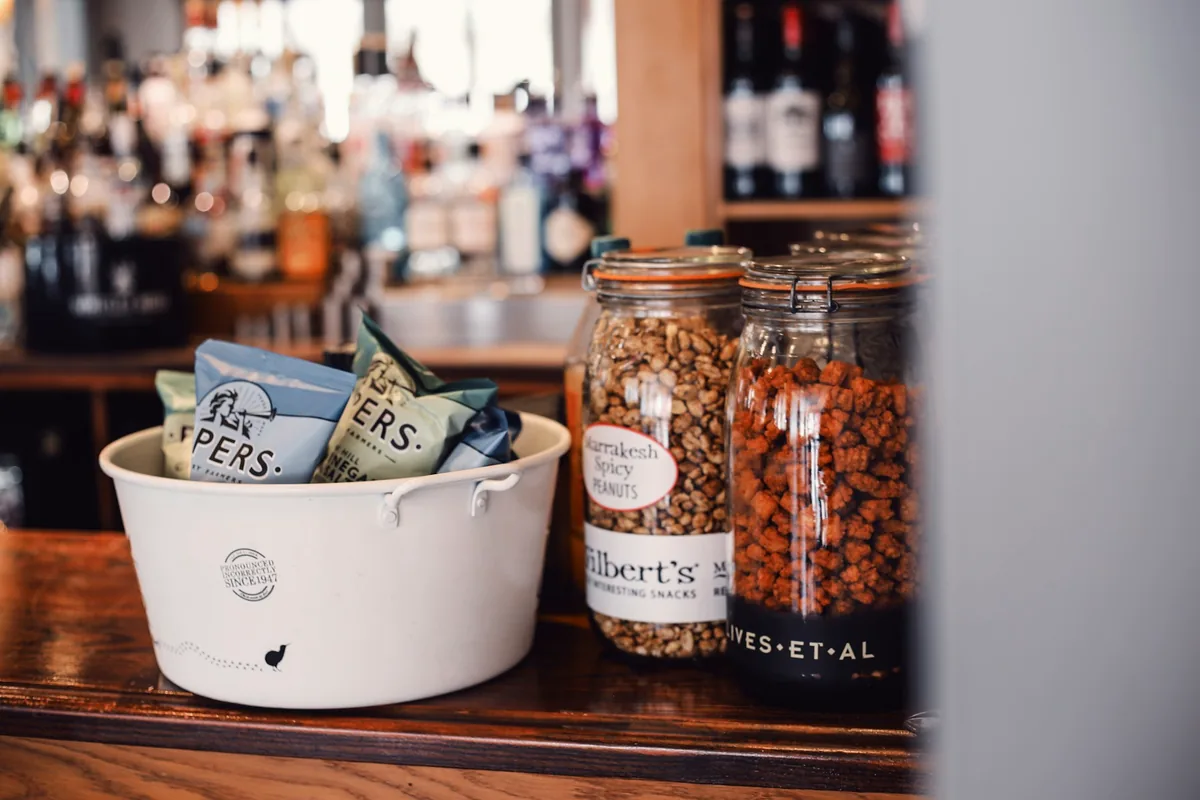
Bitterballen rarely turn up alone. They are one item in a bittergarnituur or borrelplank — a shared board of things to eat standing up with a drink — and knowing the rest of the cast helps when a menu offers the lot:
- Kaasstengels or kaassouffles — fried cheese sticks or pillows. The cheese equivalent of a bitterbal.
- Vlammetjes — small spring-roll parcels with a chilli filling. The name means little flames.
- Oude kaas met mosterd — cubes of well-aged gouda with mustard to dip. No frying involved, and often the best thing on the board.
- Ossenworst — Amsterdam raw-cured beef sausage, sliced thin.
- Gerookte amandelen — smoked almonds, to fill the gaps.
The logic of the board is contrast: something fried, something sharp, something raw, something salty. Ordering four fried items defeats it.
How to eat them
- Wait. Genuinely. The inside is much hotter than the outside and there is no way to tell from looking.
- Bite, do not pop. Take half, let the steam out, then dip.
- Mustard, not ketchup. Sharp Dutch or Belgian mustard cuts the fat. It is the standard for a reason.
- With a beer. Something with carbonation and a dry finish — a pilsner, a blonde or a tripel. The bitterbal is rich and needs scrubbing off the palate.
Frequently asked questions
Are bitterballen bitter?
No. They are savoury and rich. The name comes from bitter, the herbal spirit they were traditionally served alongside, not from the flavour of the snack.
What is the difference between a bitterbal and a kroket?
Size and shape, mostly. A bitterbal is a small sphere eaten as a snack with drinks; a kroket is a larger cylinder, often eaten in a bread roll as a light meal. The filling is essentially the same ragout.
What do you dip bitterballen in?
Mustard is the standard — a sharp, coarse Dutch or Belgian mustard rather than a sweet one. Mayonnaise appears too, and some kitchens offer a cheese sauce.
Are bitterballen Dutch or Belgian?
Dutch by origin. They are so firmly established in Flanders and on Belgian brasserie menus that plenty of people assume otherwise.
What meat is in bitterballen?
Beef, traditionally — often slow-cooked and shredded, bound in a thick beef-stock roux. Veal and chicken versions exist, and vegetarian ones using mushroom or cheese are increasingly common, but none of that can be assumed from the name.
Worth knowing
If you take one thing from this: order them early, with the first drink, and let them sit for a minute before you commit.
Bitterballen are one of the fixtures that define the format — see what a Belgian brasserie is for the rest of them, and how to pair Belgian beer with cheese if the beer cheese sauce is the part that interests you. The version Meyboom served is on the archived food menu.