
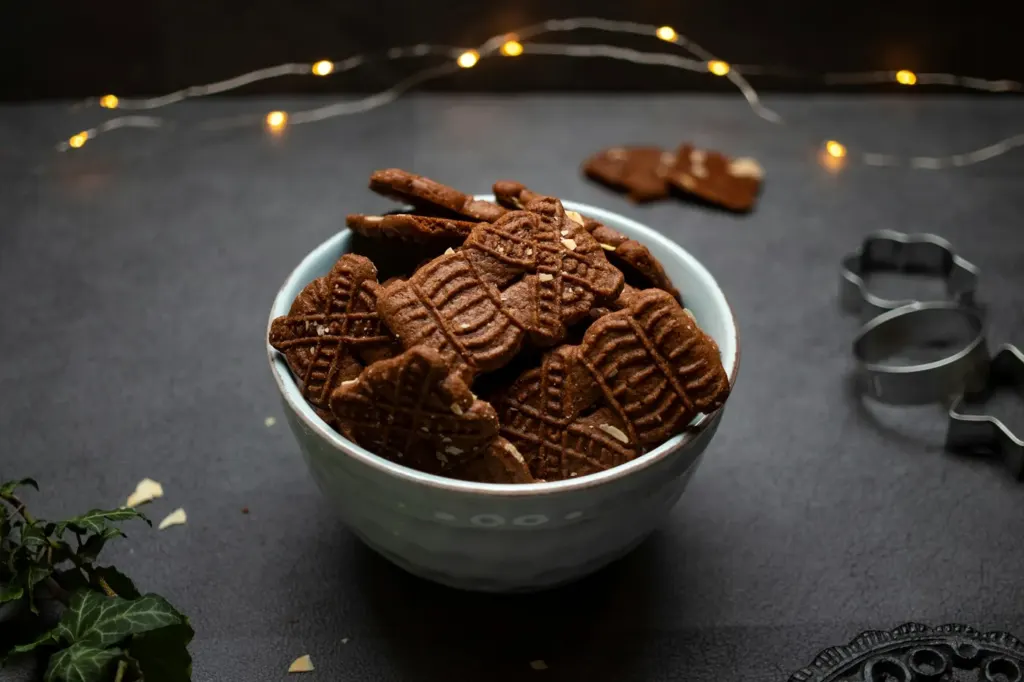
You have almost certainly eaten one. The thin, crunchy, caramel-brown biscuit that comes with coffee on a plane is a speculoos, and it has a longer history than the airline that handed it to you.
The short answer
Speculoos is the Belgian version: a thin, crisp biscuit whose flavour comes mainly from caramelised sugar, with very little spice. It is the one sold worldwide under the brand name Biscoff.
Speculaas is the Dutch version: the older, more heavily spiced biscuit, flavoured with a mix of cinnamon, nutmeg, cloves, ginger, cardamom and white pepper, and traditionally pressed in a carved wooden mould.
Same family, same shape, different flavour logic. One tastes of caramel; the other tastes of a spice cupboard.
Where the spice came from
The spiced version is the original, and it is a direct product of the Dutch spice trade. Cinnamon, nutmeg, cloves and mace arrived in the Low Countries in bulk from the seventeenth century onwards, and a biscuit loaded with expensive imported spice was a way of showing off.
The blend became standardised enough to get its own name — speculaaskruiden, speculaas spice — and it is still sold as a single ingredient in Dutch supermarkets, in the way pumpkin spice is in the United States.
The Belgian version drifted away from that. Rather than leaning on spice, it leans on sugar cooked until it caramelises, giving a deeper, toffee-ish flavour and a darker colour without the aromatic hit.
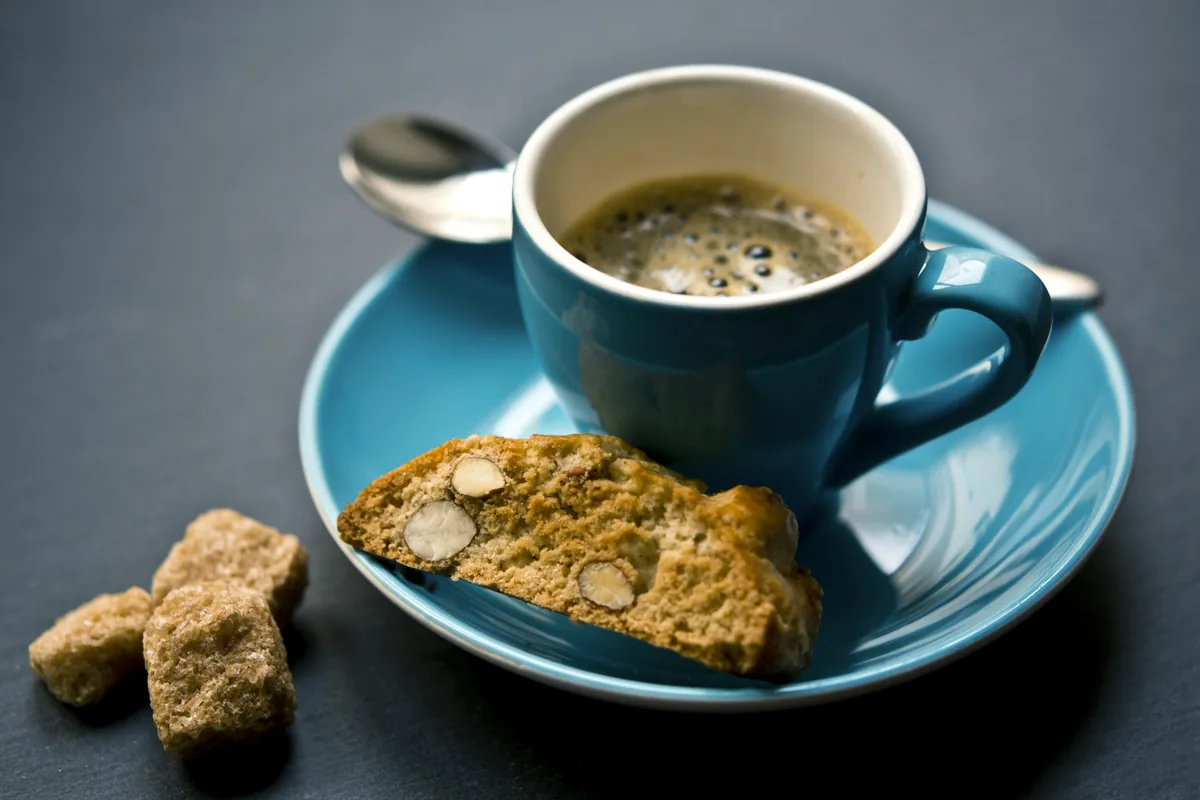
The moulds, and the name
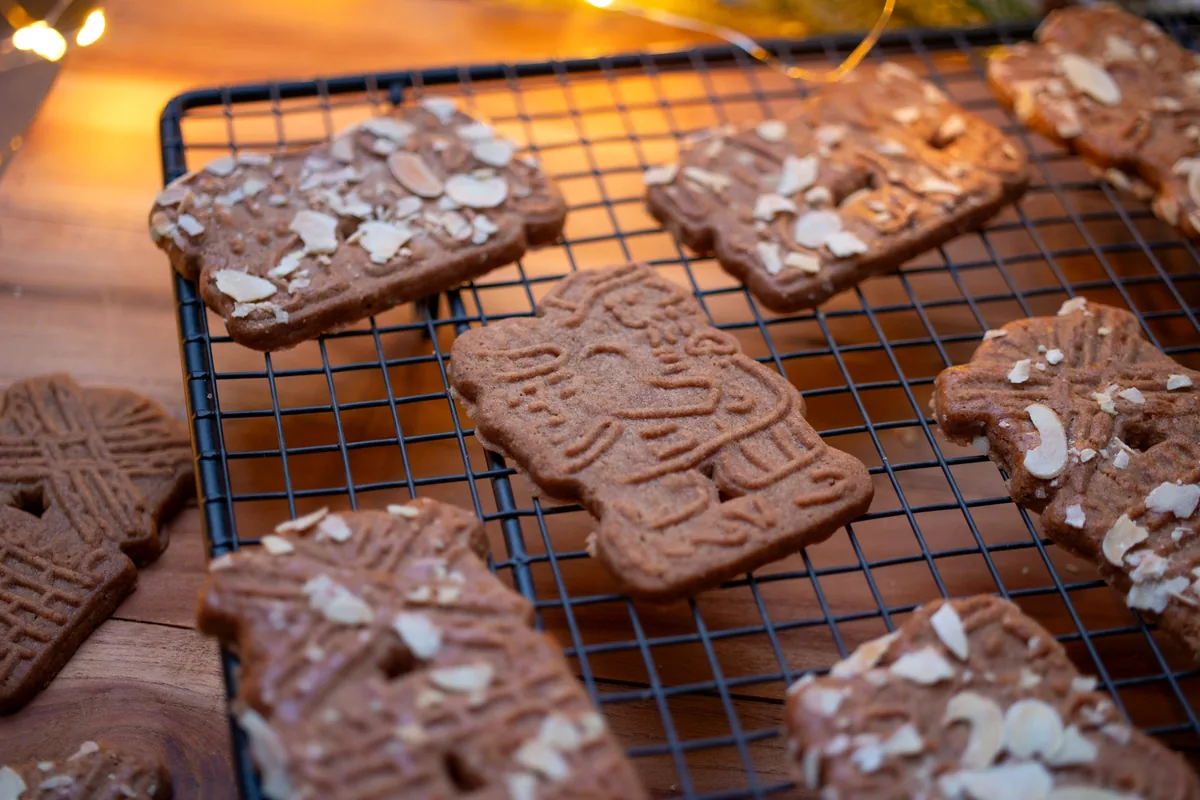
The traditional biscuit is pressed into a carved wooden board before baking, which leaves a raised image on the finished biscuit — windmills, ships, animals, and most often St Nicholas himself.
That is not decoration for its own sake. Speculaas was baked for Sinterklaas, the feast of St Nicholas on 5 and 6 December, and the images told the saint’s stories to people who could not read. The biscuits were a seasonal item long before they became an everyday one.
The name probably comes from the Latin speculum, a mirror — the baked biscuit being a mirror image of the carved mould. Other explanations exist, and the etymology is genuinely unsettled, which is worth saying rather than picking a favourite.
Speculoos, speculaas and Biscoff compared
| Speculoos (Belgian) | Speculaas (Dutch) | Biscoff | |
|---|---|---|---|
| Main flavour | Caramelised sugar | Spice blend | Caramelised sugar |
| Spices | Little to none, often just cinnamon | Cinnamon, nutmeg, clove, ginger, cardamom, white pepper | Little to none |
| Texture | Thin and very crisp | Crisp, often thicker | Thin and very crisp |
| Traditionally moulded | Sometimes | Yes, in carved wooden boards | No – machine stamped |
| Season | Year-round | St Nicholas, early December | Year-round |
| What it is | A biscuit | A biscuit | A brand of the Belgian biscuit |
What is actually in speculaas spice
Since the spice blend is what separates the two biscuits, it is worth knowing what it contains. There is no single official recipe, but a Dutch speculaaskruiden mix almost always runs on the same seven:
- Cinnamon — by a wide margin the dominant one, usually more than half the blend.
- Nutmeg and mace — mace is the lacy covering of the nutmeg seed, and slightly sharper.
- Cloves — powerful, and used sparingly.
- Ginger — dried, for warmth rather than heat.
- Cardamom — the one that makes the blend smell more complicated than gingerbread.
- White pepper — the surprise. A small amount, and it is what stops the mix tasting purely sweet.
Anise, coriander seed and allspice turn up in some versions. The pepper is the giveaway ingredient: if a biscuit tastes warm in a way you cannot place, that is usually it.
So what is Biscoff?
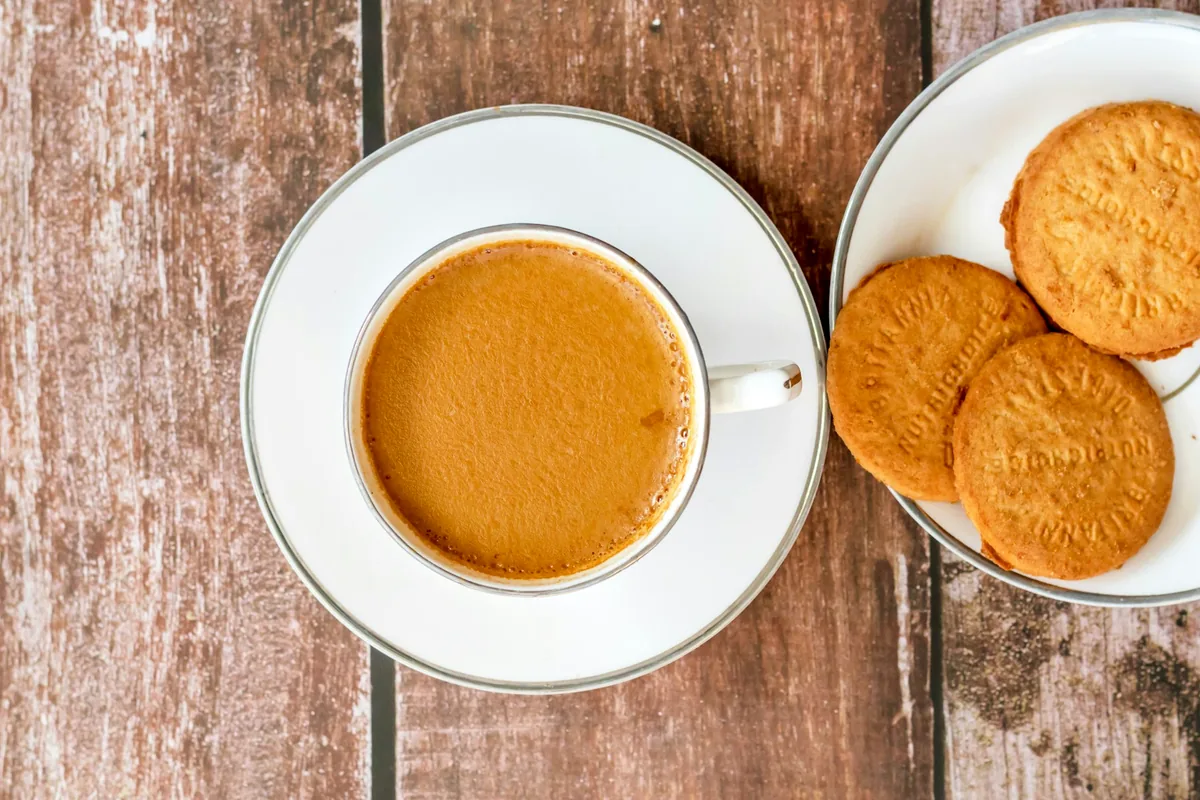
Biscoff is a brand, not a kind of biscuit. Lotus Bakeries, a Belgian company, coined the name for the export market — a compression of “biscuit” and “coffee”, because the biscuit’s job was to be served alongside a cup of it.
The product inside the wrapper is a Belgian caramelised speculoos. If you have ever wondered why the biscuit on the plane tastes faintly of gingerbread but has almost no discernible spice, that is why: it is the Belgian branch of the family, not the Dutch one.
Lotus later ground the biscuits into a spread, which is how speculoos became a flavour rather than only an object — and why “speculoos” now turns up on ice cream, lattes and dessert menus that have never seen the biscuit.
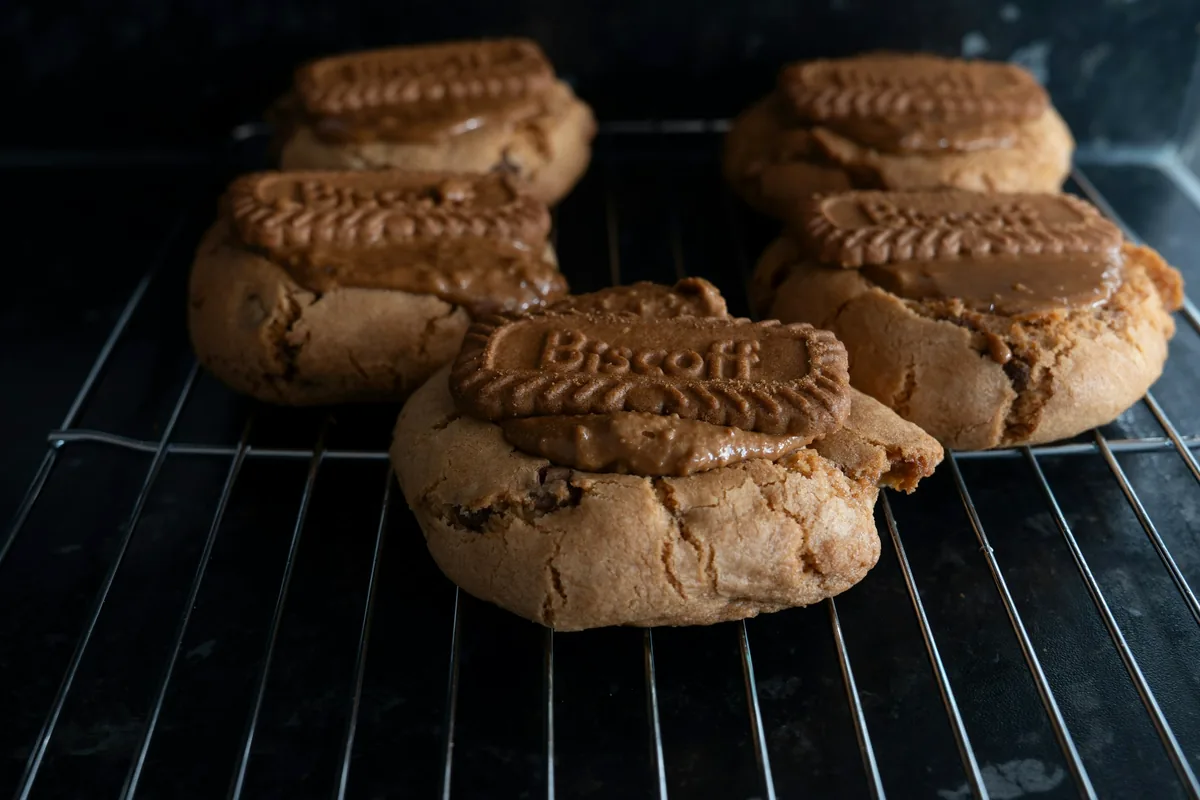
How it turns up on a brasserie menu
Crushed speculoos is a standard topping in Belgium, and it is a genuinely good one — the caramel and the crunch survive contact with anything warm and soft.
Meyboom Brasserie used it exactly that way, as one of the choices on its Liege waffle. The two menu captures are a small illustration of the naming muddle this article is about: the food menu lists the topping as Biscoff cookie crumbles, and the brunch menu lists the same thing as speculoos cookie crumbles. Both are correct, and neither is a different ingredient.
Frequently asked questions
Is speculoos the same as Biscoff?
Effectively yes. Biscoff is Lotus Bakeries’ brand name for its Belgian caramelised speculoos. All Biscoff is speculoos; not all speculoos is Biscoff.
What is the difference between speculoos and speculaas?
Speculoos is Belgian and gets its flavour mostly from caramelised sugar. Speculaas is Dutch and is heavily spiced with cinnamon, nutmeg, cloves, ginger and cardamom. The Dutch version is the older one.
What does speculoos taste like?
Caramel and brown sugar with a faint warm-spice edge, and a distinctive dry snap. People often reach for gingerbread as a comparison, which is closer to speculaas than to speculoos.
Why do speculoos biscuits have pictures on them?
They were pressed in carved wooden moulds, traditionally showing St Nicholas and scenes from his stories, because the biscuit was baked for his feast day in early December.
Is speculoos a Christmas biscuit?
Historically it was tied to St Nicholas in early December rather than Christmas. Commercially it is now sold year-round, and the Belgian caramelised version was never especially seasonal.
Worth knowing
If a recipe calls for speculoos and you have speculaas, you will get a noticeably spicier result. Going the other way, you will lose most of the aroma. They substitute, but not invisibly.
Crushed speculoos is at its best on something warm — which brings you to Liege waffle vs Brussels waffle, since the Liege is what it is usually scattered over. For the rest of the menu it belongs to, see what is a Belgian brasserie, or the archived brunch menu.