
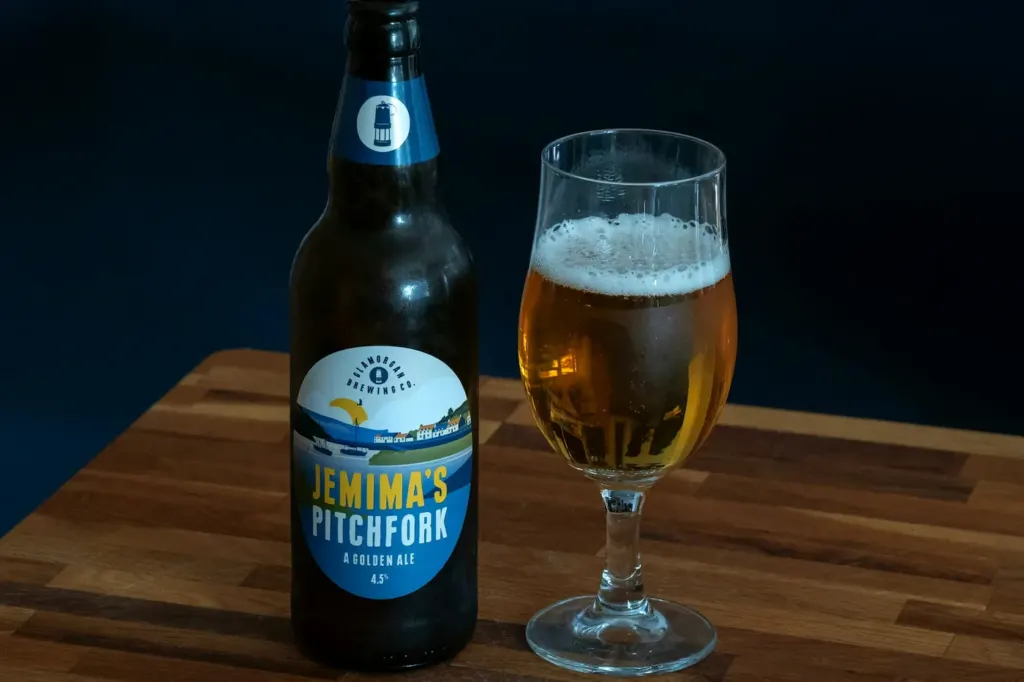
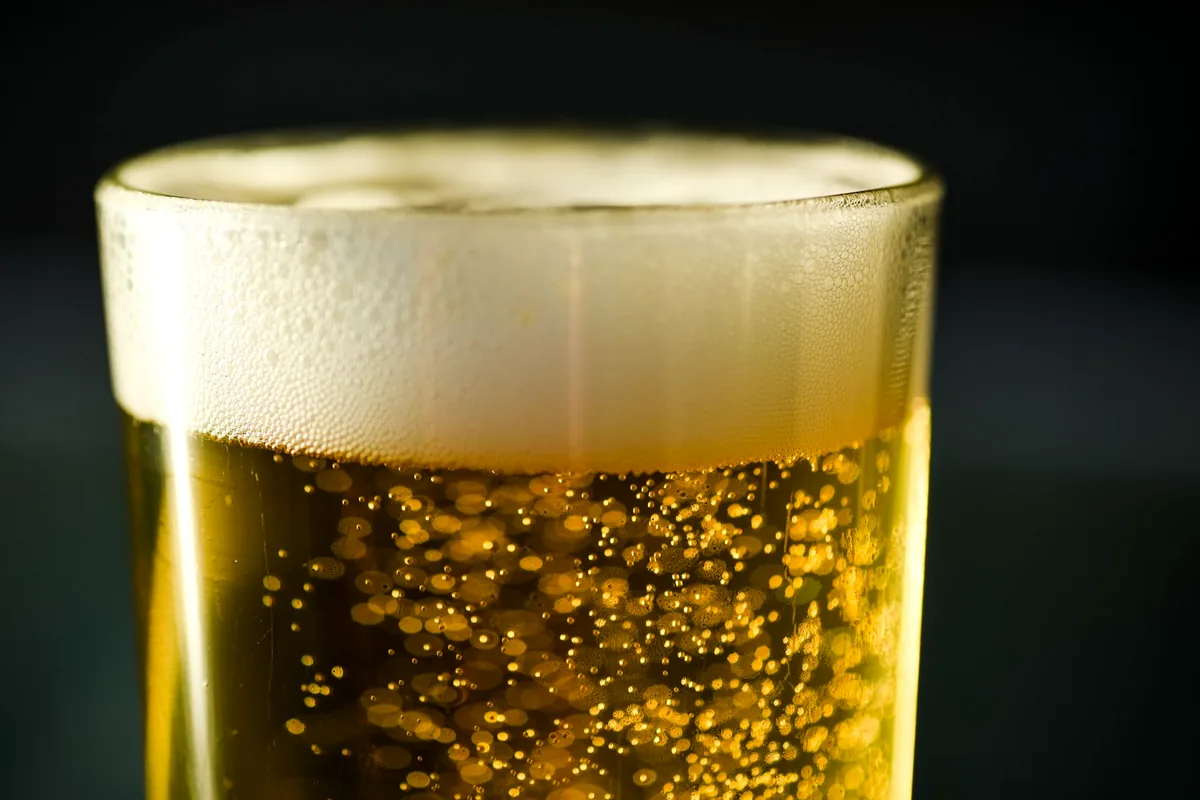
Every other strong beer announces itself. A quadrupel is dark and syrupy, a barleywine is thick, an imperial stout is opaque. Belgian golden strong ale looks like a pilsner, drinks like a pilsner, and is nearly twice the strength. The style is essentially a trick, and the brewers have never pretended otherwise.
The short answer
Belgian golden strong ale is a pale, highly carbonated, very dry Belgian ale of around 8–9% ABV. It is brewed with pilsner malt and a large addition of plain sugar, which ferments away almost completely — raising the alcohol while leaving the beer light-bodied and pale.
The result tastes of pear, pepper and citrus, finishes bone dry, and gives you almost no sensory warning about how strong it is. Duvel is the reference example and effectively invented the category.
How the trick works
Three decisions, all pulling the same way.
Sugar instead of more malt
To make a strong beer you need more fermentable material. Adding more malt would also add colour, body and residual sweetness. Adding plain sugar adds none of those — the yeast eats it almost entirely, converting it to alcohol and carbon dioxide and leaving nothing behind.
So the beer gains alcohol without gaining weight. This is the single most important thing to understand about the style, and it is the same technique that makes a tripel work.
Very high carbonation
These beers are carbonated far beyond a standard ale. The bubbles scrub the palate, lift the aroma and make the beer feel spritzy rather than heavy. Effervescence reads as “light” to the drinker regardless of what the alcohol is doing.
Yeast doing most of the flavour work
Pale malt contributes very little taste, so nearly everything you smell is yeast: pear, apple, white pepper, a touch of clove. Fermentation is run warm and long to encourage exactly that. Hop bitterness stays moderate — enough to dry the finish, not enough to dominate.
The names are a warning label
The style has a naming convention and it is not subtle.
Duvel is Flemish for devil. The story attached to it is that a taster, on first trying the beer, called it a devil of a beer, and the name stuck. Craft Beer & Brewing’s account of how Duvel is brewed covers the unusually long, cold fermentation and secondary bottle conditioning that produce it.
Delirium Tremens is named after alcohol withdrawal, with a pink elephant on the label. Judas, Lucifer and Satan are all real Belgian golden ales. The joke is consistent and the joke is the point: these beers are telling you they will catch you out.
How it compares to the styles around it
| Golden strong ale | Tripel | Pilsner | |
|---|---|---|---|
| Colour | Pale gold | Gold | Pale gold |
| Typical strength | 8-9% ABV | 8-10% ABV | 4-5% ABV |
| Body | Light and dry | Light for its strength | Light |
| Flavour | Pear, pepper, citrus | Clove, orange, spice | Bread, grass, hop bite |
| Bitterness | Moderate; dry finish | Moderate | Often higher than either |
| Carbonation | Very high | High | Moderate |
| Reference beer | Duvel | Westmalle Tripel | Pilsner Urquell |
The confusion with tripel is the common one, and it is a fair confusion — the two are built almost identically and overlap heavily in strength. The rough distinction is that tripels lean spicier and a touch sweeter, with a monastic lineage, while golden strong ales lean drier, more bitter and fruitier. Plenty of beers could be filed under either.
What it looked like on a real list
Meyboom Brasserie’s list carried the style in some depth. Duvel appeared on both the draught and bottle lists at 8.5% ABV and 33 IBU. Delirium Tremens sat next to it at 8.5% and 26 IBU, with Delirium Deliria also at 8.5%.
The list also went further than most bars do, carrying Duvel Barrel Aged at 11.5% ABV and a version aged in Irish whiskey barrels at the same strength. Those are sipping beers by any measure.
What is worth noticing is the IBU column. Duvel at 33 IBU sits below the pilsner on the same board — these are not bitter beers, whatever the dry finish suggests. If that seems contradictory, what the numbers on a beer list actually mean explains why IBU and perceived bitterness part company.
How to order and drink one
- Order one. Not a session. An 8.5% beer in a 330ml serving is roughly the alcohol of two standard beers, and the style is specifically engineered to not feel like it.
- Take the glass they give you. A tulip, and usually a large one for a small pour. The shape holds the enormous head and funnels the aroma.
- Cool, not cold. Around 8–10C. Too cold and the pear-and-pepper character disappears entirely.
- Pour hard, then wait. These beers throw a head several inches deep. Pour into the middle of the glass, let it settle, then top up.
- Eat something. Fried food, hard cheese, mussels. The carbonation is built for it.
Frequently asked questions
What is the difference between a tripel and a Belgian golden strong ale?
Very little, structurally — both are pale, strong and sugar-boosted. Tripels tend to be slightly sweeter and spicier with a monastic association; golden strong ales tend drier, fruitier and a little more bitter. Many beers sit on the line.
Why is Duvel called Duvel?
It is Flemish for devil, and the usual story is that an early taster described it as a devil of a beer. The name has since become the template for the whole category.
Why does Belgian golden strong ale have so much foam?
High carbonation plus bottle conditioning. The head is intended — it holds the aroma — which is why the glasses are oversized for the pour.
Is Belgian golden strong ale bitter?
Not especially. It finishes dry, which people often read as bitterness, but the actual hop bitterness is moderate — frequently lower than a pilsner’s.
Why is it so strong without tasting strong?
Plain sugar ferments out almost completely, so the alcohol rises while the body and sweetness stay low. There is no heaviness or syrupy sweetness to signal the strength. That is the design, and it is worth respecting.
The short version
Pale, dry, fizzy, fruity, and much stronger than it looks. The brewers named these beers after devils for a reason, and the sensible response is to have one and enjoy it rather than treat it like a lager.
For where the style sits among the rest, see Belgian beer styles explained, and for why the glass matters as much as it does, why Belgian beer comes in its own glass. The bottles Meyboom carried are on the archived bottle list.