
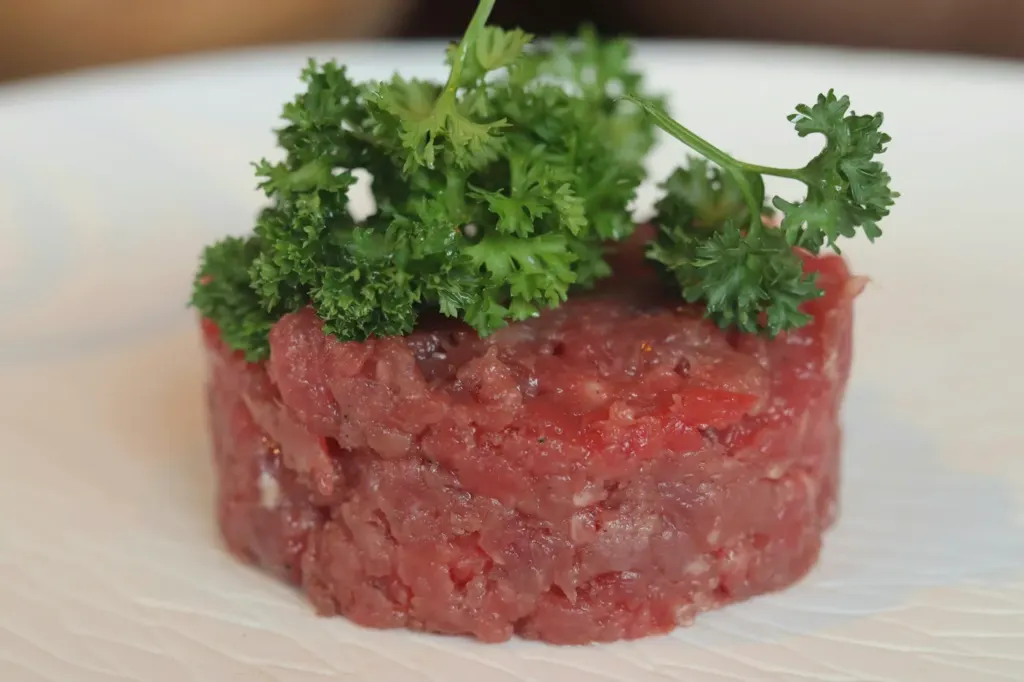
Order steak tartare in Paris and you get a mound of hand-cut raw beef, a yolk on top, and a set of seasonings you are expected to mix in yourself. Order filet américain in Brussels and you get something smoother, paler, already seasoned, and often spread on bread. They are relatives, not the same dish, and the difference is not subtle once you know what you are looking at.
The short answer
Both are raw beef. The one-line difference is mayonnaise: classic French steak tartare contains none, and Belgian filet américain is built on it. That single ingredient drives everything else — the texture, the colour, whether it is mixed in the kitchen or at your table, and whether you eat it with a fork or spread it.
The differences that matter
| Steak tartare | Filet américain | |
|---|---|---|
| Mayonnaise | None | Yes – the defining ingredient |
| Cut | Hand-chopped or diced, loose | Finely ground, smooth and cohesive |
| Colour | Deep red | Paler and pinker, often paprika-tinted |
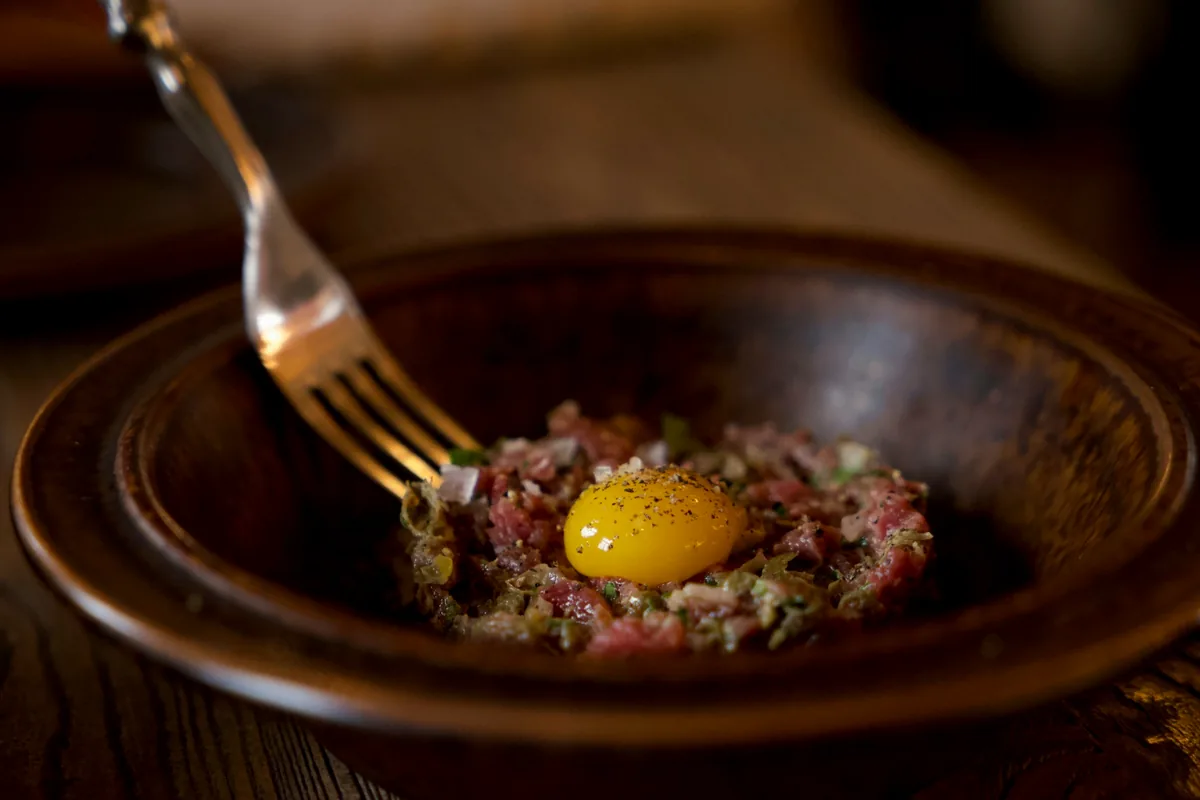
| Egg | Raw yolk on top, mixed in at the table | Usually only via the mayonnaise |
| Seasoned | At the table, by you or in front of you | Usually already blended in |
| Eaten with | Toast points, sometimes fries | Fries, or spread on a roll |
| Where | France, and internationally | Belgium and the Netherlands |
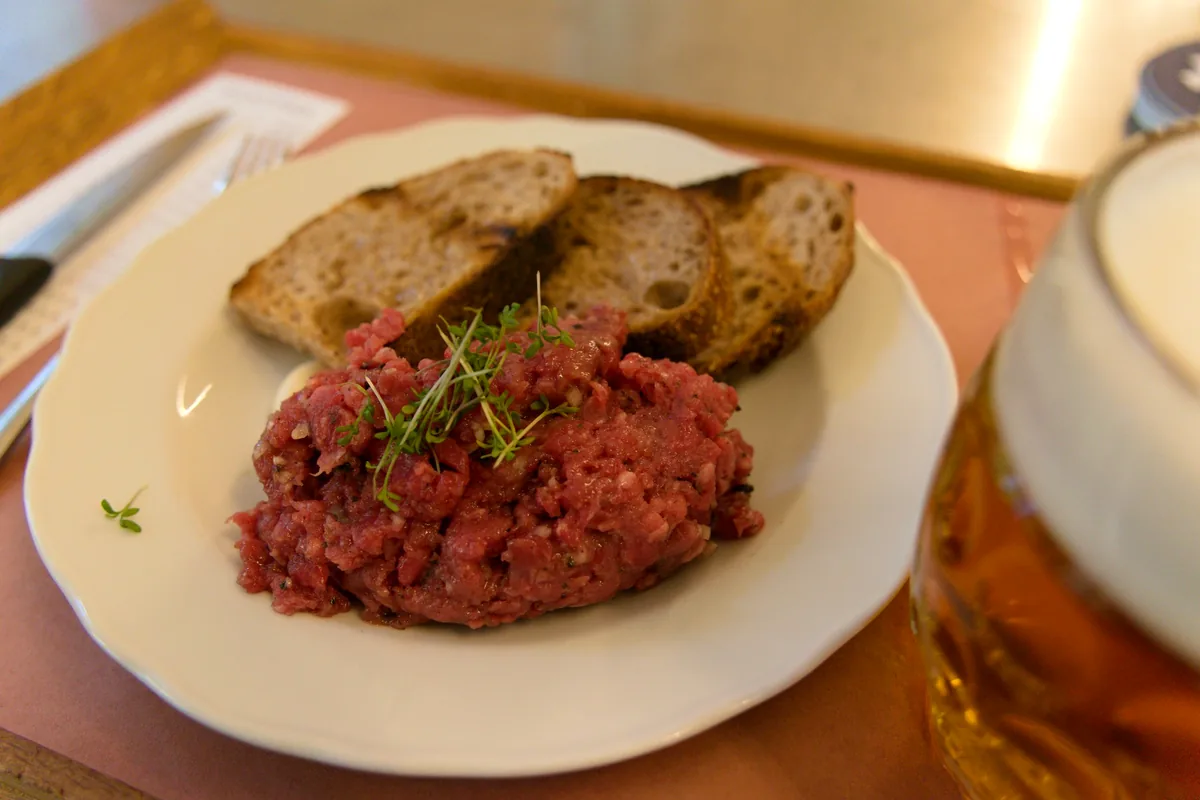
Texture is the first tell. Steak tartare is knife-work: the beef is hand-chopped or diced, and the plate stays loose and granular with visible pieces of meat. Filet américain is ground very fine and worked until it is smooth and cohesive, closer in consistency to a pâté or a spread than to a pile of chopped steak.
Then the colour. Mayonnaise lightens raw beef considerably, and paprika is a common addition in the Belgian and Dutch versions. Where a tartare is deep red, an américain tends towards a paler, pinker, slightly orange tone.
Then who does the mixing. This is the structural difference. Classic steak tartare is a dish assembled in front of you or by you: the components arrive separately and are combined at the table. Filet américain is normally delivered already seasoned and blended.
Nature and préparé
Belgium makes a distinction English menus almost never carry, and it resolves most of the confusion.
Américain nature is plain minced raw beef with nothing added, brought to the table for you to season. Functionally, this is steak tartare.
Américain préparé is the same beef with the seasoning — mayonnaise, mustard, capers, onion, herbs, paprika, Worcestershire in some kitchens — already worked through it.
So when a Belgian menu says américain without qualification, it usually means préparé, and that is the dish that differs from tartare. Ask for nature and you are essentially back to tartare under another name.
It is worth adding a correction to the usual generalisation here. The claim that filet américain is “always” pre-mixed is more true of the Netherlands, where the word overwhelmingly means a ready-made spreadable paste sold in tubs for sandwiches, than of a Brussels brasserie. Brussels tourist authorities make rather a point of the opposite: that at a good address the américain is prepared in front of you at the table, and that a kitchen sending it out pre-made is the lesser version.
Why on earth is it called américain?
Nothing about the dish is American. The best-attested account is Belgian and specific: the name was coined in Brussels in 1924 by the restaurateur Joseph Niels, who took French steak tartare and dressed it with a mayonnaise seasoned with finely minced piccalilli. Niels had trained at the Savoy in London, served the dish at La Taverne Royale, and later opened his own house, Canterbury; the family have run Brussels restaurants since.
On this account the name is period branding rather than provenance — America as the modern, aspirational place, attached to a dish to make it sound new. This is the Brussels version of the story, promoted by the city’s own tourist body, and it is not carried by every reference source, so it is best treated as the leading account rather than a settled fact.
Two other things are worth knowing. The “tartare” in steak tartare is no more reliable: the standard story ties it to Tatar horsemen tenderising meat under their saddles, which is itself a nineteenth-century European invention with no basis in Tatar cooking. And in French, sauce tartare — a mayonnaise with capers and herbs — is very likely how the beef dish got its own name, by way of the sauce originally served alongside it. Two dishes, two names, both misleading.
How Belgium actually eats it
Two ways, and both are everyday rather than special-occasion.
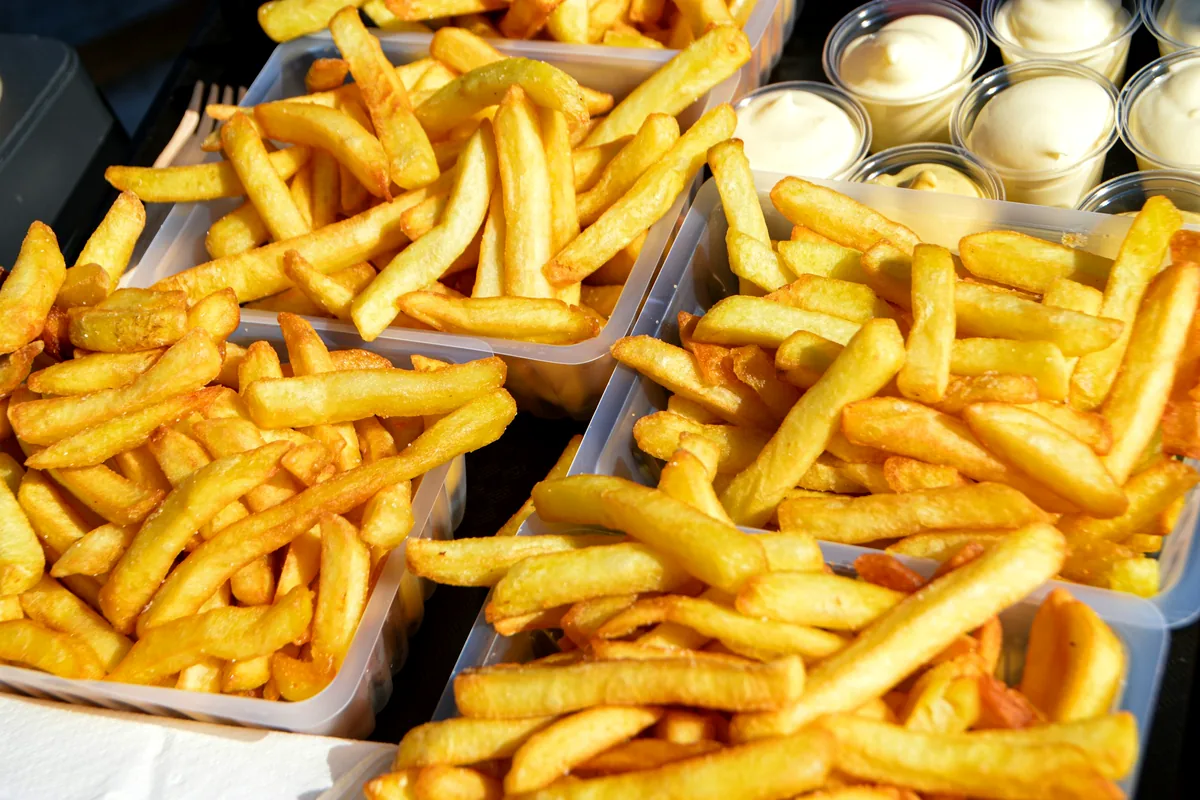
Américain frites is a full plate: the raw beef with a heap of fries, and it is a standard brasserie and café order rather than a curiosity. The fries come separately, as they do with moules-frites, and mayonnaise is on the table as well as in the dish.
The sandwich is the other one, and it is closer to a national habit than a dish. Filet américain on a soft roll or a pistolet, from a bakery or a sandwich shop, eaten at lunchtime without ceremony.
One practical note
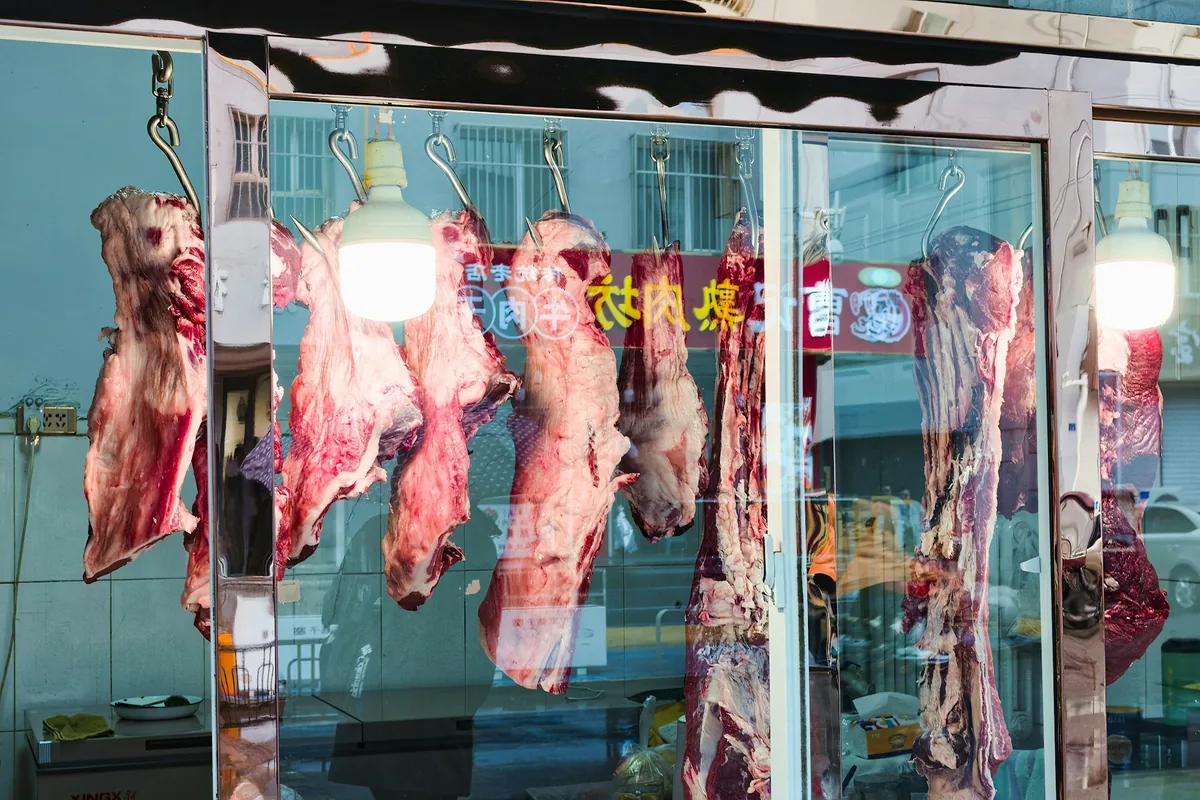
Both dishes are raw beef, and that is not incidental to them. Restaurants serving either work from cuts selected for the purpose and prepare them to order, and the standard advice from food safety bodies is that raw meat is not suitable for everyone — pregnant women, young children, older people and anyone immunocompromised are usually advised to avoid it. If you are ordering it somewhere you do not know, it is a reasonable dish to be choosy about.
Frequently asked questions
Is filet américain the same as steak tartare?
Not quite. It is the Belgian and Dutch relative of it. The defining difference is mayonnaise, which tartare does not contain, and the resulting texture is smooth and spreadable rather than loose and chopped.
Is filet américain American?
No. It is Belgian. The leading account credits the Brussels restaurateur Joseph Niels with the name in 1924, using “américain” as a fashionable label rather than a description of origin.
Does filet américain contain egg?
Usually only as mayonnaise, worked into the mixture. The raw egg yolk sitting on top is a steak tartare presentation, and the Belgian version generally drops it.
What is américain nature?
Plain raw minced beef with no seasoning added, served for you to dress at the table. It is effectively tartare, and it is how the better Brussels addresses prefer to send it out.
What do you eat it with?
Fries, as américain frites, or on bread. Toast points are more of a French tartare convention.
The short version
Steak tartare is hand-cut raw beef, seasoned at the table, no mayonnaise. Filet américain is finely ground raw beef bound with mayonnaise, usually seasoned in advance, often paprika-tinted, and eaten with fries or on a roll. Belgium distinguishes nature from préparé, which is the distinction English menus lose. Neither name means what it appears to.
Related: what a Belgian brasserie serves, why Belgian fries are different, and bitterballen.