
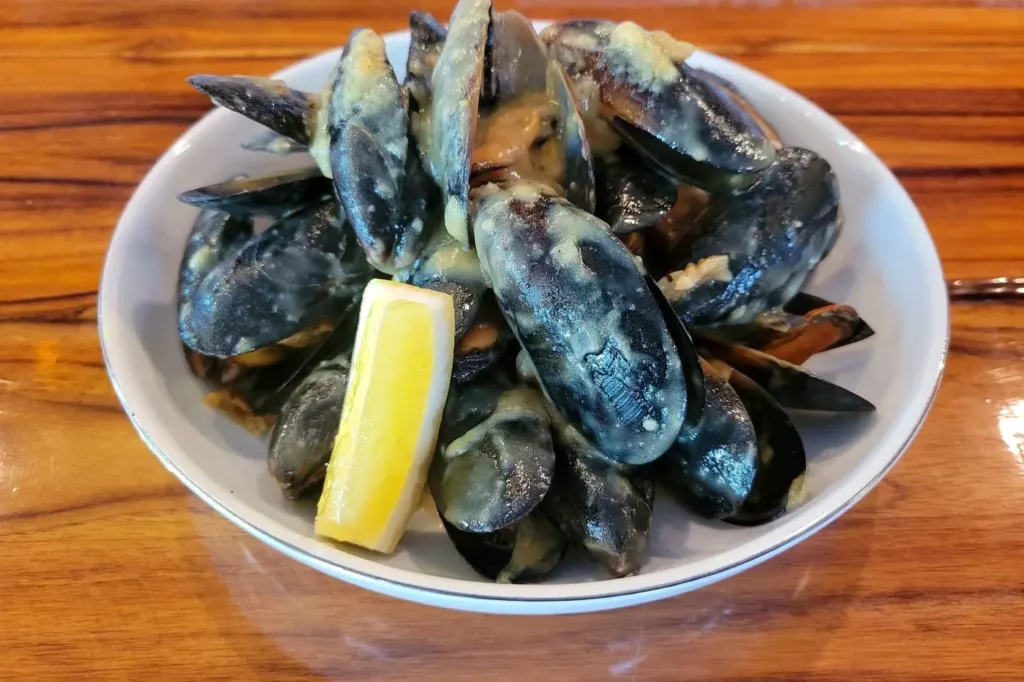
There is an old rule that you should only eat shellfish in months containing the letter R, which rules out May, June, July and August. It is repeated confidently in a lot of kitchens. It is also flatly contradicted by Belgium’s own mussel season, which opens in July.
That is a reasonable way into moules-frites, because almost everything widely believed about Belgium’s national dish is a bit off, including whether it is the national dish and where the mussels come from.
The short answer
Moules-frites is a pot of mussels steamed in an aromatic broth, served with fries alongside rather than underneath. It is Belgium’s informal national dish. The season for the mussels Belgium actually eats runs from the first Wednesday in July to around April — so the R-months rule is wrong at both ends.
The R-months rule
The rule is not nonsense. It is a genuine piece of pre-refrigeration food safety that has simply been overtaken.
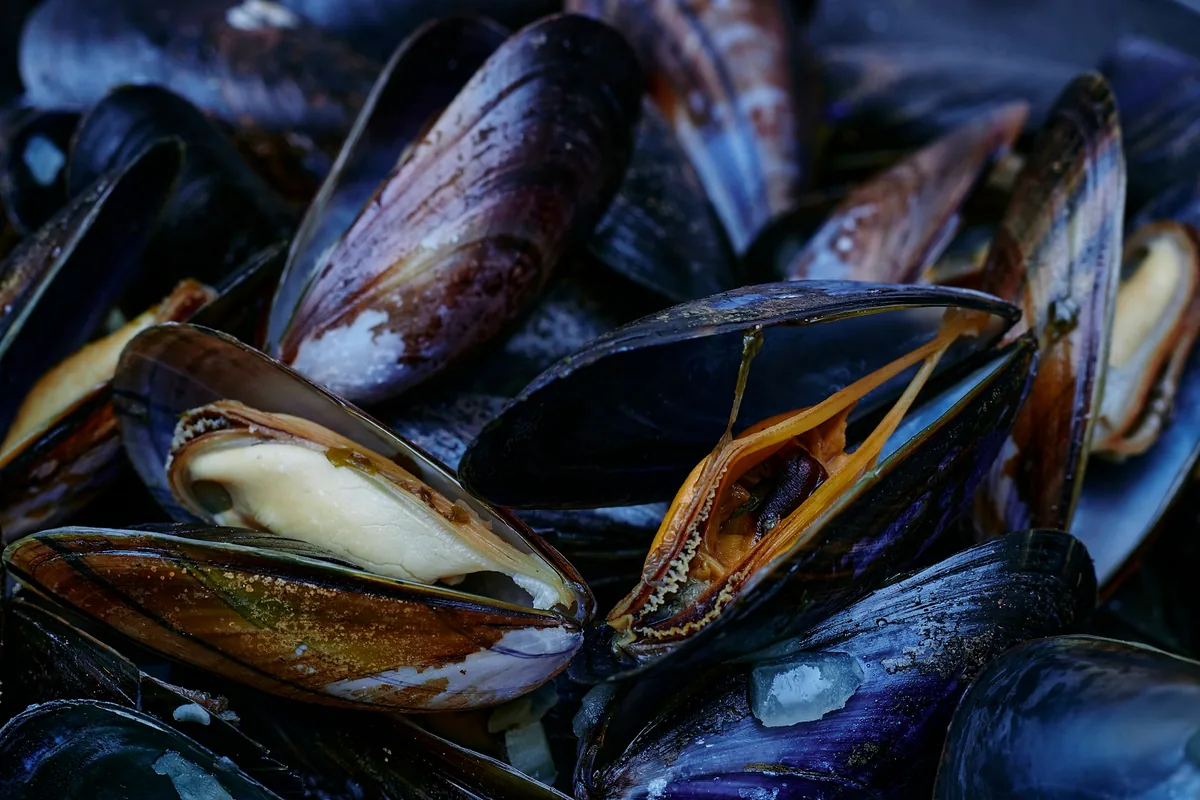
Three real things sat behind it. Warm-weather algal blooms can leave biotoxins in filter-feeding shellfish. Mussels spawn roughly between May and August, and spawning mussels are thin, watery and poor eating. And before cold chains, moving shellfish inland through a hot summer was genuinely risky. Avoiding them in the four R-less months was sensible.
What has changed is the monitoring. Commercial shellfish beds are now tested continuously for biotoxins and closed when readings require it, and the cold chain is unrecognisable. Seasonality today is about quality, not safety: you avoid spawning mussels because they are disappointing, not because they are dangerous.
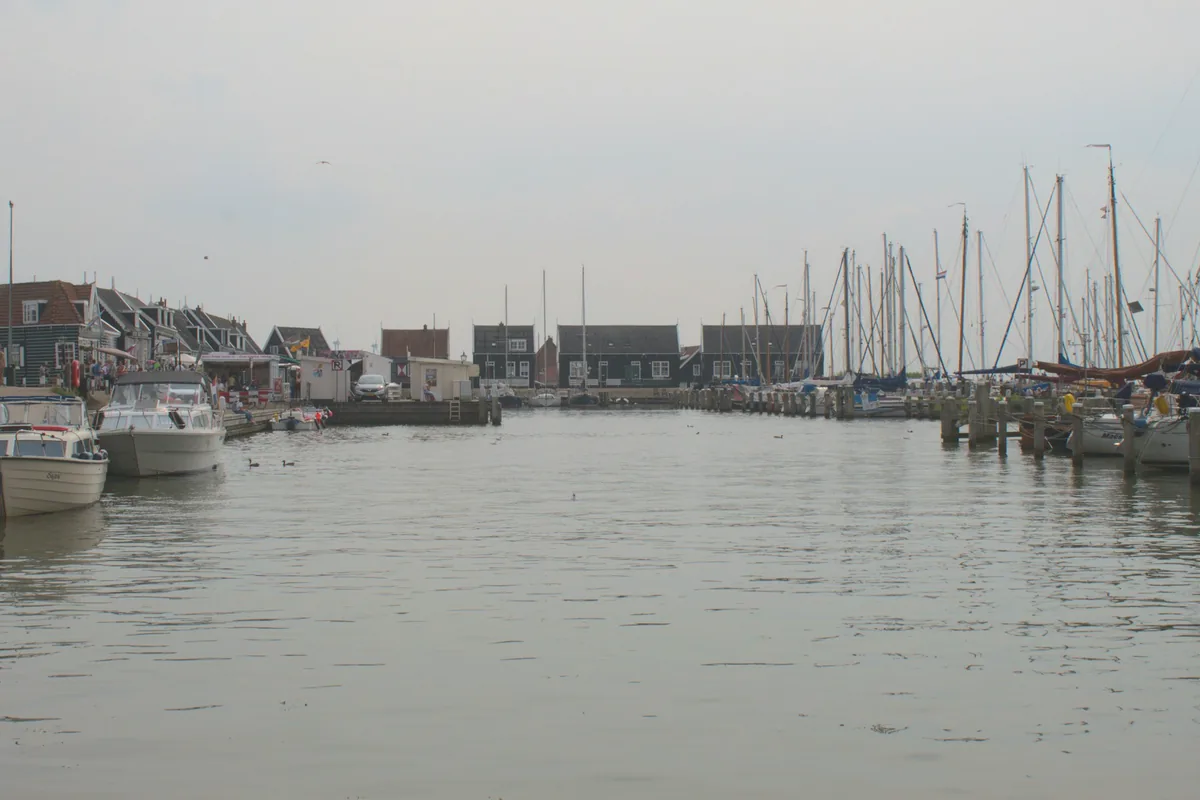
And the Belgian-specific fact settles it. Belgium’s mussels come overwhelmingly from the Zeeland beds in the Netherlands, and that season conventionally opens on the first Wednesday of July, running through to April. The opening of the Zeeland season is a minor national event. July has no R in it, and it is the month Belgians most look forward to eating mussels.
Where the dish came from
Not from a single invention. Moules-frites is a nineteenth-century convergence of two cheap things.
Mussels were abundant, cheap protein along the Flemish coast and moved inland easily once railways existed. Fried potatoes have their own well-worn origin story in the Meuse valley, where villagers are said to have fried potato slices when the river froze and small fish could not be caught. Whatever the truth of that — and it is discussed in more detail in why Belgian fries are different — both were working-class food, both were sold from stalls, and in the growing cities of an independent Belgium after 1830 they ended up on the same plate.
The most specific datable claim in circulation is that the combination was first served at the Liège fair around 1875, and that the Brussels house Chez Léon, opened in 1893, did most to make it a national fixture. That is reported by the Brussels Times among others, and is worth treating as the leading account rather than settled fact.
One thing you can safely disregard: the frequently repeated claim that moules-frites appears in a Flemish manuscript from 1781. No source that repeats it names the manuscript, says where it is held, or quotes it. It is unverifiable and looks like folklore that acquired a date.
The awkward part
On figures reported by the Brussels Times, around 92% of the mussels eaten in Belgium are imported from the Netherlands. Belgium’s national dish is, at the level of the actual ingredient, largely Dutch.
The same reporting puts consumption at something like 10 million kilograms a year, roughly 2.5 kilograms per head, with three in four Flemish households cooking mussels at home several times a season. The dish is genuinely national. The mussels are Zeelandic.
The preparations
A Belgian mussel menu is a list of broths. The mussels are constant; what changes is what they are steamed in.
| Preparation | Steamed in | Notes |
|---|---|---|
| Nature | Butter, celery, leek – no wine | The most Belgian of the four; the mussels’ own liquor carries it |
| Marinière | White wine, shallot or onion, parsley, butter | The international default |
| À la bière | Light Belgian beer in place of the wine | The version Meyboom’s archived menus described |
| À la crème | Wine base thickened with cream | Richer; sometimes lightly floured |
Nature is the one to notice. It sounds like the plain option and it is arguably the most Belgian of them: no wine at all, just butter, celery and leek, which lets the liquor the mussels release do the work. Marinière — white wine, shallot, parsley, butter — is the international default. À la bière swaps the wine for a light Belgian beer, and is the version Meyboom’s archived menus described, steaming the mussels in beer and aromatics and sending them out with fries alongside.
Beyond the core four, brasseries commonly offer them with garlic, in a tomato and herb provençale, with Roquefort, and — genuinely standard in Belgium rather than a novelty — au curry.
How to eat them
There is a technique, it is universal in Belgium, and it makes the whole thing easier.
Take the first mussel out with your fork. Do not discard that shell: keep the two halves joined at the hinge and use it as a pair of pincers, pinching each subsequent mussel out of its own shell. It works better than cutlery, it is faster, and it means one hand stays free. The same shell can pick up fries. Empties go in the bowl provided, or the lid of the pot.
Two other conventions. The fries stay on the side and are not tipped in. And the broth left at the bottom is the point of the exercise — bread for it is normal, and leaving it is the only real mistake available.
Mussels that stayed shut after cooking are conventionally left; the old instruction to discard any that do not open is a rule of thumb rather than a strict indicator, but it remains the normal practice.
Is it really the national dish?
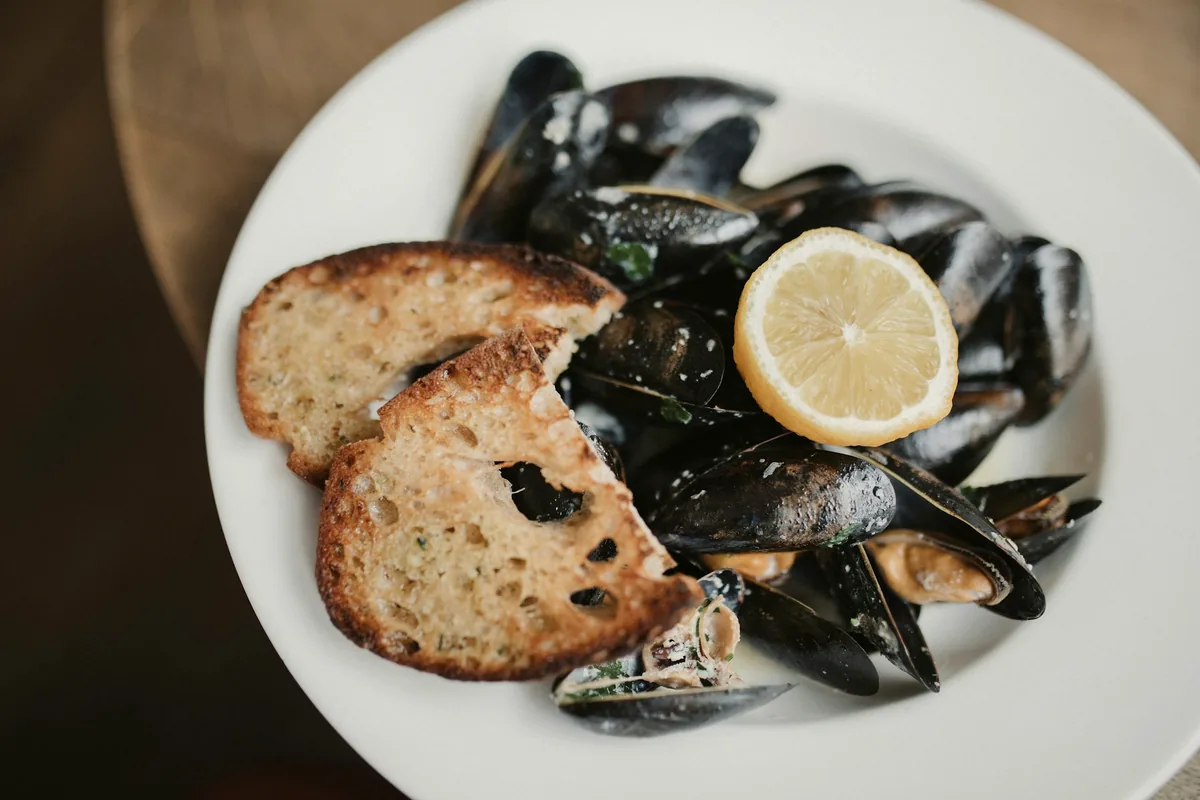
Informally, yes; officially, no. Belgium has no legally designated national dish, and moules-frites has competition from carbonade flamande, waterzooi and stoemp. What it has that they do not is universality: it is eaten across both language communities, at every price level, at home and out, which is a fair working definition.
Frequently asked questions
Can you eat mussels in summer?
Yes. The Belgian season opens in July. The R-months rule dates from before refrigeration and continuous biotoxin monitoring, and modern seasonality is about quality rather than safety.
When is mussel season in Belgium?
Conventionally from the first Wednesday of July until around April, following the Zeeland beds that supply most of them.
Are Belgian mussels Belgian?
Mostly not. Around 92% are imported from the Netherlands, principally Zeeland.
Why are the fries served separately?
So they stay crisp. Fries in the broth go soft immediately, and Belgian frites are twice-fried specifically to have a crust worth protecting.
What do you drink with them?
Beer, usually — a witbier or a light blonde works with the broth without competing with it. There is more on that in what witbier is.
The short version
Moules-frites is steamed mussels with fries on the side, Belgium’s national dish by custom rather than decree, and the product of two cheap nineteenth-century foods meeting in the cities. The mussels are mostly Dutch. The R-months rule is obsolete, and Belgium’s own season opens in July. Order nature at least once, use the first shell as tongs, and keep bread for the broth.
Related: why Belgian fries are different, what a Belgian brasserie serves, and filet américain vs steak tartare.