
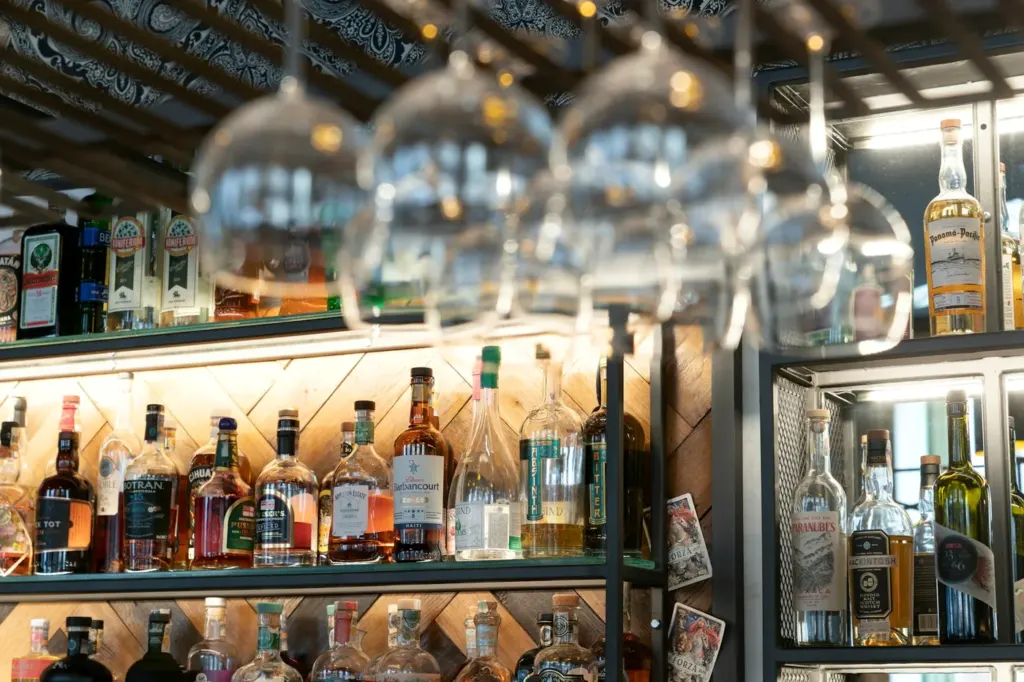
For most of the twentieth century you could not order a gin in a Belgian bar. Not because of licensing hours, not because of a local rule, but because selling spirits in any place open to the public was a criminal offence across the whole country. The ban ran from 1919 to 1984 and it is one of the strangest pieces of legislation in European drinking history.
It is also the origin of a story you will hear repeated in beer books, brewery tours and articles about why Belgian beer is so strong. That part, it turns out, does not hold up.
The short answer
The Vandervelde Law, passed on 29 August 1919, prohibited the consumption, sale and supply of distilled spirits in all places accessible to the general public. Cafés, bars, restaurants and hotels were all covered. Spirits remained legal to buy for drinking at home, but only in quantities of at least two litres at a time. The law was repealed with effect from 1 January 1984.
What the law actually said
Two provisions did the work, and the second is the clever one.
The first was the public ban. Anywhere the general public could walk in, spirits could not be served or drunk. This was not a tax or a restriction on hours. It removed a whole category of drink from the entire hospitality trade at a stroke.
The second was the two-litre minimum. In principle you could still buy spirits for the home, which sounds like a generous carve-out. In practice, in 1919, requiring a working family to buy two litres in one transaction put the purchase out of reach. A daily glass of jenever was affordable; two litres bought at once was not. The rule did not ban drinking spirits at home so much as reserve it for people with money.
Who Vandervelde was
Émile Vandervelde was the leader of the Belgian Labour Party and, in 1919, Minister of Justice. The law carries his name because he drove it.
This matters for understanding it, because the Belgian ban is often filed alongside American Prohibition, which began in the same year, and the two came from different places. American Prohibition was substantially a temperance and religious movement. Vandervelde’s law was a socialist measure aimed at working-class poverty: the argument was that cheap spirits were consuming wages, wrecking households and keeping labouring families poor. The target was jenever specifically, the strong grain spirit of Belgium and the Netherlands, and the target was chosen on class grounds.
That framing also explains the exemption that shaped the next sixty-five years. Beer was left alone. It was treated as a different sort of thing altogether: a fermented drink attached to meals, to cafés, to villages and to ordinary sociability rather than to ruin.
What it did to jenever
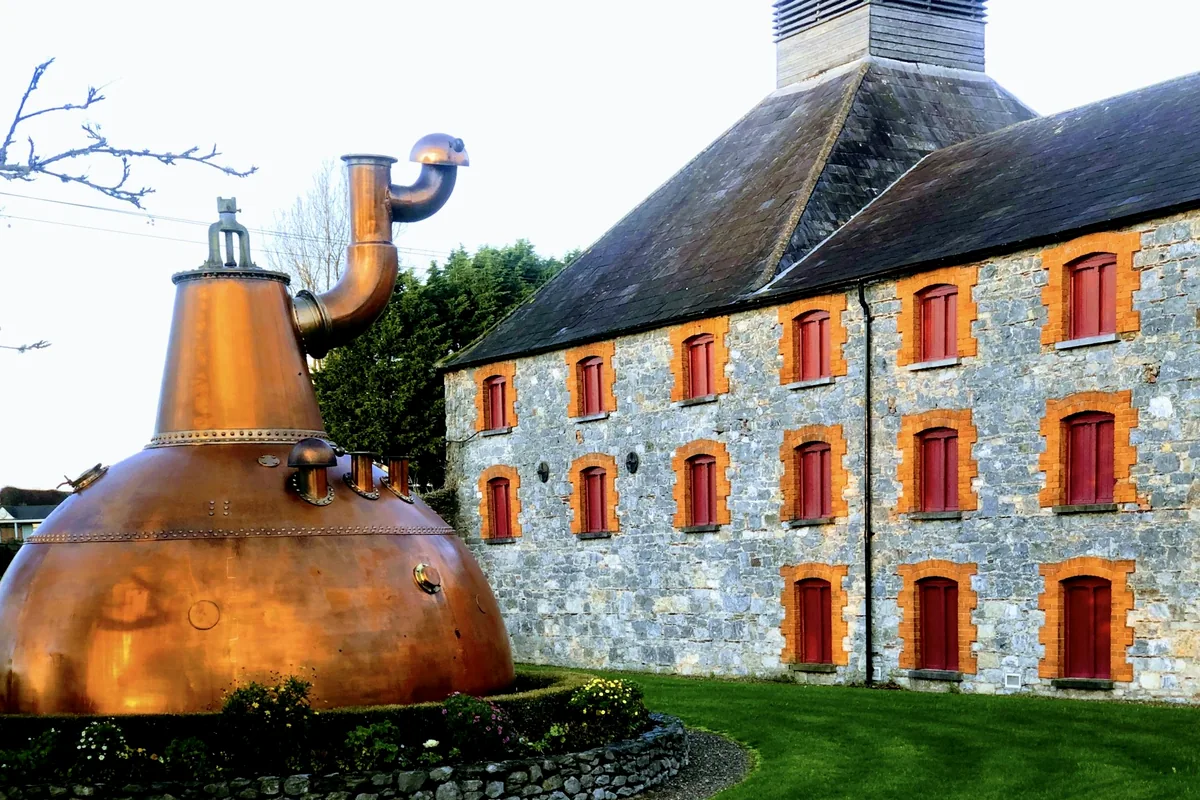
It nearly finished it. Jenever had been Belgium’s national spirit, produced at scale, and the law removed its two main routes to a drinker at once: the café, and the small affordable purchase. Sales collapsed and the distilling industry contracted sharply. Consumption entered a long decline it never fully reversed.
As with any prohibition, an illegal trade grew in the gap. Clandestine distilling moved into farm buildings and cow sheds, some of it underground in the literal sense, and organised crime took an interest. None of this is unique to Belgium; it is what happens when a popular product is made difficult rather than unwanted.
Now the myth
Here is the claim, and it is everywhere: with spirits banned from cafés, Belgian brewers moved in to fill the gap, and this is why Belgium developed its tradition of unusually strong beers. Westmalle’s dubbel appears in 1921, two years after the law, and is offered as the proof. The beer historian Jef van den Steen has argued along these lines, pointing to Westmalle and to Moortgat’s Victory Ale.
It is a tidy story. The numbers do not support it.
| The claim | What the record shows | |
|---|---|---|
| Average beer strength | Rose as brewers replaced spirits | 3.29% in 1900, 3.36% in 1930 – essentially flat |
| Beer consumption | Rose as drinkers switched | Fell through the 1930s, roughly 220 to 202 litres per head |
| Dubbel and tripel | Created in response to the 1919 ban | Stayed rare; popular only after 1950 |
| Strong Belgian beer generally | A 1920s phenomenon | Mostly an 1980s one, as soft drinks displaced table beer |
The average strength of Belgian beer in 1930 was 3.36% ABV. In 1900, before the war and before the law, it was 3.29%. Eleven years of a spirits ban moved the national average by seven hundredths of a percentage point. If brewers were replacing spirits with strong beer, the aggregate figures show no sign of it.
Nor did people drink more beer to compensate. Belgian consumption fell across the 1930s, from roughly 220 litres per head to about 202. And the styles held up as evidence stayed marginal for decades: dubbels and tripels remained rare beers, and only became popular after 1950 — thirty years after the law they supposedly explain.
The real rise in average Belgian beer strength came much later, and from a direction nobody finds romantic. Belgium had a large trade in low-alcohol table beer, drunk at meals including by children, and over the second half of the century soft drinks destroyed it. Remove the weakest category from the market and the average strength of what remains goes up. Most of the genuinely strong Belgian beers an American drinker thinks of as traditional became widely available in the 1980s.
Which is the same decade the ban was lifted. The strong-beer boom and the spirits ban overlap at the wrong end.
What the law did do
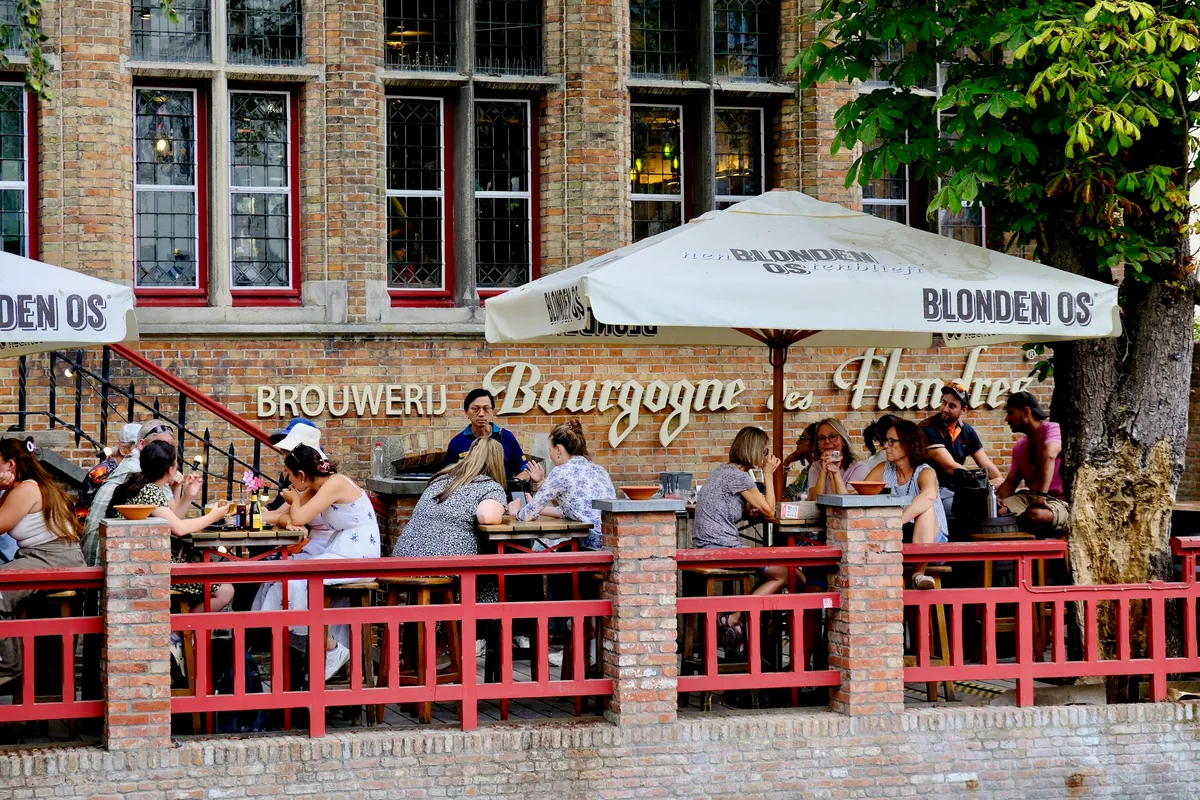
Dismissing the myth is not the same as saying the law did nothing. For sixty-five years, roughly three generations, the Belgian café was a place where the only alcohol on offer was beer and wine. Whatever else that did, it made the beer list the thing a café competed on. A bar with no spirits either has a serious beer selection or has nothing.
It is reasonable to think that helped produce the deep, catalogued, glass-per-beer café culture Belgium is known for, and which is now recognised by UNESCO. That is a slower and less quotable claim than “the law made the beer strong”, and it has the advantage of not being contradicted by the statistics.
The repeal
The ban was dismantled by legislation passed in December 1983, taking effect on 1 January 1984. By then it had outlived its author by nearly four decades and had been widely evaded for years. Belgium had also become, in the meantime, a country where the interesting drink in a café was the beer — which is roughly where it remains.
Jenever, for its part, has had a modest revival, and now holds protected geographical status. It never got its old market back.
Frequently asked questions
Was beer ever banned in Belgium?
No. The Vandervelde Law covered distilled spirits only. Beer and wine were never prohibited, and beer’s exemption was deliberate.
Could you drink spirits at home?
Yes, but you had to buy at least two litres in a single purchase. The threshold was high enough to price out most of the people the law was aimed at.
Is this why Belgian beer is strong?
Almost certainly not. Average Belgian beer strength barely moved between 1900 and 1930, and the strong styles now associated with Belgium only became popular from the 1950s onwards, with the biggest shift in the 1980s. The fuller explanation is in why Belgian beer is strong, and it is about yeast, sugar and fermentation rather than legislation.
How long did it last?
Sixty-five years, from August 1919 to the end of 1983.
Was it the same as American Prohibition?
They started in the same year and are otherwise quite different. American Prohibition banned essentially all alcohol nationally; the Belgian law banned one category of drink in one setting, and left beer and wine untouched throughout.
The short version
Belgium banned spirits in every public bar in the country for sixty-five years, on socialist rather than temperance grounds, and jenever never recovered. The law was real, unusual and long-lived. The claim that it created strong Belgian beer is folklore: the figures show the national average strength essentially unchanged, consumption falling, and the famous strong styles arriving decades later.
Related: why Belgian beer is strong, the estaminet, and the Brussels tradition that started with a beer tax.