
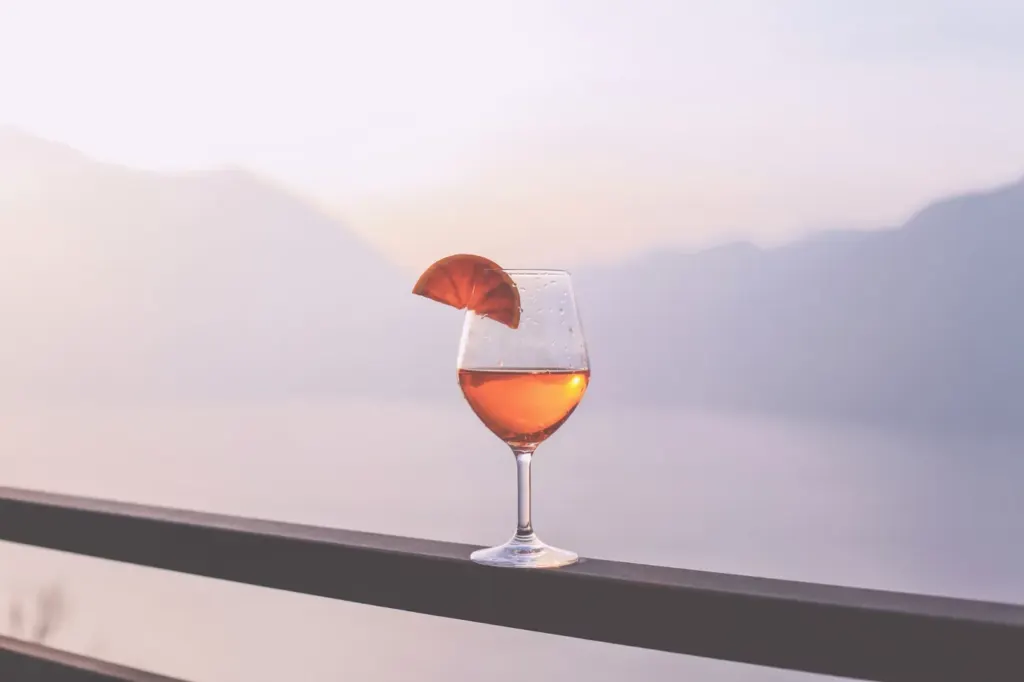
Everybody knows the recipe: three parts prosecco, two parts Aperol, one part soda. It is on the bottle, on the posters and in every bar in Europe. It is also an advertising campaign that postdates the drink by about a century.
The short answer
An Aperol Spritz is Aperol, sparkling wine and soda water over ice, with an orange slice. The spritz format goes back to nineteenth-century Veneto; Aperol was launched in 1919; the two were joined mid-century; and the “3-2-1” ratio is a marketing formula introduced after Campari bought Aperol in 2003.
Where the spritz came from
The word is German. Spritzen means to spray or splash, and the story generally told is that Austro-Hungarian soldiers and administrators posted to the Veneto in the nineteenth century found the local wine heavier than they were used to and asked for it cut with water.
Whether or not the soldiers are literally responsible, the practice is documented: in the Veneto a spritz meant white wine lengthened with water, later with soda when siphons arrived. It was a way of making wine into a long, low-strength drink for the afternoon.
The bitter came later. As Italian aperitivo bitters spread — Select in Venice from 1920, Campari, and Aperol from Padua — bars began adding a measure to the spritz. Which bitter you got depended on where you were, and to a large extent still does: Venice drinks Select, Padua drinks Aperol, plenty of places drink Campari and call it a spritz all the same.
Aperol itself
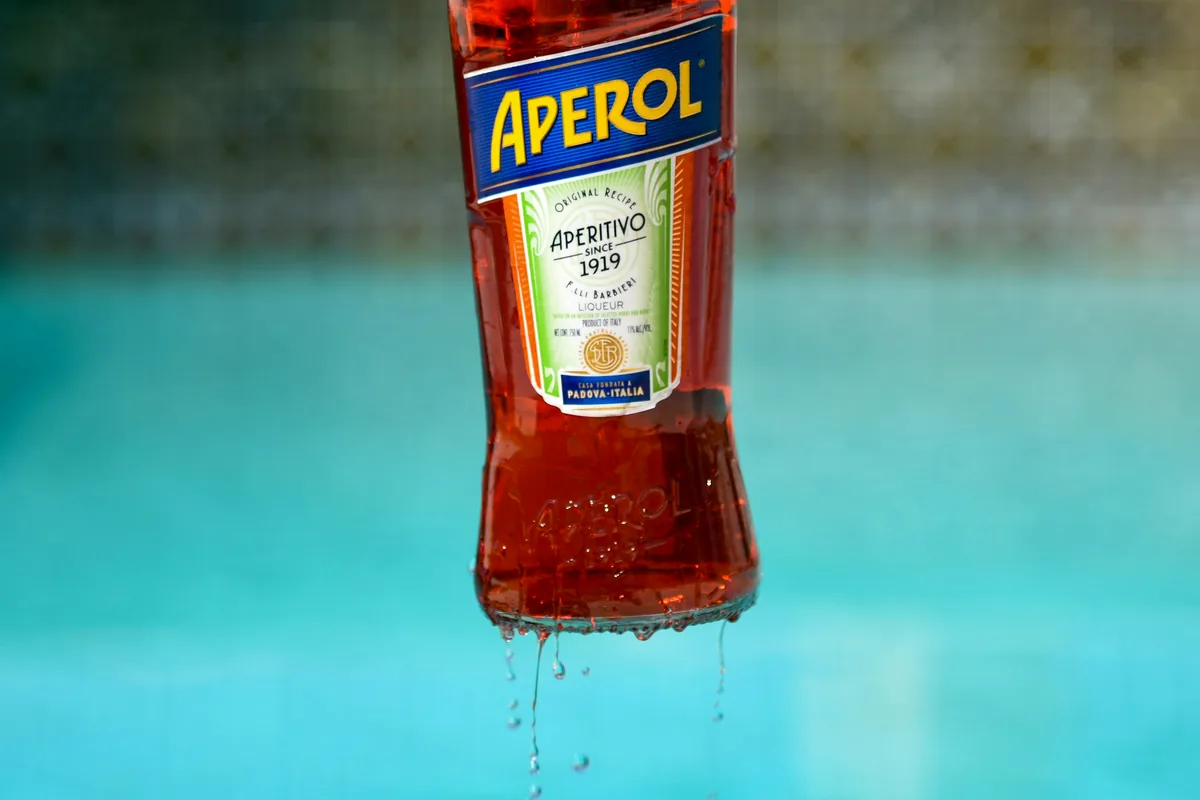
Aperol was created by the brothers Luigi and Silvio Barbieri and launched at the 1919 Padua International Fair. It is a bitter aperitivo of around 11% ABV — notably low, roughly a third the strength of Campari — flavoured with bitter and sweet orange, rhubarb, gentian and cinchona.
It then spent most of a century as a regional Italian drink. The transformation into a global product came after 2003, when the Campari Group bought the brand and put serious money behind it.
The 3-2-1 problem
Here is the part worth knowing. The ratio everybody recites — 3 parts prosecco, 2 parts Aperol, 1 part soda — arrived with Campari’s ownership and became the centrepiece of the marketing. It is a good, workable ratio. It is not a traditional recipe, and it is not how the drink was made for most of its life.
Two consequences follow.
You are allowed to change it. A great many people find 3-2-1 too sweet, and the common fix is simply more soda and less Aperol — closer to the older, wine-forward spritz. Nothing is being violated.
The prosecco is not obligatory. The campaign specified it because Campari also sold prosecco. Any dry sparkling wine works, and a drier one balances Aperol’s sugar better; the comparison is in cava vs prosecco vs champagne.
It is the same pattern as the Cuba Libre’s founding legend and the espresso martini’s celebrity anecdote — a brand-authored story repeated until it reads as history. See the Cuba Libre.
How to make a good one
It is a highball, and the highball rules apply.
- Fill the glass with ice. A large wine glass, packed. More ice dilutes less.
- Wine first, then Aperol, then soda. Adding the sparkling wine last and pouring it hard is the commonest way the drink goes flat.
- Pour gently and stir barely. One lift with a spoon.
- Orange slice, not orange juice. The garnish is there for the oil in the peel.
- Taste it. If it is cloying, more soda. If it is thin, less.
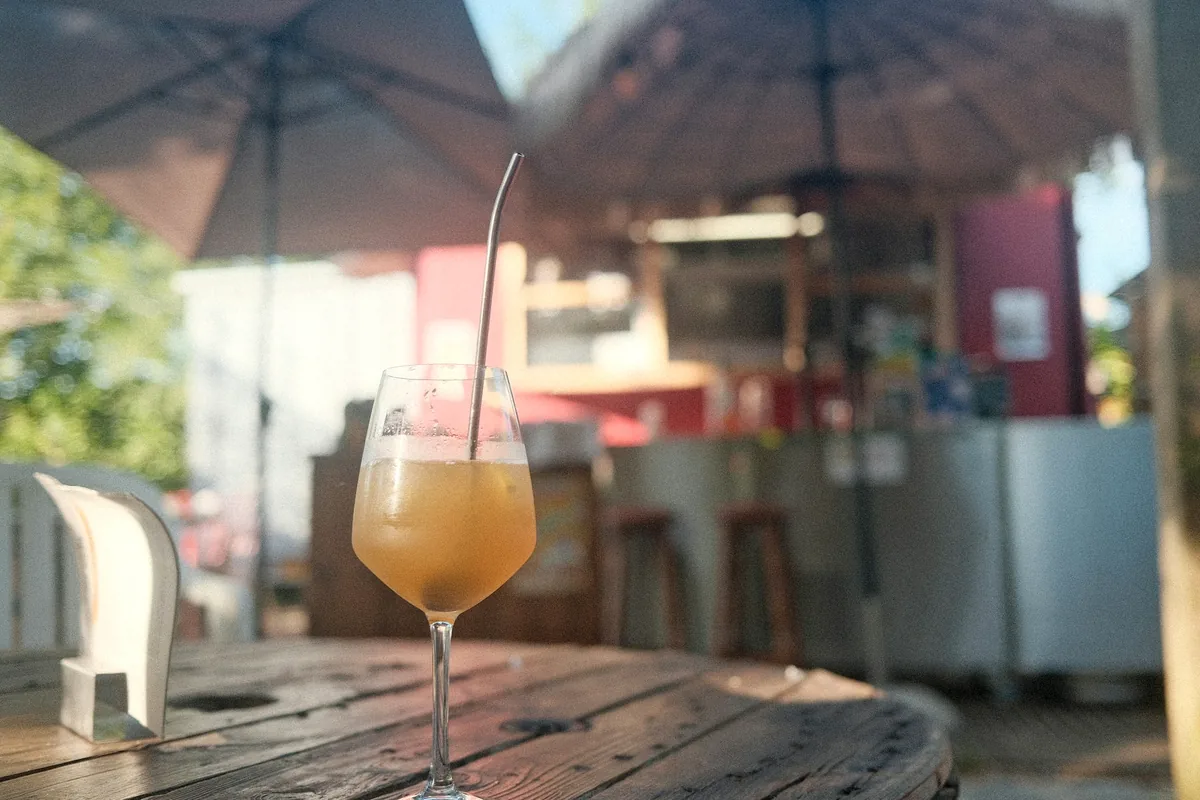
Served in a wine glass rather than a tumbler, which is not decoration: the bowl holds the ice and lets the aromatics collect.
The other spritzes
Aperol is the one that travelled, but it is not the only one and in Venice it is not even the default.
Select Spritz is the Venetian original in the eyes of most Venetians. Select is a bitter made in Venice from 1920, redder and more bitter than Aperol, and asking for “a spritz” in the city will often get you this.
Campari Spritz is drier and considerably more bitter — Campari is around 25% ABV against Aperol’s 11%, so the drink is both stronger and sharper.
Cynar Spritz uses the artichoke amaro and is the most savoury of them, with a vegetal edge that people either take to immediately or not at all.
Hugo swaps the bitter entirely for elderflower and mint, which makes it a spritz in format but not in flavour.
The pattern is that the format is fixed and the bitter is a variable. If Aperol reads as too sweet, the answer is usually a different bitter rather than a different drink.
It is an aperitivo, and that is a whole institution
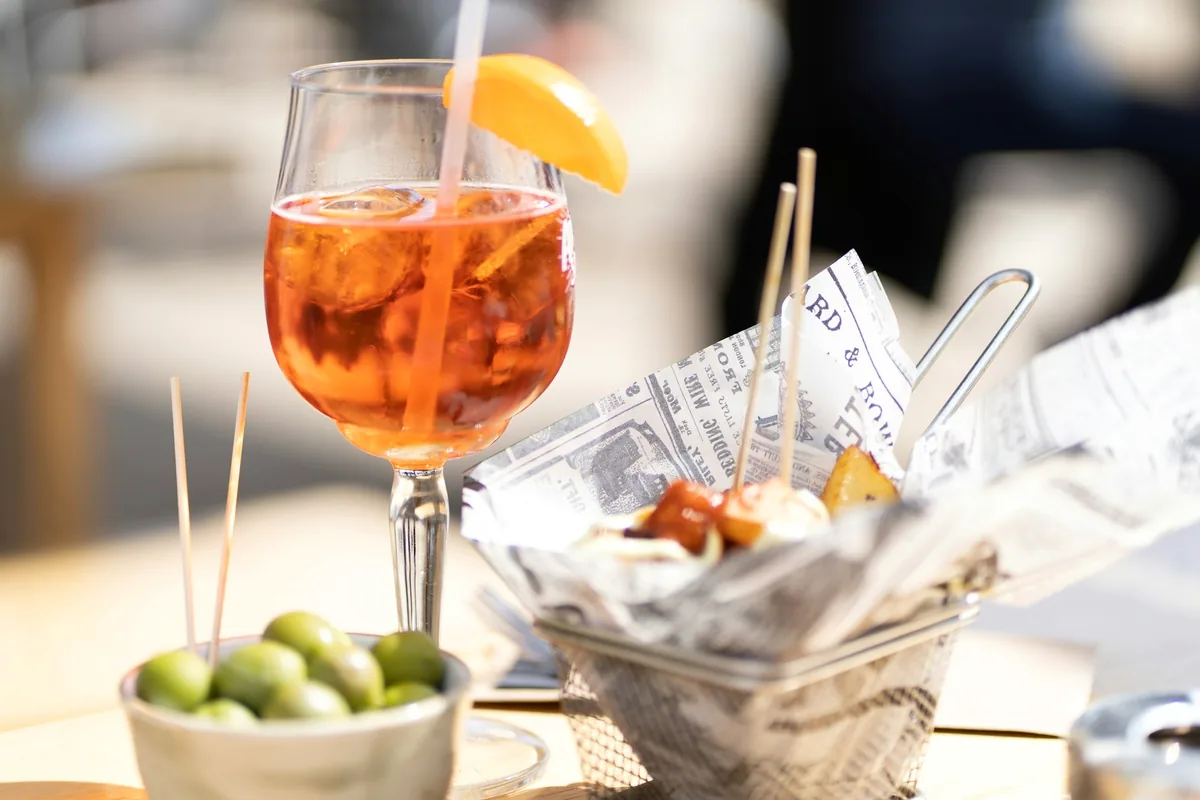
The spritz belongs to a specific slot in the Italian day: late afternoon, before dinner, outdoors, with something salty to eat. In much of northern Italy ordering one gets you olives, crisps or a small plate without asking.
That context explains the drink’s design. At roughly 8-9% in the finished glass it is deliberately weak — it is meant to sharpen an appetite and start an evening, not to be the evening. Drinking it as a strong cocktail misreads what it is for, which is more or less the argument of aperitif vs digestif.
What it looked like on a real list
Meyboom Brasserie’s archived menus carried it twice, which no other drink managed. On the cocktail list at $11: Freixenet cava, Aperol, soda. On the brunch list at the same price, with soda water spelled out.
The cava is worth a note. It is not the prosecco the marketing specifies, it is drier, and for a drink built on a sweet bitter that is arguably the better choice — the same cava the bar used in its French 75 and its Rasbini. A house that runs one sparkling wine through three drinks is making an inventory decision, but in this case it happens to improve the spritz.
The archived cocktail list and brunch menu are both still on the site, with historical prices.
Frequently asked questions
What is in an Aperol Spritz?
Aperol, dry sparkling wine and soda water over ice, garnished with orange. The widely quoted 3-2-1 ratio is a marketing formula, not a rule.
Is the 3-2-1 ratio traditional?
No. It dates from after Campari acquired Aperol in 2003. The drink is far older.
How strong is an Aperol Spritz?
Weak by cocktail standards — usually around 8-9% in the glass, because Aperol is only about 11% and the drink is mostly wine and soda.
Does it have to be prosecco?
No. Any dry sparkling wine works, and a drier one such as cava or crémant balances Aperol’s sweetness better.
Why is it served in a wine glass?
The bowl holds enough ice to keep it cold and lets the orange and bitter aromatics gather where you can smell them.
The short version
Austrian soldiers watering Venetian wine, an orange bitter from Padua in 1919, and a ratio invented by a marketing department in the 2000s. Fill the glass with ice, use something dry and fizzy, add soda until it tastes right, and ignore the numbers on the poster.
Related: the highball family and aperitif vs digestif.