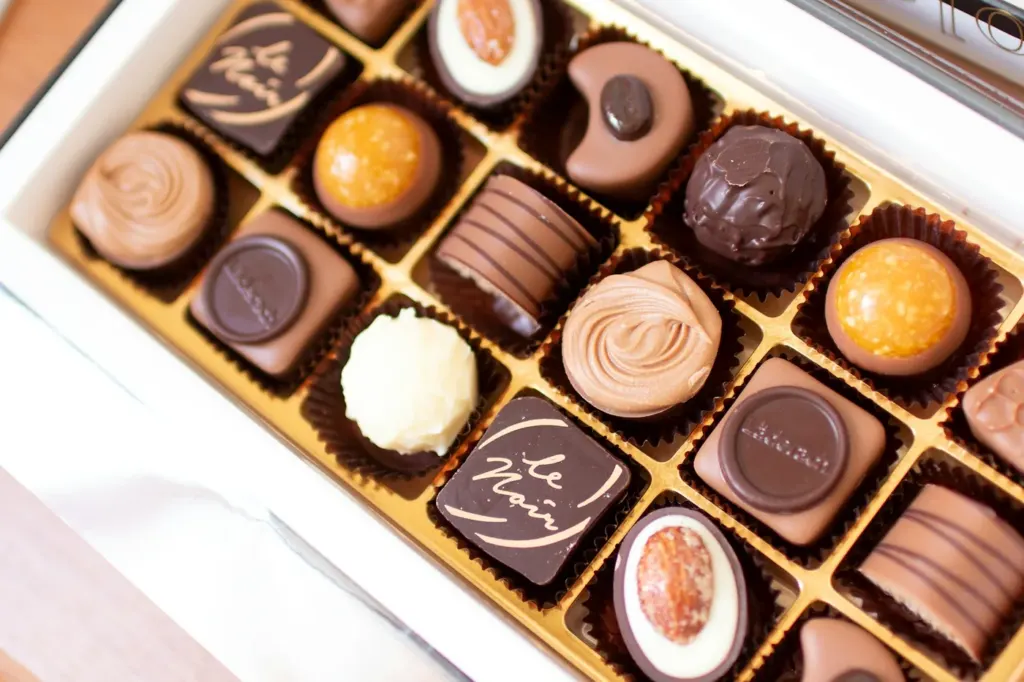
Belgium has a serious claim to being the best place in the world to buy a box of chocolates, and the words “Belgian chocolate” carry a premium accordingly. It is reasonable to assume that a phrase doing that much commercial work is legally defined.
It is not. Not in the way Champagne is, or Parma ham, or — to stay in Belgium — Brussels grondwitloof, which does hold a European protected designation. “Belgian chocolate” is governed mainly by a voluntary agreement between chocolate makers.
The short answer
“Belgian chocolate” is not a Protected Designation of Origin or Protected Geographical Indication under EU law. What exists is the Belgian Chocolate Code, a voluntary convention drawn up by the industry body Choprabisco and signed by companies that choose to, requiring that chocolate sold under the name be mixed, refined, conched and moulded in Belgium. Separately, an 1884 Belgian decree set a minimum cocoa content that shaped later European law.
What the 1884 decree did
The nineteenth-century problem was adulteration. Chocolate was routinely bulked out with flour, starch and other cheap fillers, and the cocoa content of a bar was whatever the manufacturer decided.
Belgium legislated against this in 1884, requiring chocolate to contain a minimum proportion of pure cocoa — the figure usually cited is 35%. It was a food-purity measure rather than a piece of national branding, and it worked in the way such rules do: by setting a floor, it made the label mean something.
Its wider significance is that it became a reference point for later chocolate legislation, including at European level. In this respect it plays a role a little like the German beer purity law — an early national standard that outlived its original purpose and turned into a marketing story.
What the 1884 decree did not do is say anything about geography. It regulates what chocolate is, not where it is made.
What the Chocolate Code requires
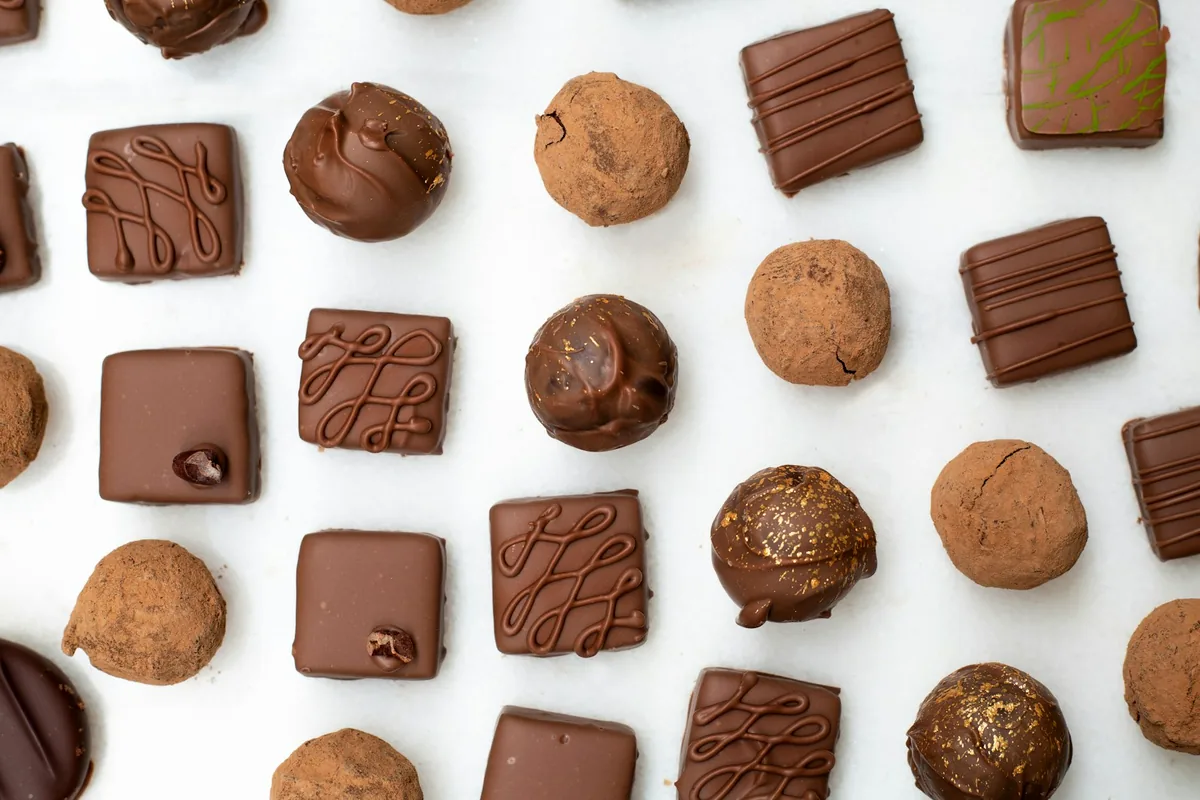
The geographic question was left open until the industry addressed it itself. The Belgian Chocolate Code, introduced in 2007–2008 by Choprabisco, the Belgian association of chocolate, praline, biscuit and confectionery manufacturers, sets out what a company must do to describe its product as Belgian chocolate.
The core requirement is that the chocolate-making itself happens in Belgium — mixing, refining, conching and moulding. That is a real condition and it excludes the most obvious abuse, which is importing finished chocolate and putting a Belgian name on the box.
| Belgian chocolate | A protected designation (e.g. Champagne) | |
|---|---|---|
| Legal status | Voluntary industry convention | EU law |
| Who sets it | Choprabisco, the trade association | EU regulation, on application |
| Binding? | Only on signatories, by agreement | On everyone, absolutely |
| Main requirement | Made – mixed, refined, conched, moulded – in Belgium | Produced in the defined area to a filed specification |
| Enforcement | Indirectly, via unfair-trade-practice law | Directly; unauthorised use is unlawful |
| Covers quality? | No | Yes, via the specification |
The catch is in the word “voluntary”. The Code is a convention that companies sign; it is not a statute, and no regulator enforces it as such.
So what happens if someone ignores it?
The route is indirect. Belgian law prohibits misleading commercial practices, and a claim of Belgian origin on a product with no meaningful connection to Belgium could be challenged on that basis. A court considering such a case could look to the Chocolate Code’s criteria as evidence of what the trade — and therefore the consumer — understands the term to mean.
That is genuine protection, but it is weaker and slower than a protected designation, which puts the burden the other way round: with a PDO, you may not use the name unless you meet the specification, full stop. A proposal for EU-level protection for Belgian chocolate was floated in 2013 and did not result in one.
What none of it covers
Two things, and they are the two most people assume are included.
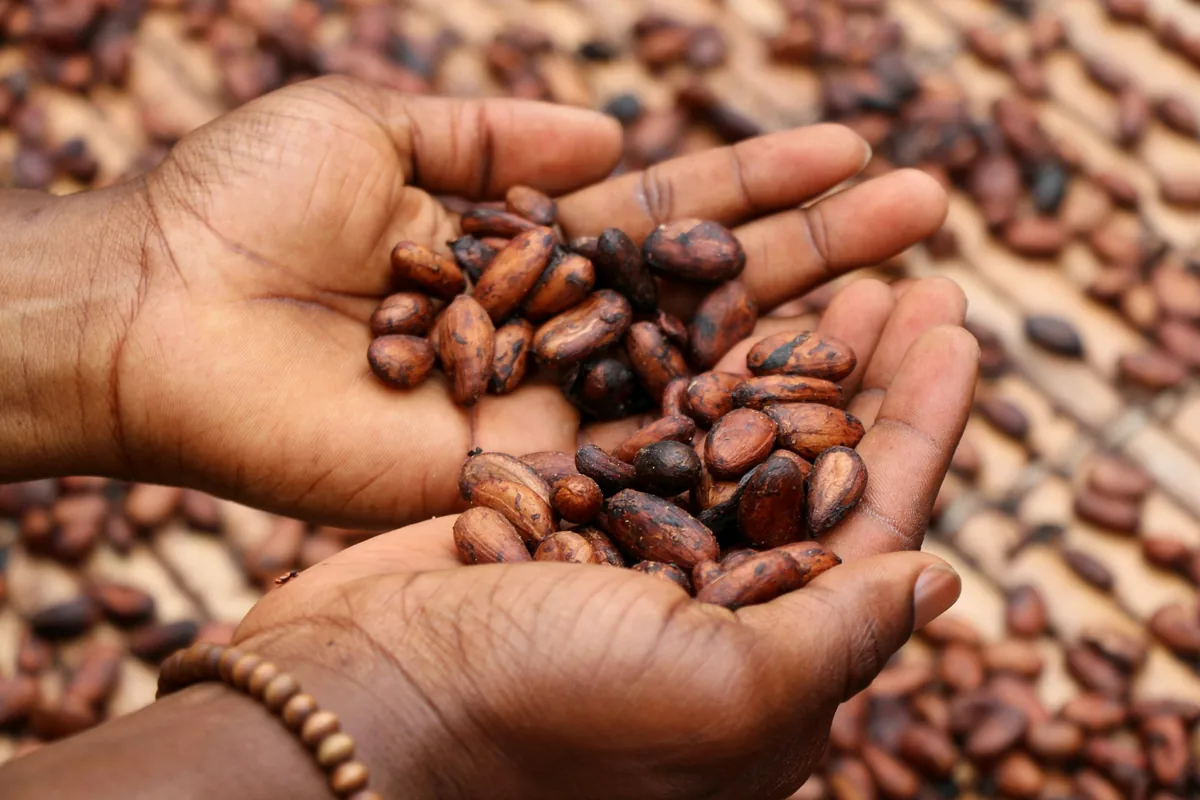
The cocoa is not Belgian and never was. Cacao grows in a narrow tropical band; the great majority of the world’s crop comes from West Africa, principally Côte d’Ivoire and Ghana. Nothing in a Belgian chocolate is grown in Belgium. What Belgium contributes is processing and craft — which is a real thing, and worth paying for, but it is not terroir in the sense that word carries on a bottle of wine.
Quality is not guaranteed. Meeting the Code means the chocolate was made in Belgium. It says nothing about the quality of the beans, the percentage of cocoa above the legal minimum, whether cocoa butter has been partly replaced with other vegetable fats, or whether the filling is any good. Industrially produced chocolate made in Belgium qualifies; excellent chocolate made by a Belgian-trained chocolatier in another country does not.
This is the same lesson as the words breweries print on beer labels. Some terms are legally defined, some are conventions, and some are simply assertions — and they look identical on the packaging.
A note on the word praline
Worth knowing before you order, because it means three different things.
In Belgium, a praline is a filled chocolate — a moulded shell with a soft centre. In France, praline is an almond caramelised in sugar, and praliné is that ground to a paste. In the United States, particularly in Louisiana, a praline is a sugar-and-cream confection with pecans, and is not chocolate at all.
The Belgian sense is the one attached to a specific event. The filled shell is credited to Jean Neuhaus II in Brussels in 1912, at the family shop in the Galeries Royales Saint-Hubert — a business his grandfather had opened in 1857 as a pharmacy, where chocolate was used to make medicine palatable. The ballotin, the stiff box that keeps filled chocolates from being crushed, followed a few years later; sources credit it variously to Neuhaus himself and to his wife Louise Agostini, and the attribution is not settled.
How to actually buy well
Since the label does less work than it appears to, the useful signals are elsewhere. Read the ingredients: cocoa butter should be the only fat, and a short list is a good sign. Check the cocoa percentage rather than trusting the word “dark”. Buy filled chocolates fresh and in small quantities, because a fresh ganache has a shelf life measured in weeks. And prefer a shop that makes what it sells on the premises, which is a stronger guarantee than any wording on a box.
Frequently asked questions
Is “Belgian chocolate” legally protected?
Not as a designation of origin. It is covered by the voluntary Belgian Chocolate Code rather than by PDO or PGI status, and can be challenged only indirectly through law on misleading commercial practices.
What does the Belgian Chocolate Code require?
That the chocolate is mixed, refined, conched and moulded in Belgium. Signing up is optional.
Does Belgian chocolate have to contain 35% cocoa?
An 1884 Belgian decree set a minimum cocoa content, usually cited at 35%, and it influenced later European rules. That is a purity standard, not a geographical one.
Is the cocoa grown in Belgium?
No. Cacao only grows in the tropics; most comes from West Africa. Belgium’s contribution is processing and craft.
What is a Belgian praline?
A filled chocolate — a moulded shell with a soft centre — credited to Jean Neuhaus II in Brussels in 1912. The word means something different in France and different again in the United States.
The short version
The reputation is earned and the legal protection is thinner than the reputation suggests. An 1884 decree set a real cocoa minimum; a voluntary 2008 code says the chocolate must actually be made in Belgium; neither guarantees quality, and no protected designation exists. Read the ingredients rather than the adjective.
Related: what speculoos is, Liège vs Brussels waffles, and what beer labels are allowed to say.