
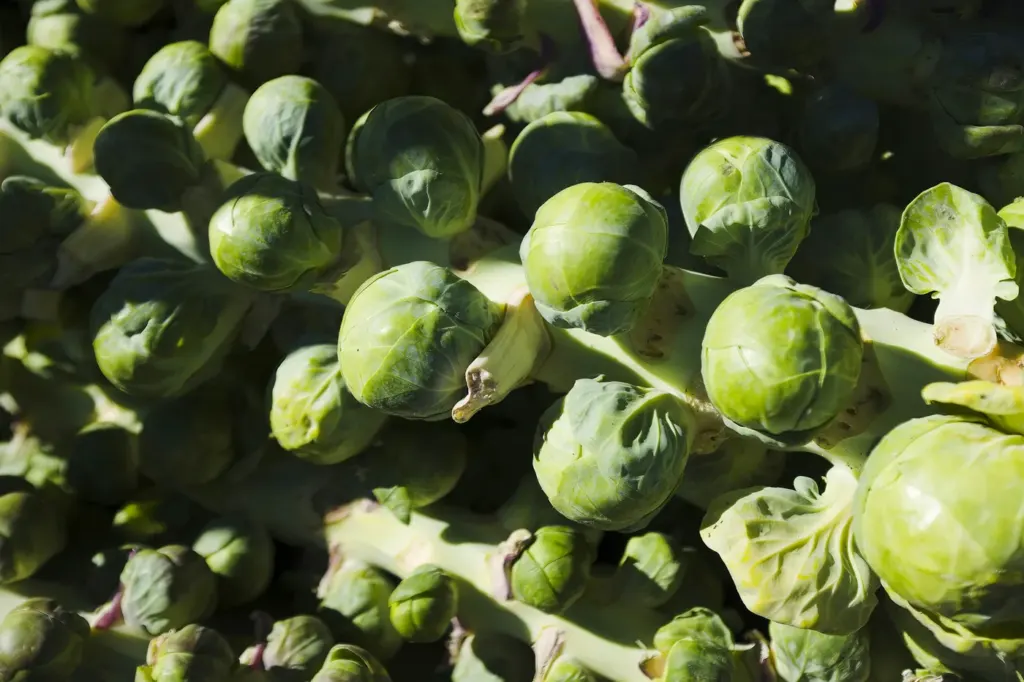
Two things are commonly said about Brussels sprouts. The first is that the name is a historical accident with no real connection to the city. The second is that people who claim they taste better than they used to are imagining it.
Both are wrong, and the second is wrong in an interesting way: the sprouts on sale today are not the same plant that a generation of children refused to eat. They were deliberately changed.
The short answer
Brussels sprouts are named after Brussels because they were grown and traded there. The earliest firm documentary evidence is a 1587 market regulation from Sint-Lambrechts-Woluwe, just outside the city. And they are measurably less bitter than they were before the 1990s, because Dutch plant breeders identified the specific compounds responsible and bred them down.
The Brussels part
Nearly every account says cultivation began in Flanders in the thirteenth century. That may well be true, but it rests on indirect readings of agricultural texts rather than on a document that describes the vegetable.
The first clear written reference is later and much more concrete: market regulations at Sint-Lambrechts-Woluwe, a municipality on the edge of Brussels, dated 1587. From there the plant spread through the Low Countries and reached wider European cultivation over the following centuries, carrying the city’s name with it.
So the honest version is: probably medieval, definitely documented from the late sixteenth century, and genuinely Brussels. Unlike a great many food names that turn out to be marketing — French fries are not French, and filet américain is not American — this one means what it says.
It is a cabbage, and that explains the shape
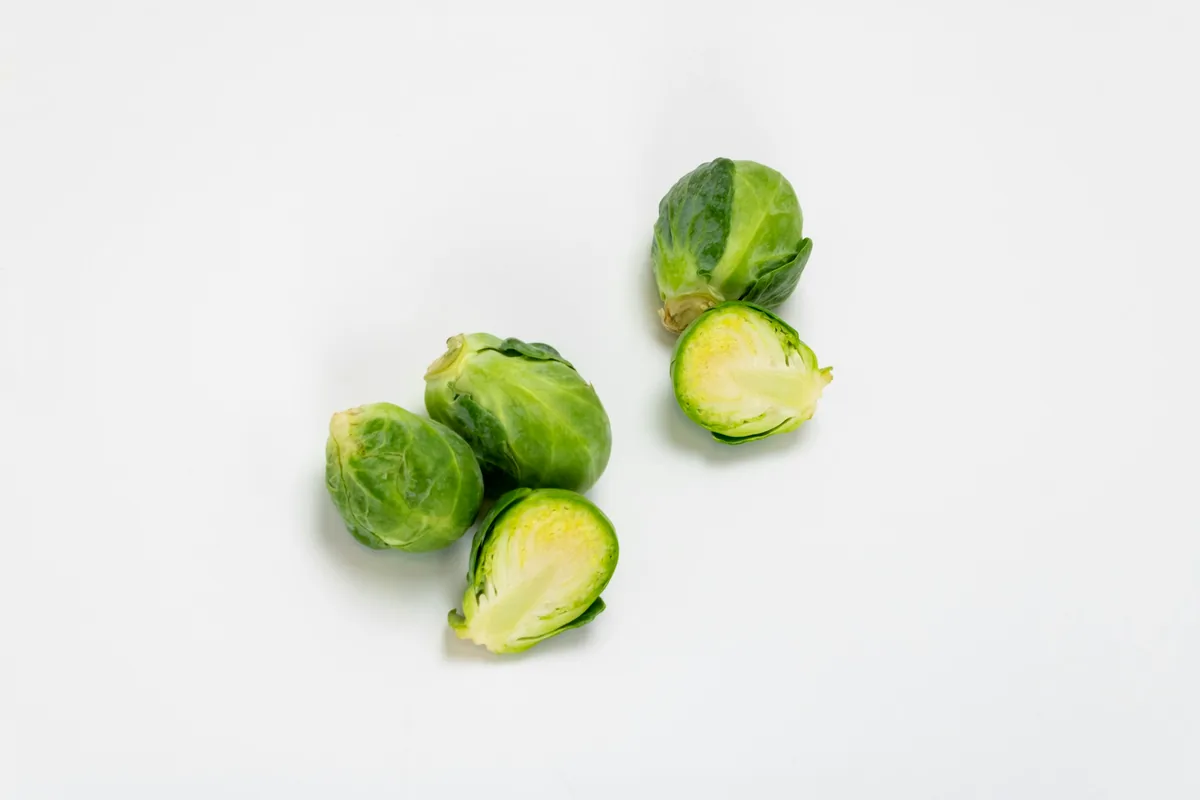
Brussels sprouts are Brassica oleracea, the same species as cabbage, broccoli, cauliflower, kale and kohlrabi. Every one of those is the same wild plant bred for a different part of itself: broccoli for flower buds, kohlrabi for a swollen stem, cabbage for a single terminal bud.
A sprout is the axillary bud — the small growth where a leaf meets the stem. Breed a plant to make those buds large and tight and you get dozens of miniature cabbages arranged up a single thick stalk, which is exactly what a sprout plant looks like in a field and almost nothing like the loose vegetable in a bag.
Now the bitterness
Here is the part that vindicates anyone who disliked them as a child.
Brassicas defend themselves with glucosinolates, sulphur compounds that taste bitter and are unpleasant to insects and grazing animals. In the 1990s a Dutch scientist, Hans van Doorn, working at Novartis Seeds, identified which ones actually drove the bitterness people objected to in sprouts: sinigrin and progoitrin. His work was published in 1998.
Once you know which compound to measure, you can select against it. Breeders went back through old low-glucosinolate varieties — which existed, but yielded poorly — and crossed them with modern high-yielding ones, aiming for a plant that kept the yield and lost the bitter compounds. It took years, and it worked.
The consequence is that a sprout bought today is a genuinely different product from one bought in 1985. This was ordinary selective breeding rather than genetic modification: the same process that produced the sprout from wild cabbage in the first place, pointed at a specific molecule.
Two other things changed at the same time
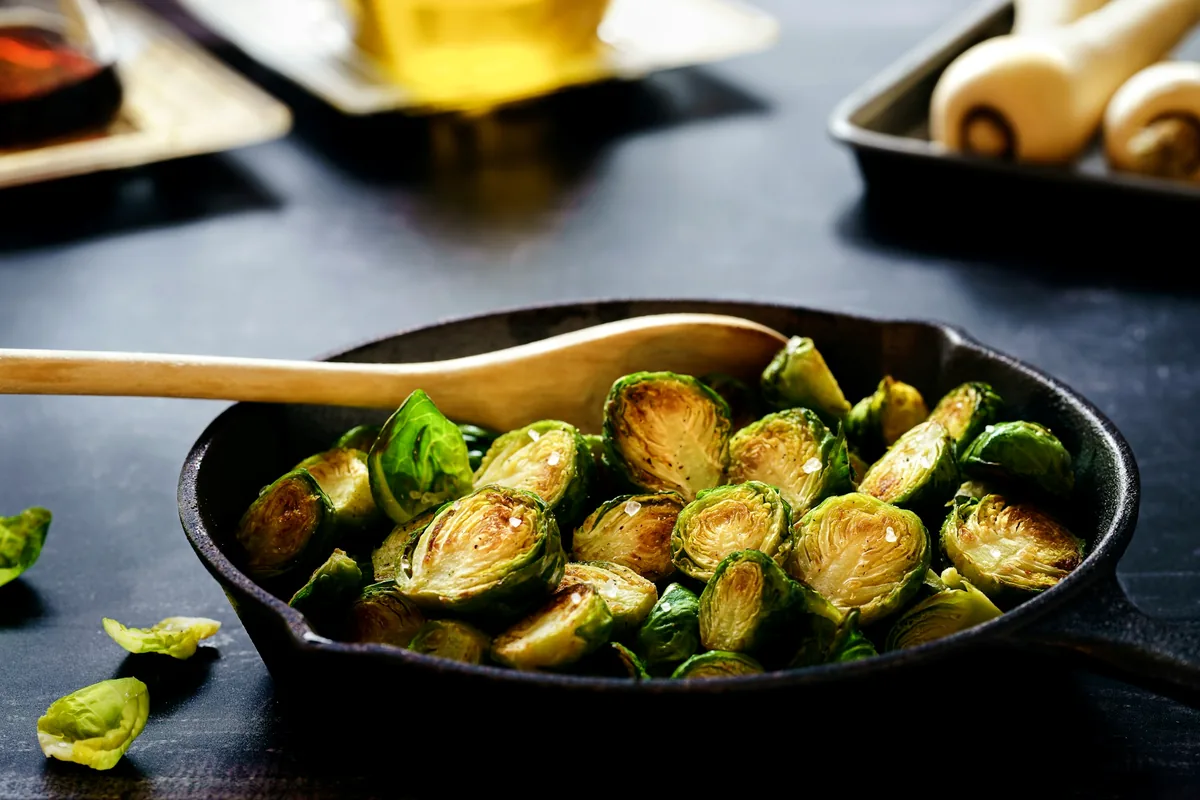
The cooking. The British and Irish tradition of boiling sprouts, at length, made everything worse: prolonged heat breaks down glucosinolates into sulphurous compounds, which is where the smell of overcooked sprouts comes from. Roasting or frying them hard instead browns the outside and produces sweetness rather than sulphur. The shift towards that treatment happened to coincide with the less bitter varieties arriving.
The eater. Sensitivity to bitter compounds varies genetically between individuals, and it also declines with age. So some of the childhood aversion was real chemistry in the vegetable, and some of it was a child’s palate. Both were true at once.
Buying them, and the stalk question
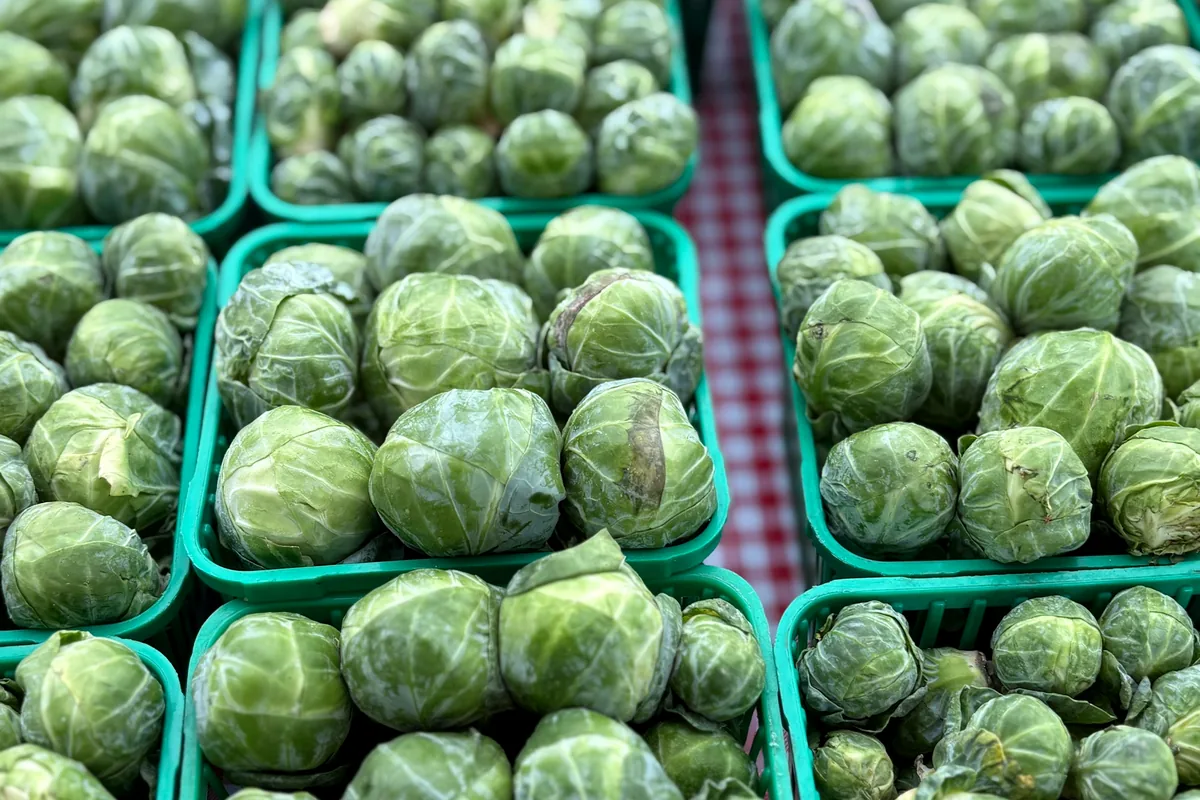
Sprouts are sold three ways and the difference is real. Loose, in a bag, is the default and the least good, because they have been off the stalk longest. In a punnet is much the same. On the stalk — a metre of woody stem with fifty sprouts still attached — is best, because they stay firm and sweet considerably longer.
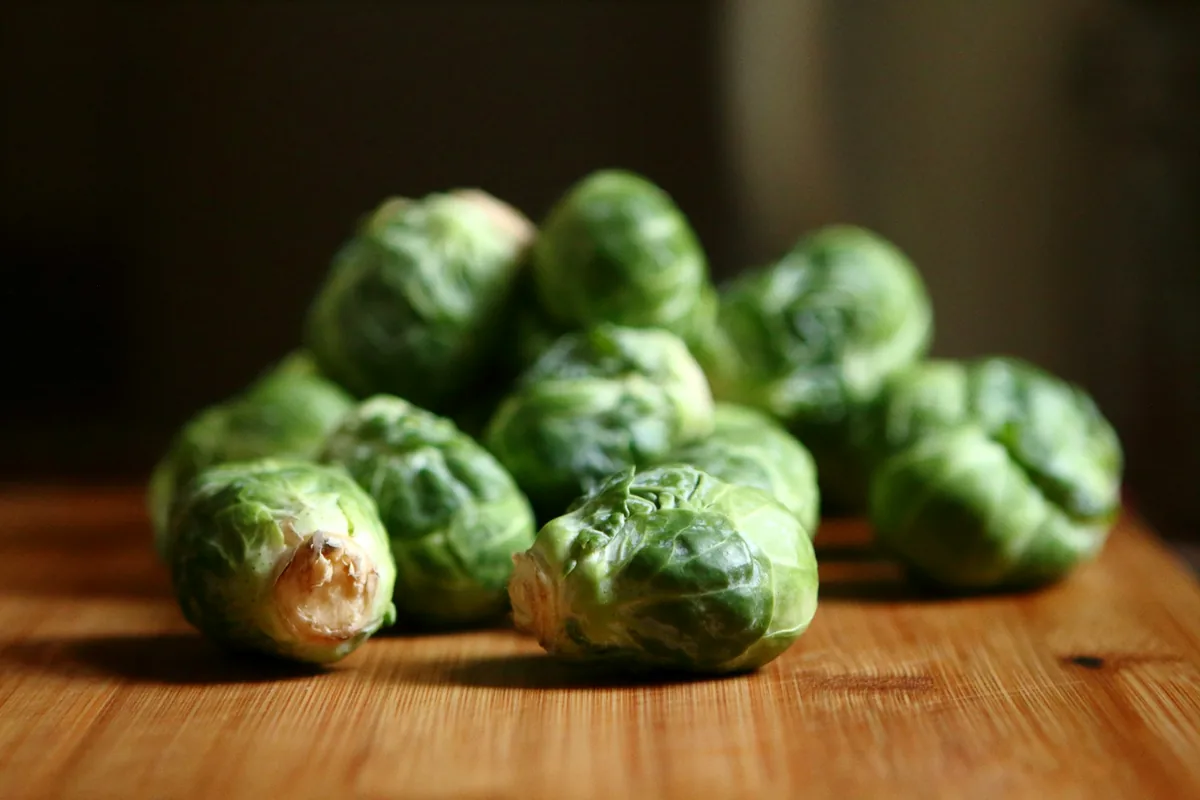
What to look for is tightness and colour: dense, heavy-for-their-size heads with no yellowing on the outer leaves and no loose or opening tops. A sprout that has begun to open has begun to go sulphurous.
| Claim | Verdict | The detail |
|---|---|---|
| They are named after Brussels | True | Grown and traded around the city; first firm record 1587, at Sint-Lambrechts-Woluwe |
| Cultivated since the 13th century | Probably, but undocumented | Rests on indirect readings of agricultural texts, not a description of the plant |
| They taste better than they used to | True, and measurably | Sinigrin and progoitrin identified in the 1990s and bred down |
| Modern sprouts are genetically modified | False | Conventional crossing of old low-bitterness varieties with high-yield ones |
| The smell is inherent to the vegetable | False | A product of overcooking, which breaks glucosinolates into sulphur compounds |
One habit worth dropping is cutting a cross in the base. It was meant to help the dense core cook at the same rate as the leaves, which made sense when the whole thing was going to be boiled for twenty minutes. Halving them and browning the cut face does the same job better, and tastes of something.
On a Belgian table
Belgium treats sprouts as a straightforward winter vegetable rather than a Christmas ritual, which is largely a British framing. They are cooked with bacon, with butter and nutmeg, in stoemp mashed through potato, or braised.
Meyboom’s archived dinner menu listed Bruxelles Sprouts as a side, sautéed with Flemish red ale and bacon — which is a neat piece of regional cooking, since Flemish red is the sour brown-red beer of West Flanders and its acidity does the same job a splash of vinegar would against the fat of the bacon.
Frequently asked questions
Are Brussels sprouts actually from Brussels?
Yes. They were grown and traded around Brussels, and the first firm written record is a 1587 market regulation at Sint-Lambrechts-Woluwe on the city’s edge.
Do Brussels sprouts taste different than they used to?
Yes, measurably. From the 1990s breeders selected against sinigrin and progoitrin, the glucosinolates identified as responsible for the bitterness, so modern varieties are milder.
Are modern Brussels sprouts genetically modified?
No. They are the product of conventional selective breeding — crossing old low-bitterness varieties with high-yielding modern ones.
Why do Brussels sprouts smell when cooked?
Overcooking. Prolonged boiling breaks glucosinolates down into sulphur compounds. Roasting or frying avoids it.
Are they related to cabbage?
They are the same species, Brassica oleracea, as cabbage, broccoli, cauliflower and kale — each bred to enlarge a different part of the same wild plant.
The short version
The name is real: Brussels sprouts come from the area around Brussels, documented there since 1587. The improvement is real too — the bitter compounds were identified in the 1990s and bred out, so the vegetable on sale now is chemically different from the one people remember. Stop boiling them and the case against them more or less collapses.
Related: Belgian endive, what a Belgian brasserie serves, and Flanders and Wallonia.