
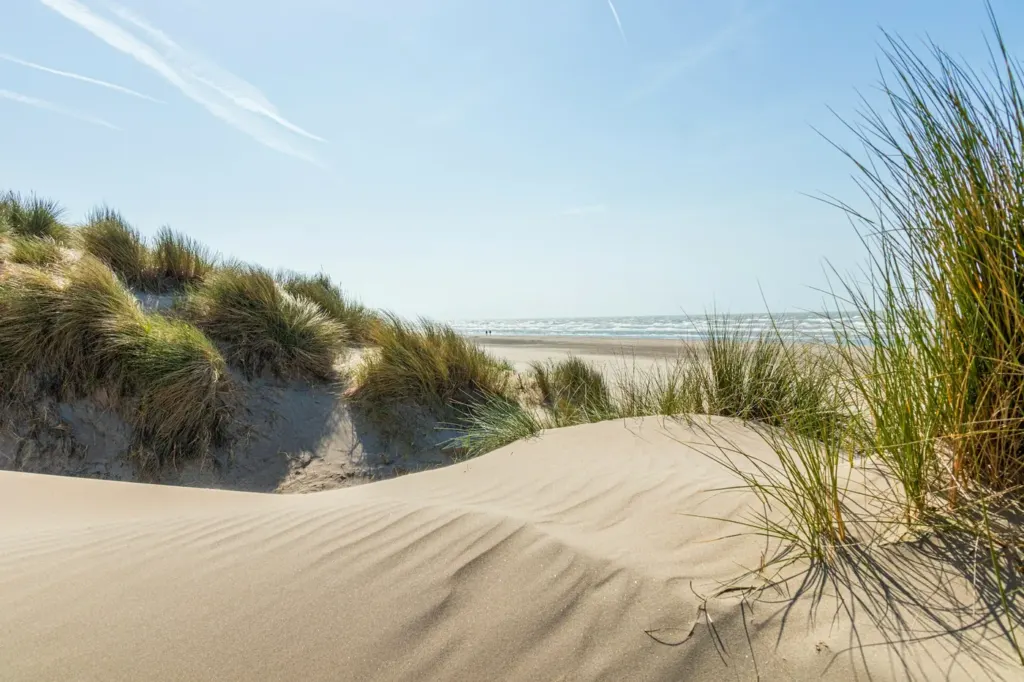
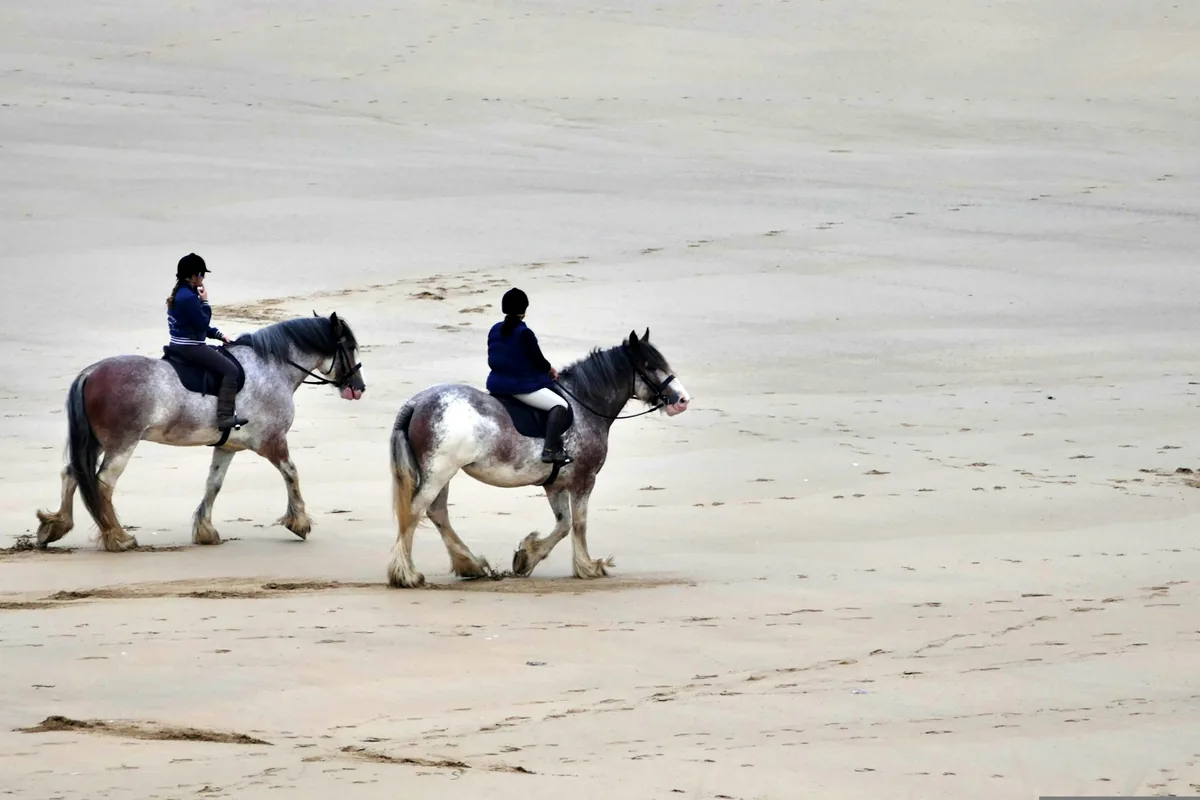
Twice a week, outside the winter months, a handful of people in a small town on the Belgian coast put on yellow oilskins, ride heavy draft horses chest-deep into the North Sea, and drag nets through the surf to catch shrimp. It is not a re-enactment and it is not for tourists, although tourists come. It is the last working example of a technique that was once ordinary across the whole southern North Sea, and Oostduinkerke is the only place on earth where it survives.
The short answer
Paardenvissers — horse fishers — catch North Sea grey shrimp from horseback in the shallows at Oostduinkerke, in West Flanders. The practice is at least five hundred years old, was once common in Belgium, France, England and the Netherlands, and now exists nowhere else. UNESCO added it to the Representative List of the Intangible Cultural Heritage of Humanity in December 2013.
How it actually works
The method is ingenious and depends entirely on the shrimp’s own reflex.
The horse walks parallel to the shore, breast-deep, towing a funnel-shaped net held open by two wooden boards. Ahead of the net a chain drags along the seabed. The chain’s vibration through the sand makes the grey shrimp — which spend the day buried — jump upward, and they jump straight into the net behind it. The shrimp are not chased or scooped; they are startled into the trap.
Every part of it is matched to the conditions. The beach at Oostduinkerke is exceptionally flat, so a horse can walk a long way out and still be in workable water. The tide has to be right, which is why the sessions are scheduled by the sea rather than the clock. And the catch is sorted on the beach afterwards, with undersized shrimp and bycatch returned.
The horses are the specialist equipment
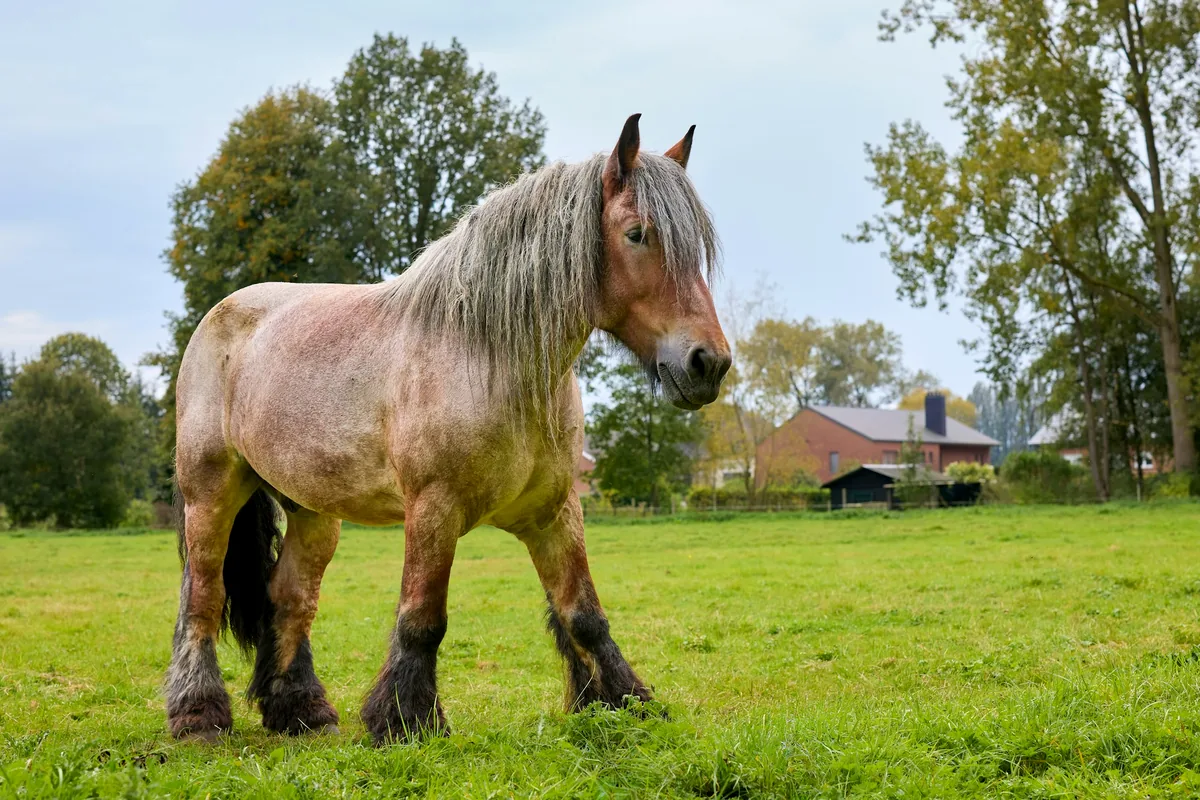
The fishers ride Brabant draft horses — the Belgian heavy horse, a breed developed for hauling rather than riding. The choice is deliberate. What the job needs is mass, to hold a line against moving water and a dragging net, and a temperament calm enough to walk into breaking surf without panicking. Speed is irrelevant.
Training a horse to do this takes years, and the knowledge of how to do it is one of the things the UNESCO listing is actually protecting.
What UNESCO listed, and why it matters
It is worth being precise, because this gets reported loosely. UNESCO did not list the shrimp, or the beach, or the horses. It inscribed the practice — the craft and the community around it — on the Representative List of Intangible Cultural Heritage, the same list that carries Belgian beer culture.
The inscription describes something broader than fishing. Around twelve households in Oostduinkerke are actively involved, and the expertise is distributed among them: some specialise in weaving and repairing the nets, others in the horses. Knowledge passes down within families and between neighbours. A two-day shrimp festival each summer draws well over ten thousand visitors, and the fishers themselves are the centre of it.
As with the beer listing, inscription confers recognition rather than legal protection. What it does provide is attention and a reason for public support, which for a practice sustained by a dozen households is not nothing.
The shrimp itself
The catch is Crangon crangon, the North Sea brown or grey shrimp, and it is worth understanding why Belgians make such a fuss about a very small animal.
It is tiny — a few centimetres — and grey-brown and translucent when raw, turning a soft pinkish grey when cooked. The flavour is markedly different from tropical prawns: sweeter, saltier, more concentrated, with a distinct taste of the sea that larger warm-water species do not have. They are traditionally cooked in seawater on the boat, or on the beach, within minutes of being caught.
And then they have to be peeled, which is the entire economics of the thing. A grey shrimp is too small to peel by machine without destroying it, so it is done by hand. That single fact explains why a portion of Belgian grey shrimp costs what it does, and why so much of the commercial catch is shipped abroad for hand-peeling and shipped back.
Why a dozen households
The obvious question about a five-hundred-year-old practice surviving in exactly one place is what killed it everywhere else.
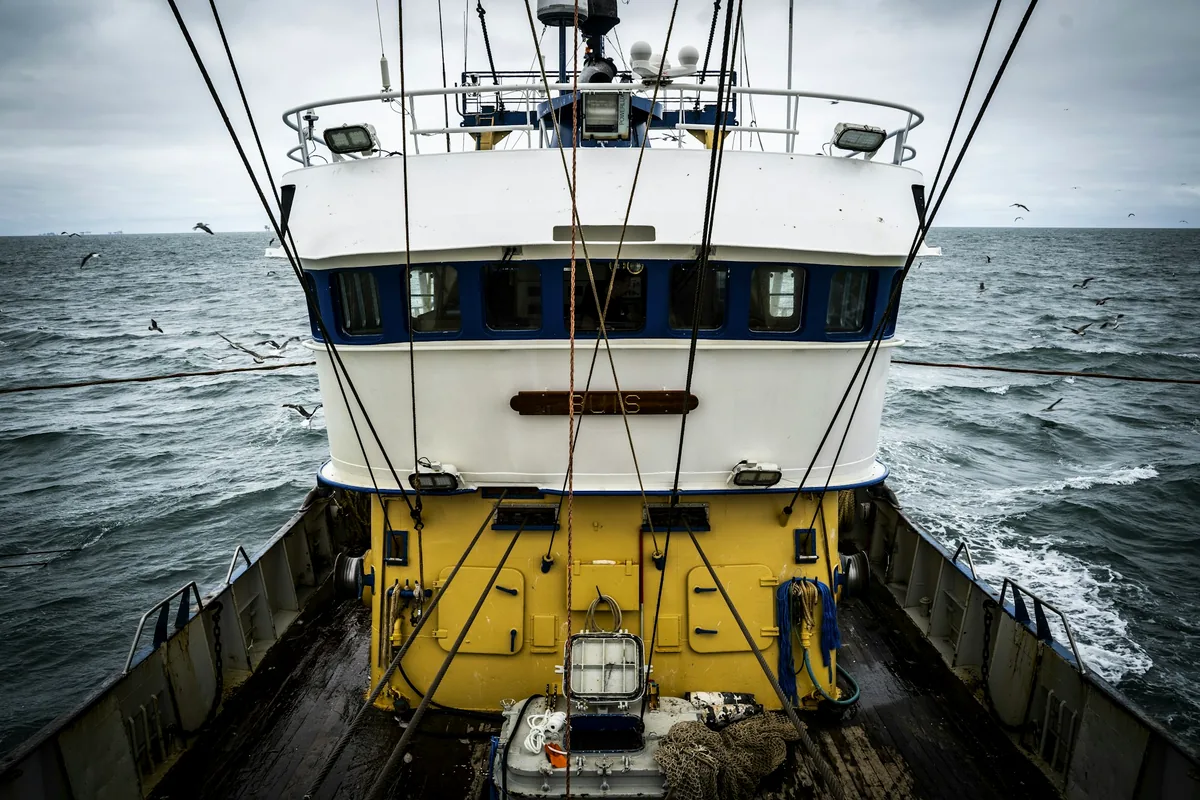
Trawlers, mostly. A boat can work deeper water, in more weather, for far longer, and catch in an hour what a horse catches in a morning. Once industrial shrimping arrived there was no economic case for the horses, and the technique disappeared from the Netherlands, England and France within a few generations.
What kept it at Oostduinkerke was partly the beach — unusually flat and shallow, which is what makes it possible at all — and partly stubbornness. It survives now as a cultural practice supported by the community and the town rather than as a living industry, which is precisely the situation the UNESCO list exists to address.
| Horseback | Trawler | |
|---|---|---|
| Where | The shallows off Oostduinkerke | Open North Sea |
| Power | A Brabant draft horse, breast-deep in the surf | Diesel engine |
| How the shrimp are caught | A dragging chain startles them upward into a funnel net | A net towed across the seabed |
| Scale | A morning’s catch, twice a week in season | Tonnes, continuously |
| Practitioners | About twelve households, worldwide | An entire industry |
| Status | UNESCO intangible cultural heritage, 2013 | Ordinary commercial fishing |
Where you actually meet them
Almost always in one of three forms.
Garnaalkroketten — shrimp croquettes — are the classic, and probably Belgium’s finest bar snack: a thick shrimp-flavoured béchamel packed with grey shrimp, breaded and deep fried, served with fried parsley and lemon. They sit in the same family as bitterballen but are considerably more expensive, for the peeling reason above.
Tomaat-garnaal — a hollowed tomato filled with grey shrimp in mayonnaise — is the standard brasserie starter, and one of those dishes that looks dated until you eat a good one.
And plainly, by the bowl, with bread and butter and a beer, which is how they are eaten on the coast.
Frequently asked questions
Where can you see horseback shrimp fishing?
Only in Oostduinkerke, on the Belgian coast in West Flanders. It is the last place in the world where the practice continues.
When did UNESCO recognise it?
December 2013, on the Representative List of the Intangible Cultural Heritage of Humanity.
What kind of horses are used?
Brabant draft horses — the Belgian heavy breed — chosen for their weight and calm temperament rather than speed.
What is a Belgian grey shrimp?
Crangon crangon, a small North Sea species, sweeter and saltier than tropical prawns. It is peeled by hand because it is too small to machine-peel.
Why are shrimp croquettes so expensive?
Hand peeling. There is no mechanical shortcut for a shrimp that size, and the labour is most of the cost.
The short version
A dozen households in one Belgian village still fish for shrimp on horseback, using draft horses and a dragging chain that startles the shrimp into the net. It is at least five centuries old, it survives nowhere else, and UNESCO listed the practice in 2013. The shrimp it catches is small, hand-peeled, and the basis of the best croquette in Belgium.
Related: Belgian beer culture at UNESCO, moules-frites, and what a Belgian brasserie serves.