
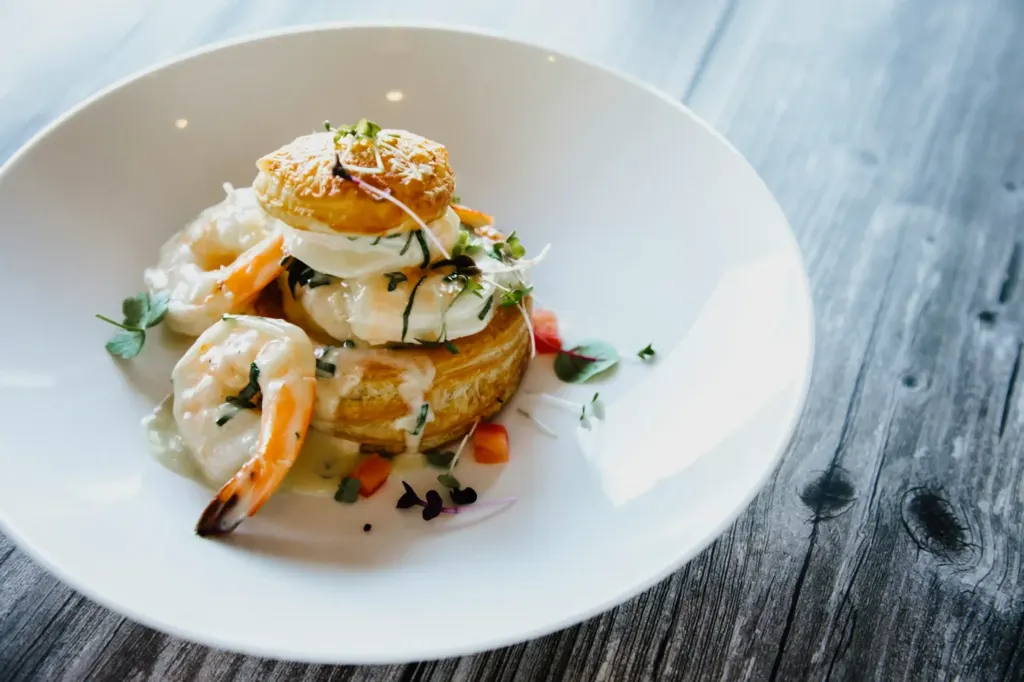
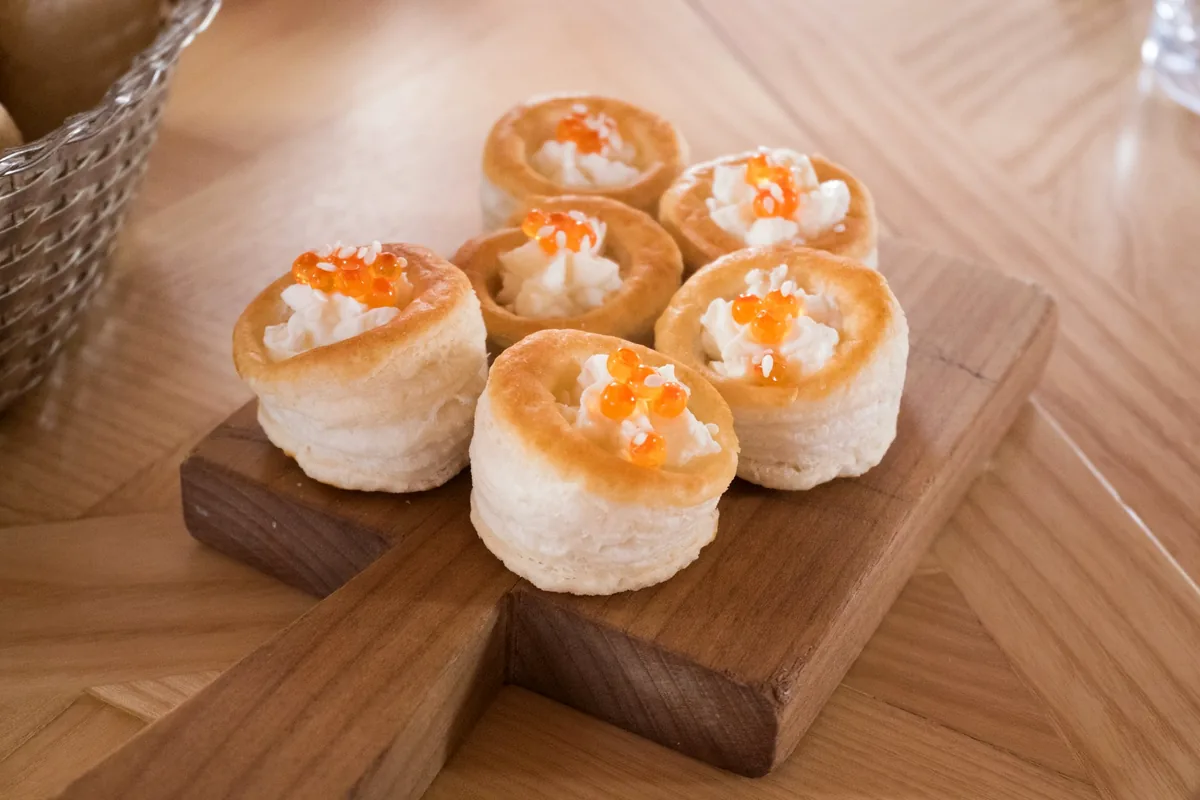
Ask for a vol-au-vent in London and you will most likely be handed a small hollow puff pastry case, possibly with something piped into it, definitely as a canapé. Ask for one in Brussels and you will be served a full main course: chicken and meatballs in a cream sauce, a large pastry case on top, and a heap of fries beside it.
Both are correct. The word has drifted apart in different countries, and Belgium kept the more substantial meaning.
The short answer
Internationally, vol-au-vent names the container — a round case of puff pastry with the middle removed. In Belgium it names the dish: a creamy stew of poached chicken, small meatballs and mushrooms, served in or beside a large pastry case, with fries. The meatballs are the Belgian marker.
Two meanings, one word
| The pastry sense | The Belgian sense | |
|---|---|---|
| What the word names | The empty puff pastry case | The complete dish |
| Typical size | Canape, a few centimetres | A main course |
| Filling | Anything – seafood, mushroom, even sweet | Chicken, meatballs, mushrooms, velouté |
| Served as | A starter or party food | A main course with fries |
| Where | Britain, France, most of the world | Belgium |
The confusion is entirely reasonable, because both usages describe the same object from different angles. One names the pastry and treats the filling as a variable. The other names a specific filling and treats the pastry as part of the serving.
It matters mostly when reading a menu abroad, or a recipe. A British recipe for vol-au-vents will teach you to make and bake the cases. A Belgian one will assume you can buy the cases and will spend its time on the sauce.
The name is about the pastry
Vol-au-vent translates as “flight in the wind”, or more loosely “windblown”. It refers to how little the baked case weighs relative to its size — puff pastry rises into a structure that is mostly air, and the phrase is a compliment to the pastrycook rather than a description of the food.
The invention is traditionally credited to Antonin Carême, the early nineteenth-century French chef who codified a great deal of what became classical pastry. As with most attributions of that period it is a tidy story attached to a famous name, and it should be read as tradition rather than documented fact.
Where the filling comes from
The Belgian dish descends from bouchée à la reine — “the queen’s mouthful” — a French court preparation of chicken or sweetbreads in a cream sauce served in small pastry cases.
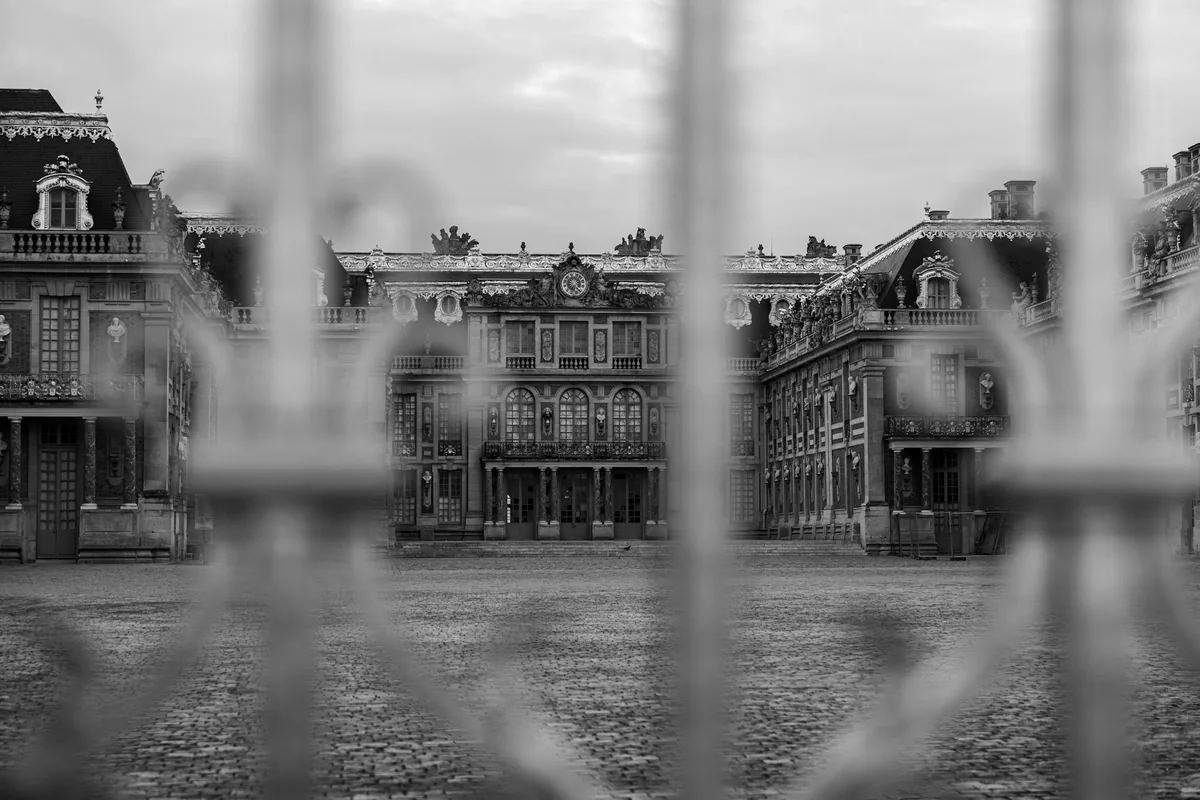
The traditional account attaches it to Marie Leszczyńska, the Polish-born queen consort of Louis XV, and places it at Versailles in the mid-eighteenth century. The story usually adds that she pressed the royal kitchens for new dishes, for reasons involving the king’s attention. It is repeated in most accounts of the dish and is not firmly documented; treat the Versailles connection as the traditional origin rather than a fact with a date.
What is clear is the direction of travel. A refined French court dish in small cases became, in Belgium, a large and unpretentious one — and picked up two things along the way.
What Belgium changed
Meatballs. This is the real dividing line. A French bouchée à la reine is chicken, mushrooms and sauce. The Belgian version adds small pork or veal meatballs — balletjes in Dutch, boulettes in French — poached directly in the sauce. If there are meatballs in it, you are eating the Belgian dish.
Fries. The court version was served alone as an entrée. Belgium made it a main course by putting fries beside it. Rice and mashed potato both appear, but fries are the default, and the pattern is the same as everywhere else in Belgian cooking: the fries arrive on the side, never underneath, so they stay crisp.
The sauce itself is a velouté — a blond roux let down with the stock the chicken was poached in, finished with cream and often a squeeze of lemon. The lemon matters more than it sounds. Without an acid the dish is very rich and reads as flat.
The case is structural, and slightly a problem
Puff pastry and hot cream sauce are natural enemies. The case exists to be light and crisp; the filling is wet. Left together for more than a few minutes the base goes soft, which is why Belgian kitchens have quietly diverged on how to plate it.
The traditional presentation fills the case and puts the lid back on top. The practical one, which is what most brasseries actually do, serves the filling in a bowl or deep plate with the pastry case set on top or alongside, so it stays crisp until you break it. Purists object; the pastry does not.
Almost nobody makes the cases at home. They are sold ready-baked in every Belgian supermarket, in sizes from canapé to dinner plate, and buying them is normal rather than a shortcut. The domestic effort goes into the sauce.
Is it the national dish?
It gets nominated, along with moules-frites and carbonade, and Belgium has no official designation for any of them. What vol-au-vent has is a particular social position: it is a dish people associate with home, with Sunday, with family restaurants and with the sort of unfashionable brasserie that has been doing the same eight dishes for forty years. It is comfort food with a court pedigree, which is an unusual combination.
Frequently asked questions
What is a vol-au-vent, exactly?
Outside Belgium, a hollow puff pastry case. In Belgium, a complete dish of chicken, meatballs and mushrooms in a cream sauce, served with a pastry case and fries.
What is the difference between vol-au-vent and bouchée à la reine?
Size and meatballs. Bouchée à la reine is the smaller French court original, chicken and mushrooms only. The Belgian vol-au-vent is a full plate and adds meatballs.
Why is it called vol-au-vent?
The phrase means “flight in the wind” and describes how light the baked puff pastry case is. It says nothing about the filling.
What is in the Belgian version?
Poached chicken, small pork or veal meatballs, mushrooms, and a velouté sauce finished with cream and lemon, in a puff pastry case with fries alongside.
Is it French or Belgian?
The pastry and the ancestor dish are French; the version with meatballs served as a main course with fries is Belgian, and it is far more central to everyday eating in Belgium than in France.
The short version
One word, two meanings. Elsewhere it is the empty case; in Belgium it is the whole plate. The pastry is French and probably owes its name to Carême; the filling descends from a court dish traditionally linked to Versailles; the meatballs and the fries are what Belgium added, and they are what make it Belgian.
Related: what a Belgian brasserie serves, why Belgian fries are different, and bitterballen.