
Some cocktails are built to transform a spirit. This family is built to present one. There is no citrus to brighten it, no syrup to round it off and no egg to soften the edges — which is why a bad martini is unmistakably bad and a bad daiquiri can pass.
The short answer
A spirit-forward cocktail is one where the base spirit stays dominant: it is combined with modifiers that adjust rather than mask it — vermouth, bitters, a little sugar, an amaro — and it is stirred, never shaken. The martini, manhattan, negroni, old fashioned and sazerac are the canon.
What makes one
Three things, and the third is the giveaway.
No citrus juice. A twist of peel is normal and expected; juice is not. The moment lemon juice goes in, you are making a sour instead.
Modifiers, not mixers. Vermouth, sherry, amaro, bitters and a small amount of sugar. They change the shape of the spirit without burying it. Compare a highball, where a mixer is deliberately most of the drink.
Stirred and served cold, usually without ice or over one big piece. The finished drink is 60-80% spirit by volume. That is the point, and it is also the warning.
Why stirred and not shaken
Shaking does three things: it chills fast, dilutes fast and aerates. Aeration is essential when you have citrus or egg to emulsify. With nothing but spirits in the glass it is purely destructive — it clouds the drink with tiny air bubbles, roughens the texture, and over-dilutes before it has finished chilling.
Stirring chills and dilutes gently, keeps the drink brilliantly clear, and produces the dense, almost oily mouthfeel these cocktails are known for. A stirred martini and a shaken one taste measurably different, and the difference is texture rather than flavour.
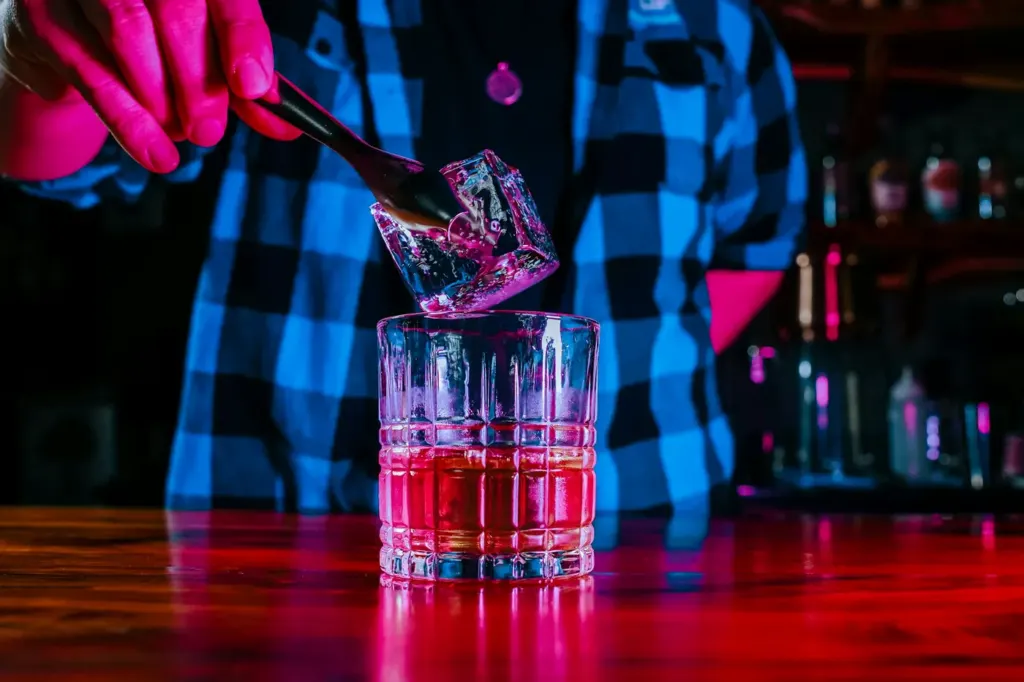
Ice matters more here than anywhere else. Dilution is an ingredient — a stirred drink is roughly a fifth water by the time it is served — and controlling it means using large, cold, dense ice rather than small wet cubes. That is why these drinks arrive over one big cube.
The family
| Drink | Base spirit | Modifier | Bitters | Garnish |
|---|---|---|---|---|
| Martini | Gin | Dry vermouth | Optional | Lemon twist or olive |
| Manhattan | Rye or bourbon | Sweet vermouth | Angostura | Cherry |
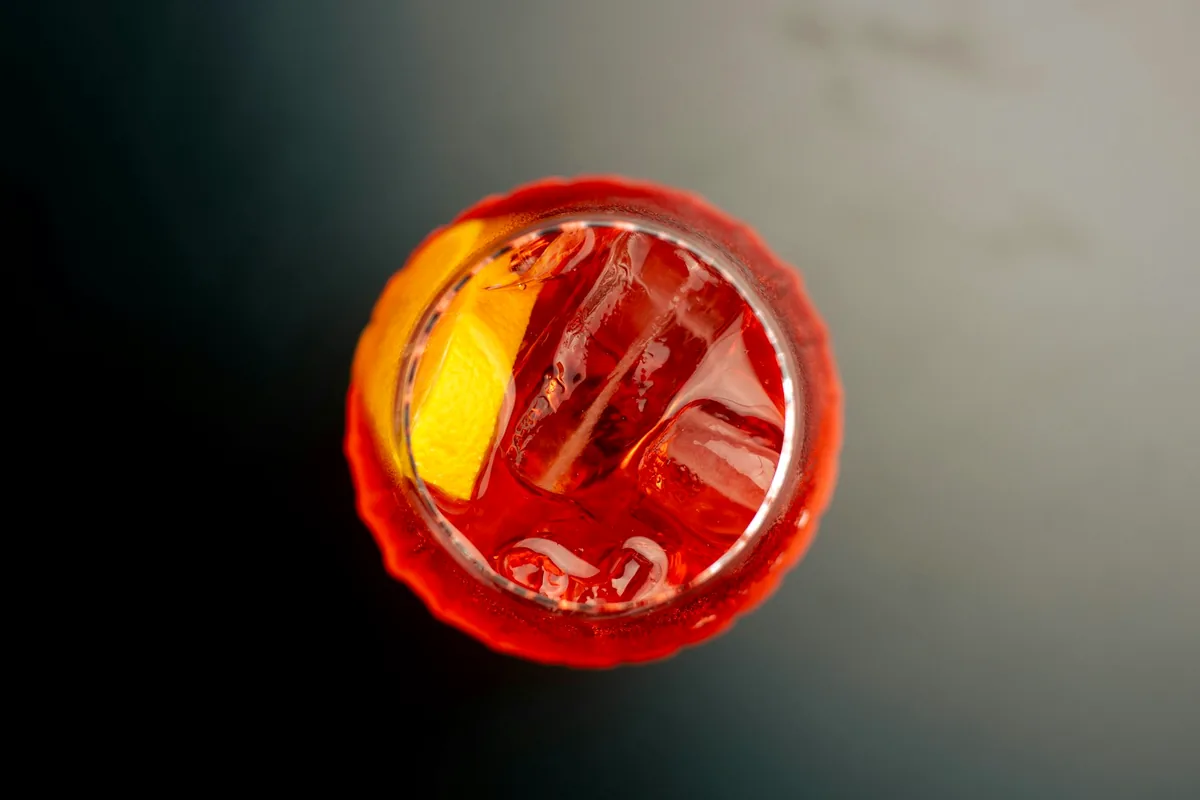
| Negroni | Gin | Sweet vermouth and Campari | – | Orange |
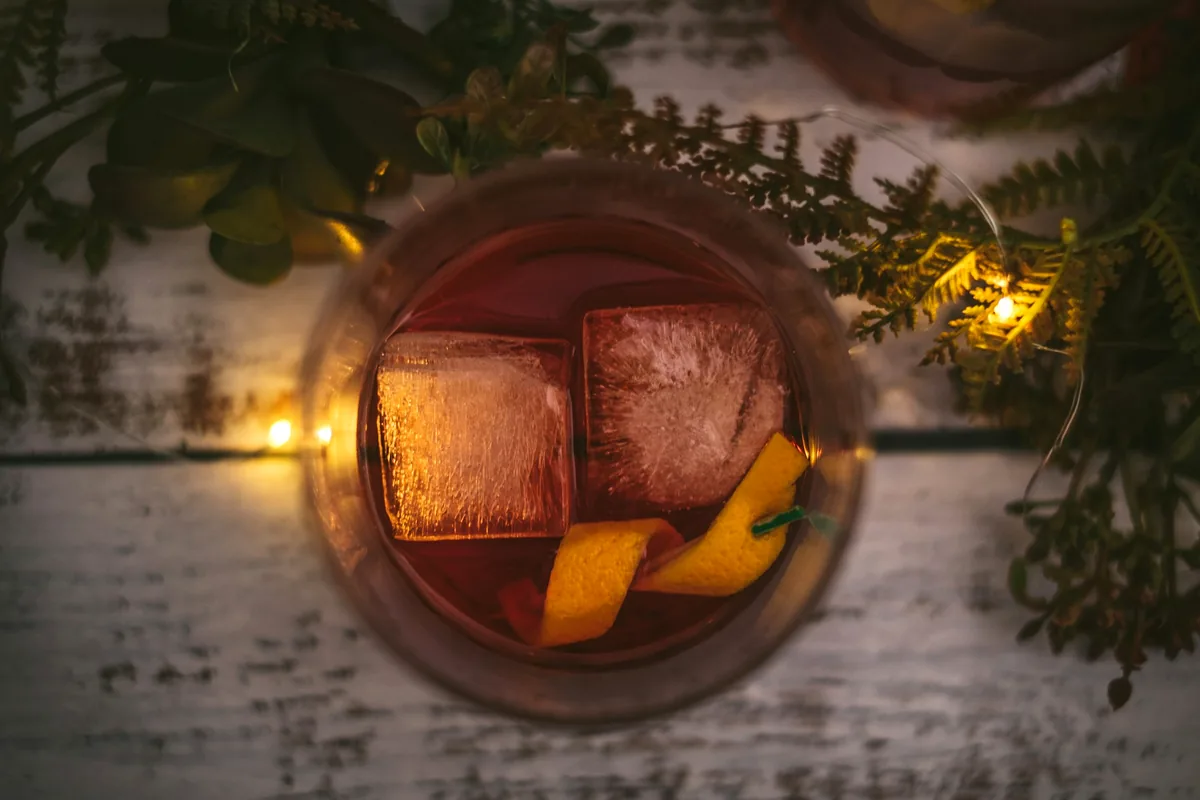
| Old fashioned | Bourbon or rye | Sugar | Angostura | Orange peel |
| Sazerac | Rye | Sugar, absinthe rinse | Peychaud’s | Lemon peel |
| Boulevardier | Bourbon | Sweet vermouth and Campari | – | Orange |
The pattern is visible once the table is laid out: a base spirit, something aromatised and usually fortified, and bitters. Change the spirit and keep the structure and you have a different classic — swap the manhattan’s rye for gin and you are close to a martinez, the martini’s ancestor.
Ordering one well
Because the spirit is exposed, the questions a bartender asks are not affectation.
- Which spirit. “A manhattan” tells them the structure, not the whiskey. Rye is drier and spicier; bourbon is sweeter and rounder.
- How dry. More vermouth is wetter and softer; less is drier and colder. “Perfect” means half sweet and half dry vermouth, not that it is especially good.
- Which garnish. A lemon twist adds citrus oil and lifts the drink; an olive adds salt and makes it savoury. They are genuinely different drinks.
- Up or on the rocks. Up means chilled and strained into a stemmed glass, and it warms as you go. On the rocks stays cold and keeps diluting.
A bar with tired vermouth will make a poor manhattan from good whiskey. Vermouth is wine, it oxidises after opening, and it belongs in the fridge — an open bottle standing warm on a back bar for a month is the commonest reason one of these drinks disappoints.
Why dilution is an ingredient
The part that separates a good stirred drink from a harsh one is water, and it is deliberate.
A martini stirred properly picks up roughly 20-25% of its volume in meltwater. That is not a compromise forced by the ice — it is the amount of dilution the recipe assumes. Gin at 45% straight from the bottle is aggressive; the same gin at an effective 30-something percent and near-freezing is silky. Under-stir and the drink is hot and sharp. Over-stir and it is flabby.
Which is why bartenders care so much about ice. Wet, small or warm cubes dilute faster than they chill, so the drink is watery before it is cold. Cold, dry, large ice does the reverse. It is the same principle as the highball, applied to a drink with nowhere near as much room for error.
These are strong drinks
Worth stating plainly. A negroni is equal parts of three alcoholic ingredients; a martini is essentially chilled gin. After dilution most of this family lands somewhere around 25-30% ABV in the glass, which is two to three times a glass of wine in a smaller serving.
They are designed to be sipped slowly before or after a meal, and they are the drinks where pacing matters most, precisely because nothing in them tastes like a mixer.
What that looked like on a real list
Meyboom Brasserie’s archived cocktail list, captured in February 2023, carried two: an Old Fashioned with Evan Williams bourbon, a sugar cube and aromatic bitters at $12, and a Sazerac with Sazerac rye, Peychaud’s bitters and Herbsaint at $14 — the most expensive drink on the list bar one.
The Old Fashioned turned up again on the archived happy hour list at $8, which is a reasonable indication of what a Belgian beer bar’s customers actually ordered when they were not drinking beer. Both archived lists are on the site: the cocktail list and the happy hour list.
Frequently asked questions
What does spirit-forward mean?
That the base spirit is the dominant flavour, adjusted by modifiers rather than covered by juice, sugar or cream.
Why are these drinks stirred?
Shaking aerates and clouds a drink that has nothing needing emulsification, and over-dilutes it. Stirring chills gently and keeps the texture dense and clear.
Is an old fashioned spirit-forward?
Yes, and it is the oldest example — spirit, sugar, bitters and water, which was the original definition of the word cocktail. See the old fashioned.
Should vermouth be refrigerated?
Yes. It is fortified wine and it oxidises. Refrigerate after opening and use it within a month or so.
What is the difference between up and on the rocks?
Up is strained into a chilled stemmed glass with no ice. On the rocks is served over ice, so it stays colder and keeps diluting as you drink.
Where to start
Order a negroni. Equal parts, three ingredients, impossible to hide behind — and if the bar makes a good one, order anything else on the list with confidence.
Related: the sour template, the highball family and what cocktail bitters are.