
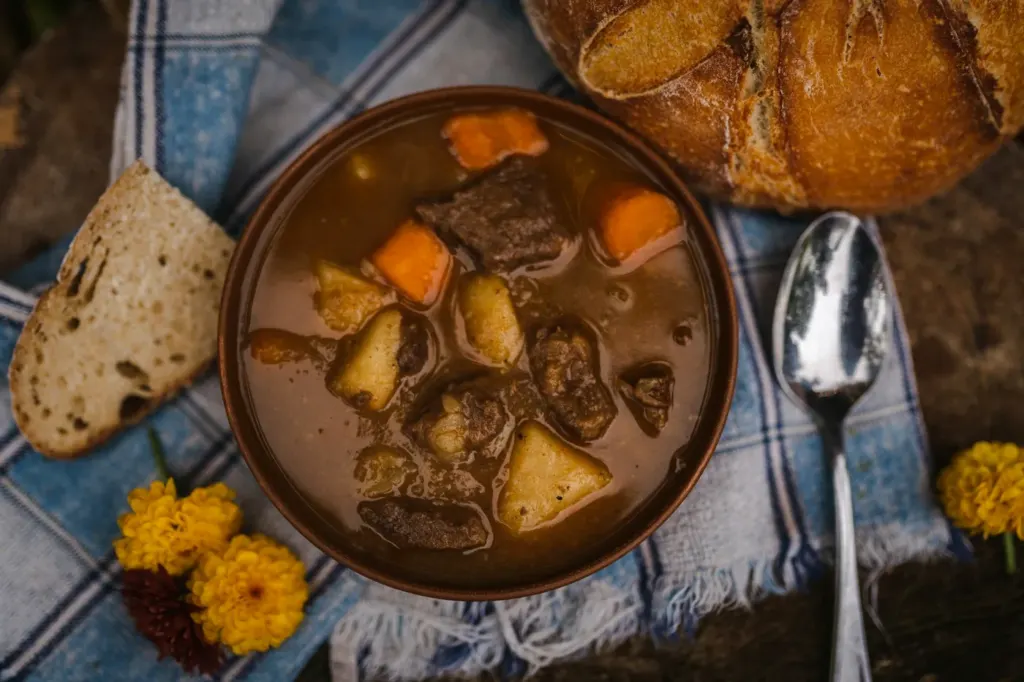
These two dishes are so often described as versions of each other that the comparison has become a shorthand: carbonade is “the Belgian boeuf bourguignon”. It is a useful starting point and it undersells the difference. Swapping beer for wine does not just change the liquid. It changes what you put in to balance it, how the sauce thickens, and what the finished plate tastes like.
The short answer
Carbonade flamande is Flemish beef braised in dark Belgian beer with a great deal of onion, finished sweet-and-sour, and thickened with mustard-spread gingerbread. Boeuf bourguignon is Burgundian beef braised in red wine with bacon, pearl onions and mushrooms, thickened with flour and the reduction itself. Beer against wine is the headline; the sweet-sour finish is the real signature.
Side by side
| Carbonade flamande | Boeuf bourguignon | |
|---|---|---|
| Braising liquid | Dark Belgian beer, often a sour brown | Red Burgundy |
| Aromatics | Sliced onions in quantity | Bacon, pearl onions, mushrooms, carrot |
| Balance | Sweet and sour, deliberately | Savoury; no sweet element |
| Thickening | Collapsed onion and dissolved gingerbread | Flour and reduction |
| Signature move | Mustard-spread pain d’epices laid on top | Lardons rendered at the start |
| Served with | Fries, alongside | Potatoes, noodles or bread |
| Home | Flanders | Burgundy |
Julia Child, who wrote both for American kitchens, put the distinction in terms of character rather than ingredients: beer, she noted, is typical of the Belgian braise and gives beef quite a different character from the red wine of the bourguignon. That is the right way round. The two dishes are not the same technique with a substitution; they are two traditions that arrived at slow-braised beef from different larders.
What the beer does, and which beer
This is the part most non-Belgian recipes get wrong, and it is worth being specific.
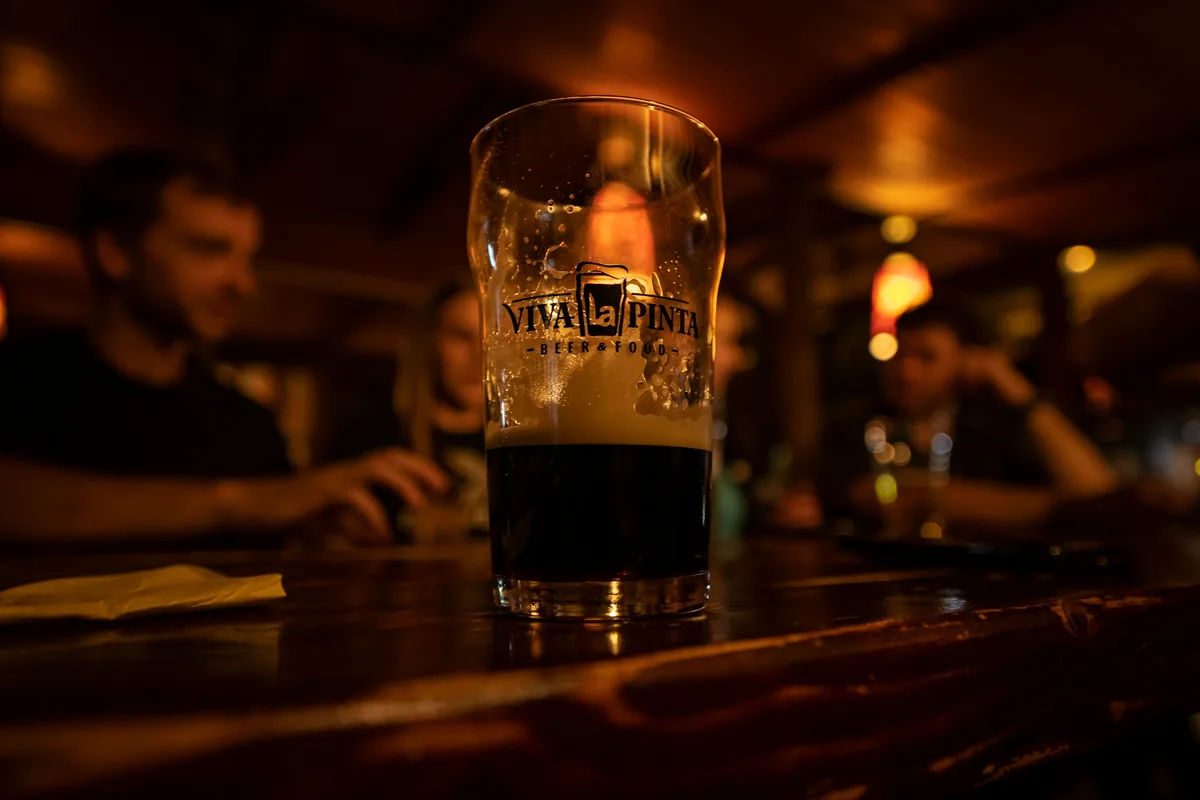
Beer brings malt sugar and, in the Belgian styles used here, a distinct sourness. A Flemish brown or an oud bruin is the traditional choice, and those beers are lightly acidic by design. A dark abbey ale works too. What does not work is anything hoppy.
The reason is mechanical rather than a matter of taste. Hop bitterness does not cook off. As a braise reduces over three hours the liquid loses volume and everything dissolved in it concentrates, so a beer that tasted pleasantly bitter in the glass produces a sauce that is harsh. Malt sweetness concentrates too, which is what you want; bitterness concentrating is what you do not. If you have read what hops actually do in beer, this is the same chemistry seen from the other end.
Wine behaves differently again. Red wine brings tannin and acid but very little sugar, so bourguignon does not need balancing against sweetness in the way carbonade does.
The onions are not a garnish
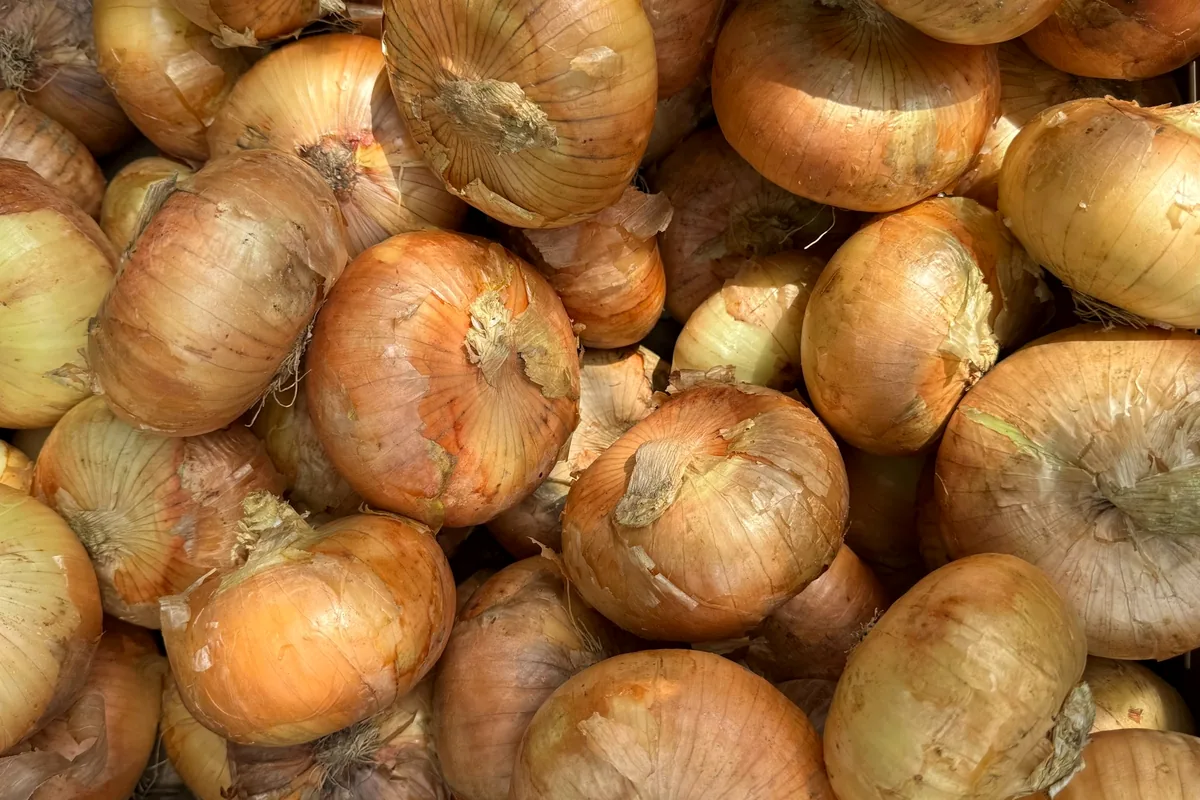
A bourguignon uses small onions as one element among several — lardons, mushrooms, carrots, the little onions glazed and added late. A carbonade uses sliced onions as a structural ingredient, in quantity, cooked down first until they are soft and brown.
They are doing two jobs. They sweeten the pot, which is half the sweet-sour balance. And as they collapse they thicken the sauce, which is why a properly made carbonade needs much less flour than a bourguignon, or none at all.
The gingerbread trick
Here is the detail that makes the dish Belgian rather than merely beer-based, and the one most often left out.
Near the end of cooking, a slice or two of pain d’épices — Belgian spiced gingerbread — is spread thickly with mustard and laid mustard-side down on the surface of the braise. It dissolves into the sauce over the last half hour. Some kitchens use speculoos instead, crumbled in, which does much the same thing.
It sounds like a gimmick and it is doing three jobs at once. The bread thickens the sauce as it breaks up. The gingerbread’s sugar and spice complete the sweet side of the balance. And the mustard supplies sharpness that cuts across both. Add a splash of vinegar, or rely on a sour brown beer to do it, and you have the sweet-sour finish that separates a carbonade from every other beef stew.
The cut, and the name
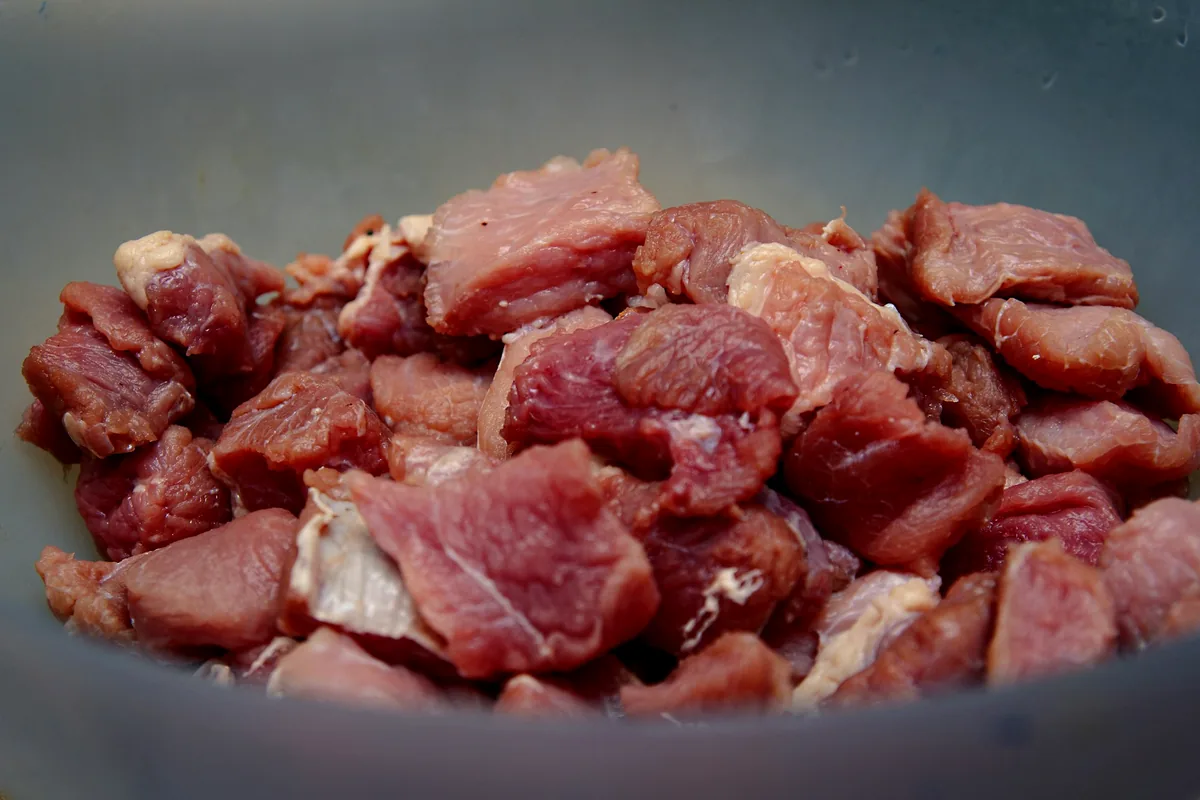
Both dishes need the same thing from the butcher: a hard-working cut with plenty of connective tissue — chuck, shin, blade — that turns to gelatine over a long slow cook. A lean, tender cut is wasted, and will end up dry.
The name is a small joke on itself. Carbonade traces to the Latin carbo, coal, and originally described meat cooked over coals. The dish it now names is braised in liquid in a covered pot, which is close to the opposite. Flemish speakers mostly sidestep the problem and call it stoofvlees or stoverij — literally “stew meat” — which is at least accurate.
What usually goes wrong
Three things, and they are all avoidable.
The wrong beer. Reaching for whatever Belgian beer is in the fridge is how a carbonade ends up bitter. A tripel is too sweet and too strong, an IPA is a disaster, and a lager contributes almost nothing. Dark, malty, ideally a little sour.
Not enough onion, and not cooked long enough. The onions have to be genuinely browned and collapsed before the liquid goes in. Rushing them means no sweetness and no body, and no amount of gingerbread later will rescue it.
Skipping the acid. A carbonade without a sour note is just beef in beer. If the beer is not a sour brown, a spoonful of vinegar near the end is not optional — it is the ingredient that makes the dish taste finished rather than heavy.
Like most braises it is better the next day, once the sauce has set and the flavours have settled. Belgian kitchens make it in quantity for exactly that reason.
How it is served
With fries. Not with the mash or noodles a bourguignon usually gets, and not with the fries tipped into the sauce either — they arrive alongside, for the same reason they do with moules-frites, which is that a Belgian fry has a crust worth protecting. Bread and a green salad are the other common accompaniments.
Frequently asked questions
Is carbonade flamande just Belgian beef bourguignon?
No. It uses beer rather than wine, far more onion, and a sweet-sour finish built on gingerbread and mustard that bourguignon has no equivalent of. The shared idea is slow-braised beef; almost everything else differs.
What beer should be used?
A dark, malty Belgian beer — traditionally a Flemish brown or oud bruin, or a dark abbey ale. Avoid hoppy beers: bitterness concentrates as the braise reduces and turns the sauce harsh.
Why is there gingerbread in it?
It thickens the sauce as it dissolves and supplies the sweetness that balances the beer’s acidity. Spread with mustard, it adds the sour edge at the same time.
Is carbonade Belgian or French?
Belgian, and specifically Flemish, though it is also cooked in French Flanders across the border. The dish tracks the region rather than the modern frontier.
Why is it called carbonade if it is not grilled?
The word comes from the Latin for coal and once described grilled meat. The name outlived the method. Dutch speakers generally call it stoofvlees instead.
The short version
Beer instead of wine is where the comparison starts, not where it ends. Carbonade is sweeter, more sour, more heavily onioned, and thickened by vegetables and gingerbread rather than flour; bourguignon is drier, more savoury and built on wine, bacon and mushroom. Use a malty beer and never a hoppy one, and serve it with fries on the side.
Related: Flanders and Wallonia brew differently, what speculoos is, and what a Belgian brasserie serves.